
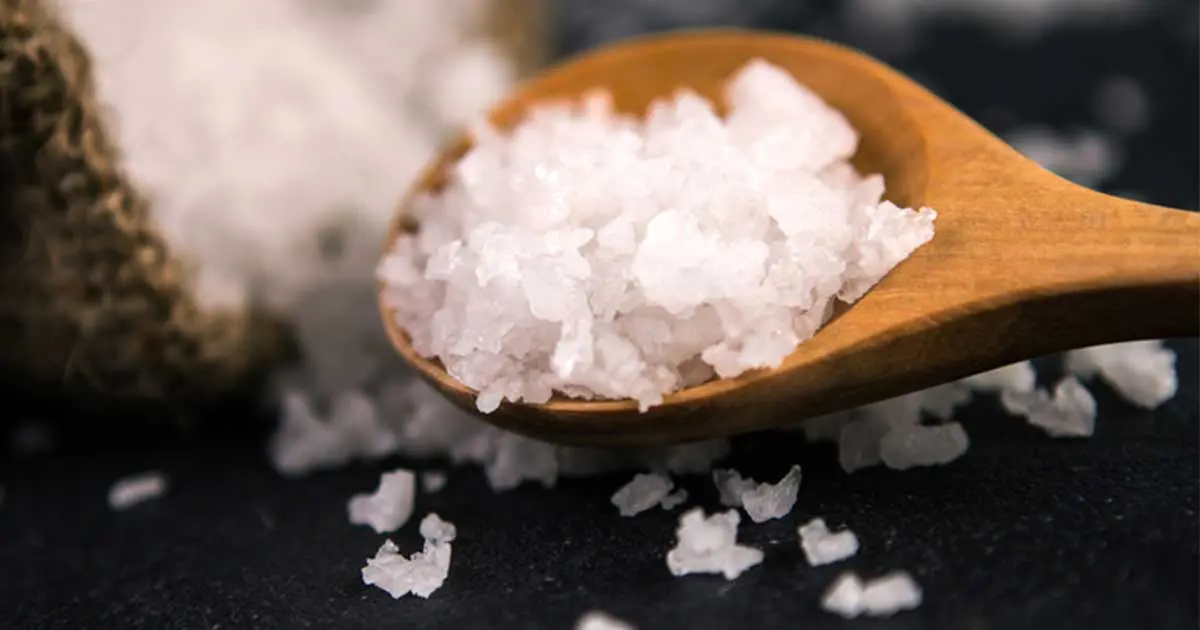
Is Your Salt TOXIC?
Let’s chat about salt and its potential toxicity.
Salt is an essential mineral that is vital for human life. Our bodies need sodium to maintain fluid balance, transmit nerve impulses, and contract and relax muscles. It also contains many trace minerals that are important for our health, including bromine, boron, phosphorus, zinc, silicon, iron, manganese, and copper.
The Importance of Salt for Human Health
Not all salt is created equal. Refined salt has been heavily processed and stripped of many of its essential minerals. In addition, it is often mixed with anti-caking agents and other additives to prevent clumping. These additives can be harmful to our health and can turn what was once a nutritious mineral into junk food.
Unrefined salt, on the other hand, is a healthier option because it retains its natural minerals and is less processed. However, it can also be contaminated with toxins if it is extracted from a polluted environment.
Sea salt, for example, can be contaminated with microplastics, which are tiny particles of plastic that have been found in oceans around the world. These microplastics can contain harmful compounds like plasticizers and stabilizers, and can cause health problems such as weight gain and hormonal imbalances.
Pink Himalayan salt can also be contaminated with heavy metals such as lead, mercury, cadmium, and aluminum. This is because the mining of the rock salt formations used to make pink Himalayan salt can cause contamination.
So, what can we do to protect ourselves from these toxins? One solution is to choose a high-quality salt that has been tested for contaminants. Look for one that is certified organic and free of additives. Another solution is to minimize our exposure to toxins in general by living a healthy lifestyle and avoiding unnecessary exposure to environmental pollutants.
In conclusion, salt is an essential mineral for our health, but it’s important to be aware of potential toxins that can be found in certain types. By choosing a high-quality salt, living a healthy lifestyle, and using natural detoxifiers, we can help protect ourselves from these toxins and enjoy the many benefits that it has to offer.
References
- Cirillo, Massimo, et al. “A History of Salt”. American Journal of Nephrology. vol. 14, no. 4-6, 1994, pp. 426-431., doi:10.1159/000168759.
- Advisory Report to Secretary of Health and Human Services and Secretary of Agriculture. “Scientific Report of the 2015 Dietary Guidelines Advisory Committee.” U.S. Department of Agriculture (USDA), 2015, health.gov/sites/default/files/2019-09/Scientific-Report-of-the-2015-Dietary-Guidelines-Advisory-Committee.pdf.
- X, Science. “Vital for Life, Heat and Power – What You Never Knew about Salt Water.” Phys.org, Phys.org, 14 Sept. 2018, phys.org/news/2018-09-vital-life-power-knew-salt.html.
- Vandenbroucke, Jan P et al. “Causality in epidemiology: The need for a pluralistic approach” International journal of epidemiology vol. 45,6 (2016): 1776-1786. doi:10.1093/ije/dyv341
- Alexander, Dominik D et al. “Red Meat, Colorectal Cancer: An Update on the State of the Epidemiologic Science.” Journal of the American College of Nutrition vol. 34,6 (2015): 521-43. doi:10.1080/07315724.2014.992553
- Food Insight. “The Science of Anti-Caking Agents.” Food Insight, 10 Oct. 2018, foodinsight.org/the-science-of-anti-caking-agents/.
- Karami, Ali et al. “The presence microplastics in different commercial salts.” Scientific reports vol. 7 46173. 6 Apr. 2017, doi:10.1038/srep46173
- Open overlay panel author linksDiogo Peixoto, et. al. “Microplastic Pollution in Commercial Salt for Human Consumption: A Review.” Estuarine, Coastal and Shelf Science, Academic Press, 10 Feb. 2019, www.sciencedirect.com/science/article/pii/S0272771418300647.
- Lim, XiaoZhi. “Microplastics Are Everywhere – but Are They Harmful?” Nature News, Nature Publishing Group, 4 May 2021, www.nature.com/articles/d41586-021-01143-3.
- Fayet-Moore, Flavia et al. “An Analysis Of The Mineral Composition of Pink Salt Available In Australia.” Foods (Basel Switzerland) vol. 9,10 1490. 19 Oct. 2020, doi:10.3390/foods9101490
- Genuis Stephen J. et al. “Human excretion of bisphenol-A: Blood, urine, sweat (BUS) study.” Journal of Environmental and Public Health vol. 2012 (2012): 185731. doi:10.1155/2012/185731
- Mastinu, Andrea et al. “Zeolite Clinoptilolite – Therapeutic Virtues Of An Ancient Mineral.” Molecules, Basel, Switzerland vol. 24,8 1517. 17 Apr. 2019, doi:10.3390/molecules24081517
Keep updated on latest posts
-
Best Coffee Creamers at Target: Cleanest Options
If you are buying coffee creamer at Target, the ingredient list matters more than the pretty packaging on the front of the bottle. I went…
-

3 Ways I Use Thyme for Coughs and Colds Every Fall
When fall rolls around, and coughs, congestion, and sore throats start making their way through the house, I reach for an herb that has been…
-
Can Rosemary Aroma Improve Memory and Focus?
Rosemary is usually thought of as something you throw into a pan with potatoes, chicken, or vegetables. But this familiar herb may have another interesting…
-

Homemade Chicken Feet Bone Broth for Dogs
A collagen-rich, joint-supporting bone broth made with two ingredients — safe, simple, and something your dog will genuinely go crazy for Chicken feet bone broth…
One swap a week
Every week, one small change worth making, why it matters, and where to get it. Two minutes, then back to your life.