

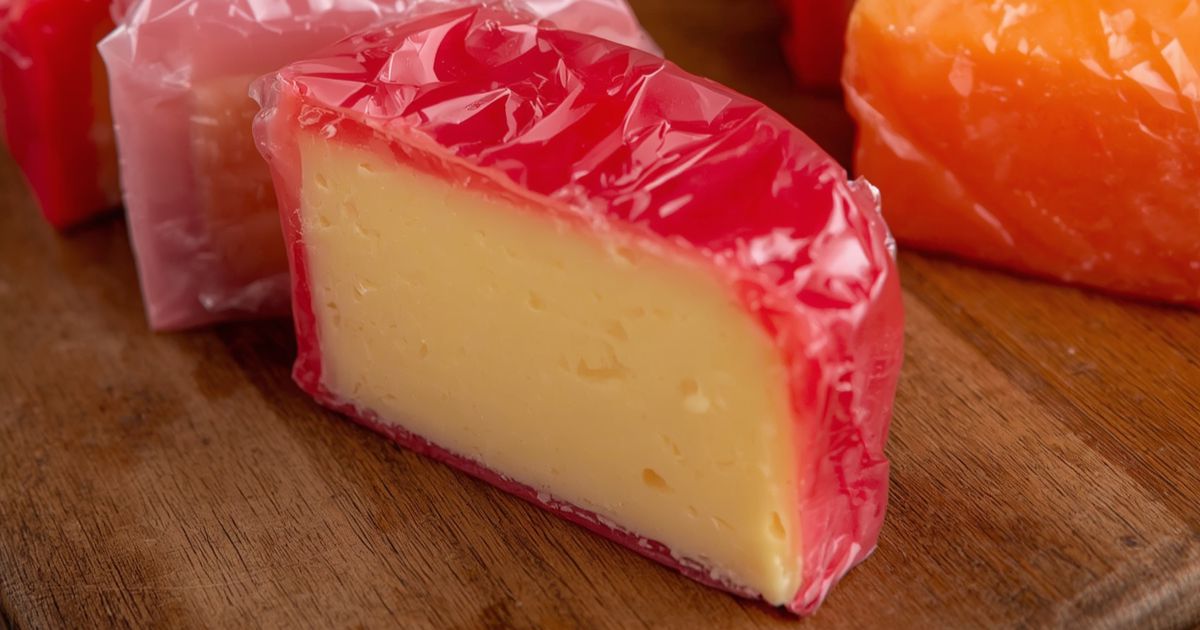
Certain snacks have built a reputation over time as being simple, wholesome, and reliable, especially when they come in small portions and minimal-looking packaging. Wax-wrapped mini cheeses often fall into that category, positioned as easy grab-and-go options that feel closer to real food than ultra-processed snacks. But when taking a closer look at how these products are sourced and made, the picture becomes more nuanced. What appears straightforward on the surface can conceal layers of complexity, especially in conventional dairy production and the materials used in packaging.
What “Conventional Dairy” Actually Means
Not all dairy is created equal, and the term “conventional” covers a wide spectrum of farming practices that prioritize efficiency and scale. In many large-scale operations, cows are often fed grain-based diets that may include conventionally grown crops treated with pesticides and herbicides. These inputs can enter the broader food chain, contributing to cumulative exposures. While regulatory systems set limits on what is considered safe, consumers are increasingly aware of the benefits of reducing cumulative exposure wherever possible. Choosing dairy, then, becomes less about avoiding it altogether and more about understanding sourcing, feed quality, and farming practices that influence the final product.
The Feed-to-Food Connection
The quality of what an animal consumes directly impacts the quality of what it produces. When cows are raised on diverse, pasture-based diets, the resulting milk often has a different nutritional profile than milk from grain-fed systems. This includes variations in fatty acids and micronutrients, as well as a reduced likelihood of pesticide residues associated with feed. On the other hand, grain-fed systems can rely heavily on monoculture crops, which are more likely to involve chemical inputs. For those aiming to take a lower-tox approach to everyday eating, this connection between feed and food becomes an important consideration.
More Than Just Wax: What That Red Coating Really Is
One detail that often gets overlooked is the signature red coating that surrounds these mini cheeses. While it’s commonly assumed to be just a simple wax layer, the coloring can involve additives such as carmine, a red pigment derived from crushed cochineal insects. This ingredient is widely used in the food industry to achieve a bright, stable red hue, but it may not align with everyone’s expectations of what a “simple” snack should contain. For those trying to be more intentional about ingredients, especially when it comes to hidden additives, this is one of those details that tends to shift how the product is perceived.
Paraffin Wax and What Comes With It
Beyond the coloring, the wax itself is typically made from paraffin, a petroleum-derived substance used to seal and preserve the cheese. While it serves a functional purpose and is not meant to be eaten, it still adds an extra layer of material around the food. One concern with paraffin-based products is the potential for contamination with polycyclic aromatic hydrocarbons (PAHs), a group of compounds associated with petroleum processing. The levels and risks can vary depending on the level of refinement and regulation. Still, for those aiming to reduce overall exposure to petroleum-derived substances, it becomes another factor worth considering when choosing everyday foods.
The Convenience Trade-Off
Convenience is often the driving force behind snack choices, and individually wrapped cheeses are designed to meet that need. They are portable, portioned, and require no preparation, making them appealing for busy routines. But convenience can sometimes come at the cost of transparency. The more a product is processed, portioned, and packaged, the more layers exist between the consumer and the original food source. Taking a step back to evaluate whether that convenience aligns with personal priorities can lead to small but meaningful shifts, such as choosing less processed forms of the same food.
A Simpler Way to Approach Cheese
Cheese itself is not the issue; it is one of the oldest and most traditional ways of preserving and enjoying dairy. The difference lies in how it is made and sourced. Opting for organic cheese or varieties made from milk produced without synthetic pesticides and herbicides can reduce exposure to unwanted residues. Aged cheeses, such as traditionally produced Parmesan, also tend to have simpler ingredient profiles and longer fermentation processes, which can be appealing for those looking to keep things closer to whole foods. These options often come with less packaging and fewer additives, aligning more closely with a low-tox approach.
What to Look for When Choosing Better Options
Shifting away from heavily marketed snack versions starts with paying attention to a few key details at the store. Labels that indicate organic certification, grass-fed sourcing, or traditional production methods can offer insight into how the cheese was made. Packaging is another factor worth considering, with blocks or wedges often being a simpler alternative to individually wrapped portions. Even small changes, like slicing cheese at home instead of relying on pre-packaged options, can reduce both packaging waste and unnecessary exposure to additional materials.
Building a More Intentional Routine
Choosing better-quality dairy when possible, being mindful of packaging, and questioning default “healthy” labels all contribute to a more intentional approach to everyday food choices. Over time, these decisions create a baseline that feels both sustainable and realistic. It allows room for flexibility while still moving in a direction that prioritizes quality over convenience when it matters most.
The Bigger Picture Behind Small Swaps
What makes these shifts meaningful is not any single product swap, but the mindset behind it. Looking beyond marketing and asking simple questions about sourcing, processing, and packaging builds a stronger connection to what ends up on the plate. Wax-wrapped cheese is just one example of how a familiar item can be re-evaluated through a different lens. By focusing on whole, minimally processed options and cleaner sourcing, it becomes easier to create a routine that supports long-term health.
References:
- Fernandes J, Gomes S, Reboredo FH, Pintado ME, Amaral O, Dias J, Alvarenga N. Clean label approaches in cheese production: Where are we? Foods. 2025 Feb 26;14(5):805. doi: 10.3390/foods14050805. PMID: 40077507; PMCID: PMC11899541.
- Falih MA, Altemimi AB, Hamed Alkaisy Q, Awlqadr FH, Abedelmaksoud TG, Amjadi S, Hesarinejad MA. Enhancing safety and quality in the global cheese industry: A review of innovative preservation techniques. Heliyon. 2024 Nov 19;10(23):e40459. doi: 10.1016/j.heliyon.2024.e40459. PMID: 39654744; PMCID: PMC11625285.
- Vitale M, Costabile G, Testa R, D’Abbronzo G, Nettore IC, Macchia PE, Giacco R. Ultra-processed foods and human health: A systematic review and meta-analysis of prospective cohort studies. Adv Nutr. 2024 Jan;15(1):100121. doi: 10.1016/j.advnut.2023.09.009. Epub 2023 Dec 18. PMID: 38245358; PMCID: PMC10831891.1