
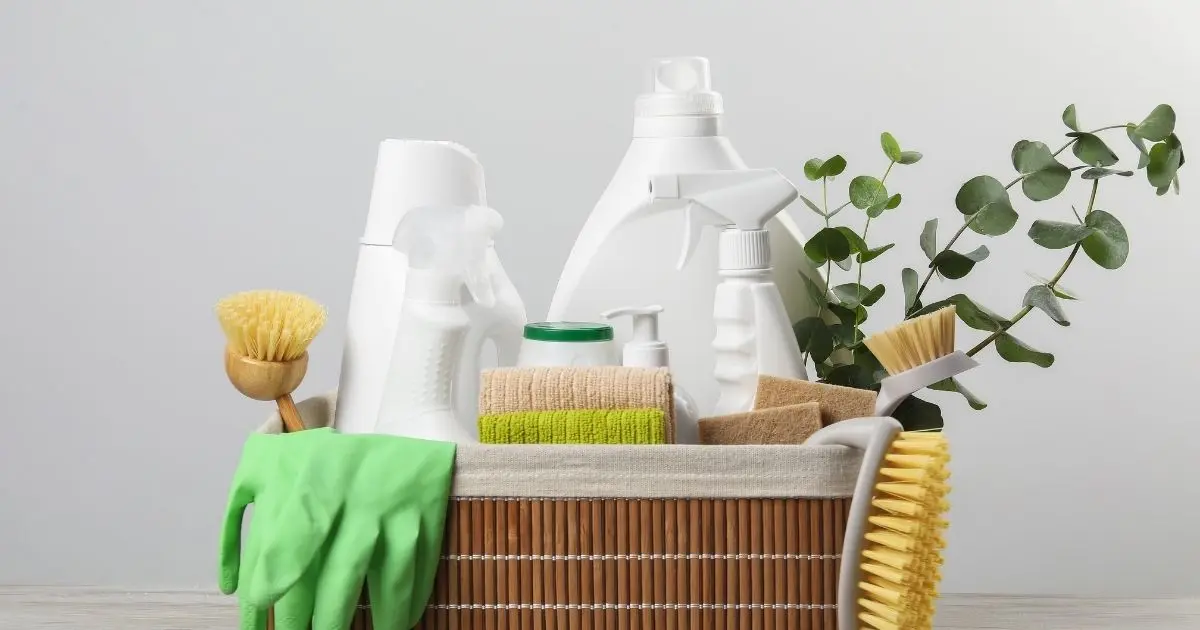
Toxic Items I’d Never Choose and What to Use Instead
Walking through a big-box store feels harmless and even productive because it appears clean, organized, and familiar. The problem is that many of the most common household items on those shelves are designed for convenience and profit, not for long-term health. They are made with plastics, coatings, fragrances, and chemical blends that slowly migrate into food, air, water, and skin. None of this causes an immediate reaction, which is why it is easy to overlook; however, over time, this cumulative background exposure adds up and contributes to hormone disruption, metabolic stress, immune burden, and neurological load.
Why “Normal” Household Products Can Be a Problem
Most consumer products are regulated based on acute toxicity, rather than chronic, low-dose exposure. That means they are tested to see if they kill you or burn you, not whether they subtly interfere with endocrine signaling, gut bacteria, or detox pathways over years. When a product is used daily, worn on the skin, heated with food, or inhaled for extended periods, even minor chemical releases can become biologically significant. This is why a trash bag, a paper plate, or a detergent can matter just as much as something labeled “chemical” or “industrial.” The exposure pathway is what matters, not how ordinary the item looks.
Plastic Food Storage Bags and Microplastic Migration
Conventional plastic storage bags are made from polyethylene and often contain plasticizers, stabilizers, and slip agents that are not chemically bound to the plastic matrix. That means they can migrate out, especially when exposed to fat, acid, heat, or friction. Over time, these compounds and microplastic fragments can move into food and then into the digestive system, where they interact with gut microbes and intestinal lining.
Silicone storage bags are not perfect, but food-grade platinum-cured silicone is significantly more stable. It does not fragment into microplastics the way conventional plastic does, especially when stored in cold conditions. Swapping plastic bags for reusable silicone or glass is one of the simplest ways to reduce daily ingestion of synthetic debris.
Coated Paper Plates and the PFAS Problem
Paper plates often feel natural and harmless, but many are coated with a thin layer of plastic or fluorinated material to make them grease-resistant. That layer is typically composed of PFAS, a class of chemicals that persist in the environment and in human tissue for years. PFAS are associated with immune suppression, thyroid disruption, and altered lipid metabolism, and they migrate more readily when they come into contact with hot or oily foods.
Uncoated, unbleached sugarcane or bamboo plates avoid this coating entirely and perform the same function without introducing persistent chemicals into the food stream.
Laundry Detergent as a Skin Exposure Route
Clothing is essentially a wearable chemical delivery system if it is washed in products full of fragrances, solvents, and petroleum-derived surfactants. These residues do not thoroughly rinse out and then sit against the skin all day, especially in warm, moist areas where absorption is higher. Fragrances are particularly problematic because they are protected as trade secrets and can contain dozens of hormone-active compounds under a single word on the label.
Fragrance-free, simpler formulations reduce this exposure and also tend to be gentler on the skin barrier and respiratory system.
Dishwasher Detergents and What Stays on the Plate
Dishwasher tabs and powders are designed to aggressively strip grease and food residues, which means they often contain strong surfactants, enzymes, and rinse aids that are not entirely removed in the wash cycle. Trace residues remain on dishes and are ingested with every meal. While the dose is small, the exposure is constant.
Cleaner alternatives with simpler formulations reduce this ingestion pathway and also reduce the amount of chemical load entering wastewater systems and eventually the environment.
Synthetic Fragrance as a Hormonal Stressor
Plug-in air fresheners, scented candles, and fragranced sprays are a significant source of indoor air pollution. The synthetic scent compounds are volatile organic chemicals designed to linger, which means they are also intended to be inhaled. Many of these compounds interfere with hormone receptors and neurological signaling and can worsen headaches, respiratory irritation, and sleep quality. Essential oil diffusers, when used lightly and with high-quality oils, provide scent without the same synthetic chemical load and allow control over intensity and duration.
Scented Trash Bags and Constant VOC Off-Gassing
Scented trash bags are designed to mask odors, but they do so by continuously releasing fragrance chemicals into the air. This creates a steady background exposure that remains constant, even when the room is empty. Unscented, recycled, or biodegradable bags eliminate this constant chemical release while still performing the same practical function. Odor is better managed through ventilation, regular emptying, and composting rather than masking with volatile compounds.
Plastic Food Containers and the Limits of “BPA-Free”
The removal of BPA has led many manufacturers to replace it with structurally similar compounds, such as BPS and BPF, which share many of the same endocrine-disrupting properties. “BPA-free” does not mean hormone-neutral; it only means a specific chemical has been replaced with a similar one. Glass containers are chemically inert, do not absorb odors or colors, and do not release particles into food, making them one of the most reliable long-term storage options.
A Home That Supports Health
A non-toxic home is built through small, consistent decisions that reduce unnecessary exposures. Each swap removes a small piece of background stress from the body’s regulatory systems. Over time, this accumulates to a lower inflammatory load, more stable hormone signaling, improved gut function, and a nervous system that is not constantly compensating for environmental inputs. The house becomes less of a chemical environment and more of a biological one, a place that quietly supports repair, balance, and resilience instead of interfering with it.
References:
- Rádis-Baptista G. Do Synthetic Fragrances in Personal Care and Household Products Impact Indoor Air Quality and Pose Health Risks? Journal of Xenobiotics. 2023;13(1):121–131. doi: 10.3390/jox13010010. PMID: 36976159; PMCID: PMC10051690.
- Ogulur I, Pat Y, Aydin T, Yazici D, Rückert B, Peng Y, Kim J, Radzikowska U, Westermann P, Sokolowska M, Dhir R, Akdis M, Nadeau K, Akdis CA. Gut epithelial barrier damage caused by dishwasher detergents and rinse aids. Journal of Allergy and Clinical Immunology. 2023;151(2):469–484. doi: 10.1016/j.jaci.2022.10.020. PMID: 36464527.
- Macchione, M., Yoshizaki, K., Frias, D. P., Maier, K., Smelan, J., Prado, C. M., & Mauad, T. (2024). Fragrances as a trigger of immune responses in different environments. Toxicology In Vitro, 96, 105769.https://doi.org/10.1016/j.tiv.2023.105769
- Jin, S., Zhong, L., Zhang, X., Li, X., Li, B., & Fang, X. (2023). Indoor Volatile Organic Compounds: Concentration Characteristics and Health Risk Analysis on a University Campus. International Journal of Environmental Research and Public Health, 20(10), 5829.https://doi.org/10.3390/ijerph20105829
- Zhang X, Yu C, Wang P, Yang C. Microplastics and human health: Unraveling the toxicological pathways and implications for public health. Frontiers in Public Health. 2025;13:1567200. doi: 10.3389/fpubh.2025.1567200
Keep updated on latest posts
-

Best Coffee Creamers at Target: Cleanest Options
If you are buying coffee creamer at Target, the ingredient list matters more than the pretty packaging on the front of the bottle. I went…
-

3 Ways I Use Thyme for Coughs and Colds Every Fall
When fall rolls around, and coughs, congestion, and sore throats start making their way through the house, I reach for an herb that has been…
-

Can Rosemary Aroma Improve Memory and Focus?
Rosemary is usually thought of as something you throw into a pan with potatoes, chicken, or vegetables. But this familiar herb may have another interesting…
-

Homemade Chicken Feet Bone Broth for Dogs
A collagen-rich, joint-supporting bone broth made with two ingredients — safe, simple, and something your dog will genuinely go crazy for Chicken feet bone broth…
One swap a week
Every week, one small change worth making, why it matters, and where to get it. Two minutes, then back to your life.