
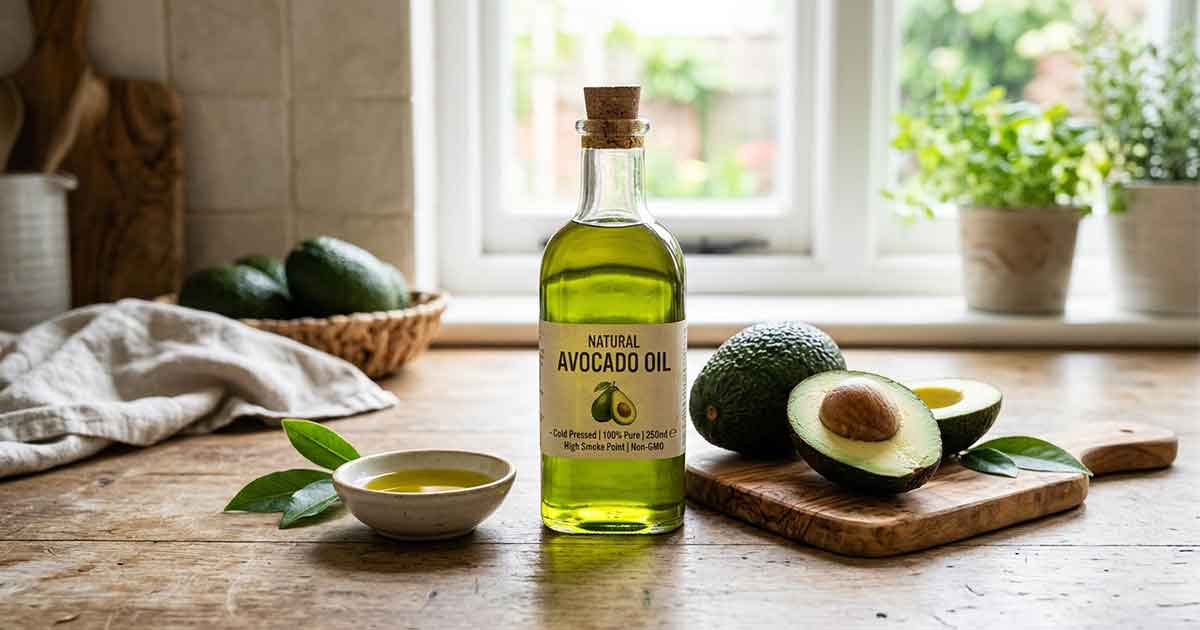
Is Your Avocado Oil Really Avocado Oil? What a New UC Davis Study Found
If you’ve been buying chips, mayonnaise, or salad dressing made with avocado oil because you’re trying to avoid seed oils, there’s a new reason to look more closely at the label. A 2026 study from researchers at the University of California, Davis found that 48 of 54 packaged foods labeled as containing avocado oil showed chemical profiles inconsistent with authentic avocado oil, about 89% of the products tested.
The study, published in Applied Food Research, examined processed foods including chips, mayonnaise, and salad dressings. Researchers found evidence suggesting that cheaper oils had been substituted for or mixed with the avocado oil the products claimed to contain.
For anyone paying a premium specifically to avoid soybean, canola, sunflower, or other seed oils, that’s worth noting.
What Did the UC Davis Avocado Oil Study Find?
The researchers tested 54 processed foods that listed avocado oil as their only oil ingredient. They extracted the oils from the finished foods and analyzed their chemical profiles to determine whether they were consistent with authentic avocado oil.
The results were striking:
- 48 of 54 products failed the authenticity testing.
- 93% of the chips tested showed evidence of other oils.
- 71% of the mayonnaise products showed evidence of other oils.
- 100% of the salad dressings showed evidence of other oils.
The researchers also found that price did not reliably predict authenticity. In other words, paying more for an avocado oil product didn’t necessarily mean you were getting authentic avocado oil.
Why Would Avocado Oil Be Adulterated?
The problem may not always begin with the company whose name is on the package.
According to the UC Davis researchers, adulteration may occur upstream in the supply chain, before the oil reaches the manufacturer. A food company may purchase an ingredient from a supplier and rely on that supplier’s specifications without independently testing every batch.
That doesn’t change the consumer’s experience.
If you buy a bag of chips because the package says they’re made with avocado oil, you’re paying for that ingredient. If the oil actually contains other, less expensive oils, you’re getting something different from what you intended to purchase.
If You’re Avoiding Seed Oils, This Matters
This is where the study becomes especially relevant.
Many consumers aren’t buying avocado oil chips or mayonnaise because they simply prefer avocado oil. They’re choosing those products specifically to avoid oils such as soybean, canola, sunflower, or safflower oil.
The UC Davis findings suggest that an avocado-oil claim on a packaged food isn’t enough to guarantee that the product contains only authentic avocado oil.
That doesn’t mean every avocado oil product is adulterated. The study tested a specific sample of 54 products, not every product on the market. But the results are significant enough to justify greater selectivity.
What About Olive Oil?
The UC Davis study also tested 20 packaged foods labeled as containing olive oil. Only one failed the authenticity testing, compared with 48 of the 54 avocado-oil-labeled foods.
That doesn’t prove that every olive oil product is authentic. It does provide an interesting comparison between the two categories.
UC Davis researchers have also noted that olive oil has benefited from decades of research, testing, and industry standards, whereas avocado oil remains a less standardized category.
For that reason, 100% olive oil is a practical default right now if your primary goal is to avoid seed oils in packaged foods and reduce uncertainty about what’s actually in the product.
Does This Mean Avocado Oil Is Bad?
No. That’s not what the study found. The research focused on authenticity and food fraud, not whether authentic avocado oil causes health problems. The concern is that consumers may be paying for avocado oil while receiving a product whose actual oil composition doesn’t match the label.
Authentic avocado oil remains a legitimate cooking oil. The issue is knowing whether the product you’re buying actually contains what you think it contains.
How to Shop More Carefully
You don’t need to become a food scientist to make better choices. A few simple habits can help:
- Read the full ingredient list, not just the front-of-package claims.
- Don’t assume a higher price means better quality.
- Look for independent testing or credible certifications when available.
- Choose simpler products when possible.
- Consider 100% olive-oil products when you’re specifically trying to avoid seed oils.
- Remember that a study of 54 products doesn’t represent every avocado-oil product on the market.
This is also a good reminder that the simplest food choices often give you the most control. Instead of relying heavily on packaged chips, dressings, or mayonnaise marketed as premium-oil products, you can make some of these foods yourself using an oil you trust.
The Bigger Lesson About Food Labels
The avocado oil study is really a lesson in food transparency.
Reading an ingredient label is important, but consumers ultimately have to trust that the ingredients listed on that label accurately represent what’s inside the package. When adulteration happens somewhere in the supply chain, even a careful shopper can be misled.
That’s why third-party testing, stronger industry standards, and supply-chain transparency matter.
For now, the practical approach isn’t to panic about avocado oil. It’s to be more skeptical of premium claims and choose products with a clear, verifiable ingredient story whenever possible.
The Bottom Line
A product labeled “made with avocado oil” doesn’t necessarily guarantee that you’re getting pure avocado oil.
UC Davis researchers tested 54 processed foods and found that 48 exhibited chemical profiles inconsistent with those of authentic avocado oil. The affected categories included chips, mayonnaise, and salad dressings.
The study doesn’t prove that avocado oil is unhealthy, nor does it mean every avocado oil product is fraudulent. It does show that authenticity is a legitimate concern in the current packaged-food market.
If you’re specifically buying avocado oil products to avoid seed oils, 100% olive oil is the simpler choice for now. And as always, don’t just read the marketing on the front of the Package, look at the ingredients, consider how much processing is involved, and choose foods that give you more control over what’s actually going into your body.
Frequently Asked Questions
Is avocado oil in packaged foods always pure?
No. In the UC Davis study, 48 of 54 packaged foods labeled as containing avocado oil showed chemical profiles inconsistent with those of authentic avocado oil. The study does not establish that every avocado oil product on the market is adulterated.
What percentage of avocado oil products failed the UC Davis test?
Approximately 89% of the 54 products tested failed the researchers’ authenticity criteria.
Were avocado oil chips tested?
Yes. The study included chips, mayonnaise, and salad dressings. Researchers found evidence of other oils in 93% of the chips tested.
Is olive oil a better choice right now?
If you’re trying to avoid seed oils and want to minimize uncertainty about the authenticity of packaged-food oils, 100% olive oil is a reasonable default. In the UC Davis comparison, only one of 20 olive oil-labeled products failed the authenticity testing.
References:
- Lopez-Alvarez, N., & Wang, S. (2026). Authenticity of avocado and olive oils used as ingredients in commercially processed foods. Applied Food Research.https://www.sciencedirect.com/science/article/pii/S2772502226007274
- DiNicolantonio, J. J., & O’Keefe, J. H. (2017). Good fats versus bad fats: A comparison of fatty acids in the promotion of insulin resistance, inflammation, and obesity. Missouri Medicine, 114(4), 303–307.https://www.ncbi.nlm.nih.gov/pmc/articles/PMC6140086/
- Serreli G, Boronat A, De la Torre R, Rodriguez-Moratò J, Deiana M. Cardiovascular and Metabolic Benefits of Extra Virgin Olive Oil Phenolic Compounds: Mechanistic Insights from In Vivo Studies. Cells. 2024;13(18):1555. doi: 10.3390/cells13181555. PMID: 39329739; PMCID: PMC11430205.
Keep updated on latest posts
-
Best Coffee Creamers at Target: Cleanest Options
If you are buying coffee creamer at Target, the ingredient list matters more than the pretty packaging on the front of the bottle. I went…
-

3 Ways I Use Thyme for Coughs and Colds Every Fall
When fall rolls around, and coughs, congestion, and sore throats start making their way through the house, I reach for an herb that has been…
-
Can Rosemary Aroma Improve Memory and Focus?
Rosemary is usually thought of as something you throw into a pan with potatoes, chicken, or vegetables. But this familiar herb may have another interesting…
-
Homemade Chicken Feet Bone Broth for Dogs
A collagen-rich, joint-supporting bone broth made with two ingredients — safe, simple, and something your dog will genuinely go crazy for Chicken feet bone broth…
One swap a week
Every week, one small change worth making, why it matters, and where to get it. Two minutes, then back to your life.