
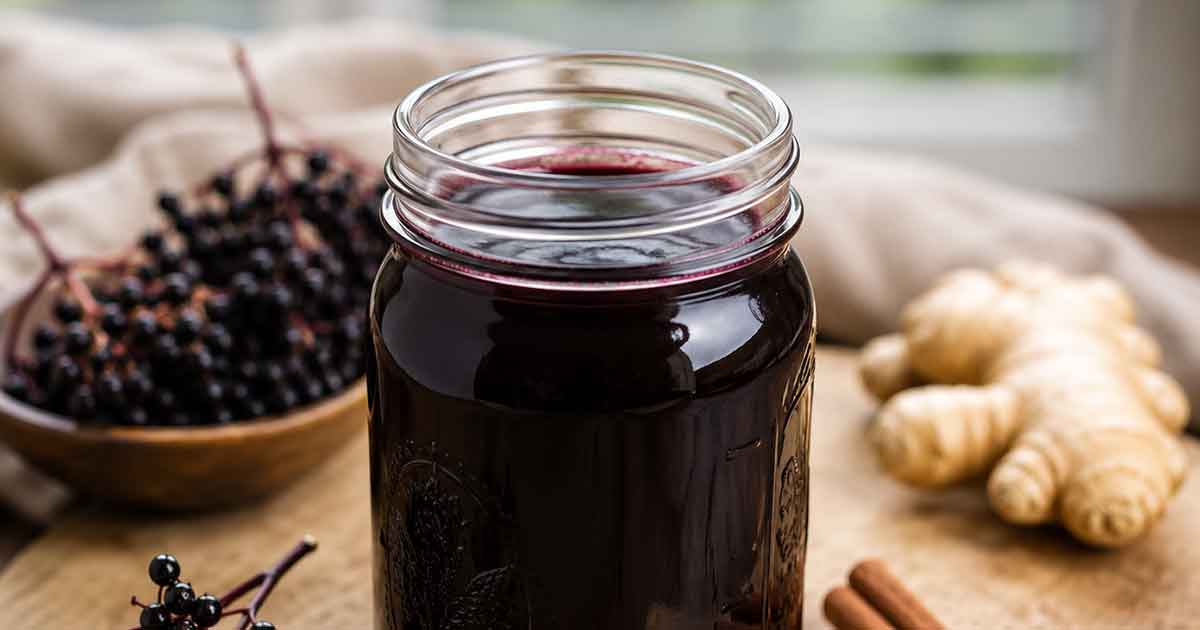
Homemade Elderberry Syrup: An Easy Immune Recipe
Every fall, right about the time the kids head back to school, we make a batch of elderberry syrup and keep it in the fridge. A spoonful a day has become one of our simplest cold-season routines, and the kids actually ask for it because it tastes good.
Elderberry has been used for generations as a folk remedy for seasonal wellness, and making it at home means you skip the corn syrup, artificial dyes, and long ingredient lists on the store-bought bottles. It comes together in about an hour with a handful of ingredients, and one batch lasts a couple of weeks. Here is exactly how we make ours, along with the safety notes worth knowing before you start.
Quick Answer: How Do You Make Elderberry Syrup?
To make elderberry syrup, simmer dried elderberries with water, ginger, cinnamon, and cloves for about 45 minutes until the liquid reduces by half. Strain out the berries, let the liquid cool until just warm, then stir in raw honey. Store it in a sealed jar in the refrigerator for up to three weeks. Always cook elderberries before use, since raw ones are not safe to eat.
What Is Elderberry Syrup?
Elderberry syrup is a sweetened liquid made by simmering elderberries with water and spices, then straining and preserving the liquid with honey. It has long been a traditional folk remedy taken during the fall and winter for seasonal immune support. The dark purple berries come from the elder tree, and while they must always be cooked before eating, the finished syrup is a simple, whole-food way to work elderberry into your family’s routine.
What the Research Does and Does Not Say
Elderberry is one of the more studied folk remedies, though the evidence is still limited. Some small studies suggest elderberry may help reduce the duration or severity of common cold and flu symptoms, while other research has been inconclusive, so it is best thought of as gentle seasonal support rather than a cure or a replacement for medical care. We use it as one small part of a bigger routine that also includes good sleep, real food, sunlight, and hand washing. If you or your kids are sick, especially with a high fever or symptoms that linger, always check in with your doctor.
Why Make Your Own Instead of Buying It
A homemade batch gives you control over the ingredients and costs a fraction of the store-bought bottles. Many commercial elderberry syrups are watered down or sweetened with corn syrup and cane sugar, and some add preservatives and artificial coloring. When you make it yourself, you know exactly what is in the jar: real elderberries, warming spices, and raw honey. A pound of dried elderberries also makes several batches, which brings the cost per spoonful well below the pre-made versions.
The Ingredients (and Why They Work)
Each ingredient earns its place:
- Dried elderberries: the star, rich in the dark pigments called anthocyanins that elderberry is known for. Dried berries are the safest and most convenient form for syrup.
- Fresh ginger: adds warmth and a little spice, and is a traditional companion for seasonal wellness.
- Cinnamon stick: brings cozy flavor and pairs naturally with the berries.
- Whole cloves: a small amount adds depth and rounds out the spice.
- Raw honey: sweetens the syrup and acts as a natural preservative. Stirring it in after the liquid cools helps preserve its beneficial properties.
- Water: the base that draws everything out of the berries and spices as it simmers.
Homemade Elderberry Syrup Recipe
Prep time: 5 minutes
Cook time: 45 minutes
Cool time: 10 minutes
Total time: about 1 hour
Makes: about 2 cups
Ingredients
- 2/3 cup dried elderberries
- 3 1/2 cups water
- 1 tablespoon fresh ginger, grated (or 1 teaspoon dried)
- 1 cinnamon stick
- 4 to 5 whole cloves
- 1 cup raw honey
Instructions
- Add the elderberries, water, ginger, cinnamon stick, and cloves to a medium saucepan.
- Bring to a boil over medium-high heat, then reduce to a low simmer.
- Simmer, partially covered, for about 45 minutes, until the liquid has reduced by roughly half.
- Remove from the heat and mash the berries gently with the back of a spoon to release the rest of their juice.
- Set a fine-mesh strainer over a bowl and pour the mixture through, pressing on the solids to extract as much liquid as possible. Discard the spent berries and spices.
- Let the liquid cool until it is just warm to the touch, not hot. This step matters, since very hot liquid can degrade the beneficial compounds in raw honey.
- Stir in the raw honey until fully dissolved.
- Pour into a clean glass jar or bottle, seal, and store in the refrigerator.
Important Safety Notes
Please read these before making or serving elderberry syrup:
- Never use raw elderberries. Raw or unripe elderberries, along with the leaves, stems, and bark, contain compounds that can cause nausea and stomach upset. Cooking the berries, as in this recipe, is what makes them safe. Only use dried elderberries or properly cooked ones.
- Do not give honey to babies under 1 year old. Raw honey can pose a risk of infant botulism. For children under one, this recipe is not appropriate, and you should talk to your pediatrician about alternatives.
- Check with your doctor if you are pregnant, nursing, or managing a health condition. Because elderberry may stimulate immune activity, anyone who is pregnant or nursing, taking medications, or living with an autoimmune condition should check with a healthcare provider first.
- This is not medical advice. Elderberry syrup is a traditional remedy, not a treatment, and it is not intended to diagnose, treat, cure, or prevent any disease.
How Much Should You Take?
Traditional use varies, so this is a general guide rather than a medical dose. Many people take about 1 tablespoon a day for adults and 1 teaspoon a day for children over one as everyday seasonal support, and some take it more frequently at the first sign of feeling under the weather. Because everyone and every situation is different, it is a good idea to confirm what is right for your family with your doctor, especially for young children.
How to Store Elderberry Syrup
Homemade elderberry syrup keeps in the refrigerator for about two to three weeks in a sealed glass jar. Because it does not contain the preservatives found in store-bought versions, make it in batches you will use up within that window. For longer storage, freeze it in an ice cube tray, then keep the cubes in a freezer bag and thaw one at a time. If the syrup ever smells off or shows any sign of fermentation or mold, discard it and make a fresh batch.
Frequently Asked Questions
What is elderberry syrup good for? Elderberry syrup is traditionally taken for seasonal immune support during the fall and winter. Some small studies suggest it may help with the duration or severity of cold and flu symptoms, though the evidence is limited, so it is best used as gentle support alongside good sleep, real food, and hand washing rather than as a cure.
Is homemade elderberry syrup safe for kids? For children over one year old, a small daily amount is a common traditional practice, and most kids enjoy the taste. It should never be given to babies under 1, because it contains raw honey, which poses a botulism risk to infants. Check with your pediatrician about the right amount for your child.
Can you use fresh elderberries instead of dried? Yes, but they must be fully ripe and cooked, never raw. Raw and unripe elderberries contain compounds that can cause stomach upset, and the leaves, stems, and bark should never be used. If using fresh, you will generally need about twice the volume of dried.
How long does homemade elderberry syrup last? Stored in a sealed glass jar in the refrigerator, it lasts about two to three weeks. For longer storage, freeze it in portions and thaw as needed. Discard it if it smells off or shows any sign of mold or fermentation.
Can you take elderberry syrup every day? Many people take a small daily amount through cold season as ongoing support. Because elderberry may stimulate immune activity, anyone who is pregnant, nursing, on medication, or managing an autoimmune condition should talk to their doctor before taking it daily.
Can you make elderberry syrup without honey? Yes. You can use pure maple syrup in place of honey, which also makes it suitable for children under one, though you should still check with your pediatrician first. Maple syrup does not have the same preservative effect as raw honey, so the syrup may keep for a slightly shorter time.
One Batch, A Whole Season of Support Some of the best cold-season routines are also the simplest. An hour on the stove and a jar in the fridge gives you weeks of a whole-food remedy your family will actually reach for, without the corn syrup and dyes in the bottled kind. Make a batch this weekend and keep a spoon nearby.
Keep updated on latest posts
-
Best Coffee Creamers at Target: Cleanest Options
If you are buying coffee creamer at Target, the ingredient list matters more than the pretty packaging on the front of the bottle. I went…
-
3 Ways I Use Thyme for Coughs and Colds Every Fall
When fall rolls around, and coughs, congestion, and sore throats start making their way through the house, I reach for an herb that has been…
-
Can Rosemary Aroma Improve Memory and Focus?
Rosemary is usually thought of as something you throw into a pan with potatoes, chicken, or vegetables. But this familiar herb may have another interesting…
-

Homemade Chicken Feet Bone Broth for Dogs
A collagen-rich, joint-supporting bone broth made with two ingredients — safe, simple, and something your dog will genuinely go crazy for Chicken feet bone broth…
One swap a week
Every week, one small change worth making, why it matters, and where to get it. Two minutes, then back to your life.