
How to Choose Safer School Supplies This Back-to-School Season
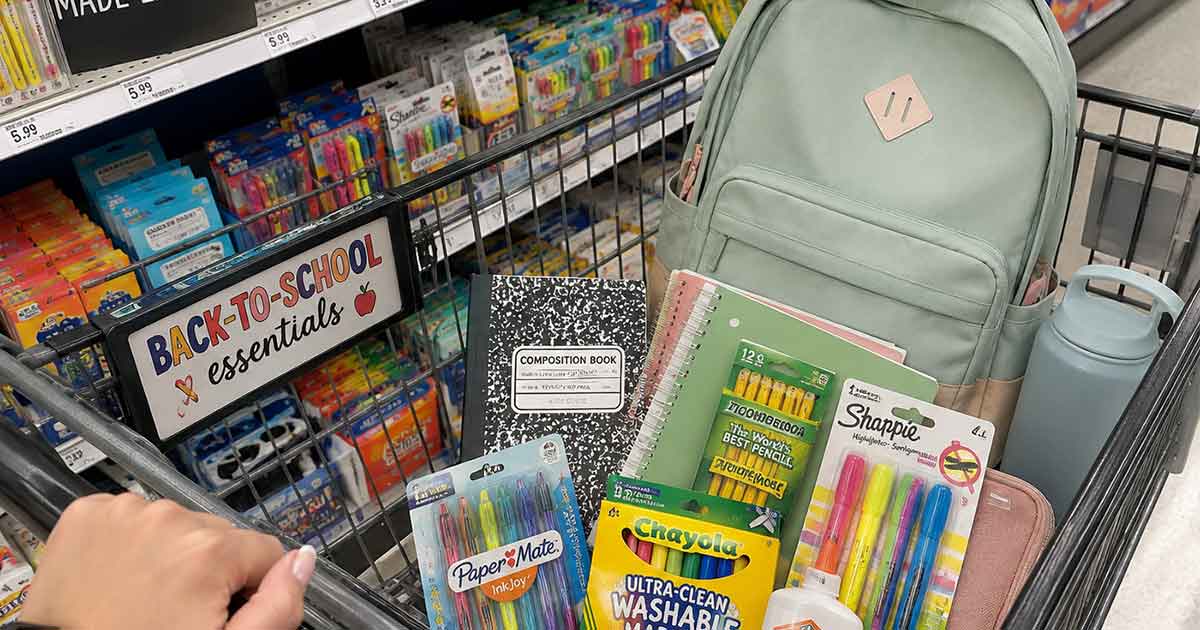
Every back-to-school season, I see the same thing: carts overflowing with crayons, markers, notebooks, backpacks, and lunch gear. Most of us grab whatever’s on the school supply list, assuming that if it’s made for kids, it must be safe. Unfortunately, that’s not always the case.
The good news is that you don’t need to research every brand or memorize a list of chemicals before heading to the store. In fact, a few simple habits can help you avoid many of the materials and additives I’d rather my family not use every day.
Think about how often kids handle their school supplies. They’re coloring, writing, carrying backpacks, opening lunch boxes, and, if they’re young enough, occasionally chewing on a crayon or marker cap. These products spend hours in their hands every school day, which is why I think they’re worth paying a little more attention to. The goal is simply knowing which items deserve a second look and which shortcuts make shopping a whole lot easier.
The Easiest Shortcut: Look for the ACMI AP Seal
If there’s one habit that makes back-to-school shopping meaningfully faster and easier, it’s knowing the ACMI AP (Approved Product) seal.
The Art & Creative Materials Institute reviews art supplies and certifies products as non-toxic for their intended use. The AP seal appears on crayons, markers, paint, modeling clay, colored pencils, and glue, and spotting it takes just a few seconds while you’re standing in the aisle.
The seal doesn’t mean a product is made with all-natural ingredients, but it does confirm that the product has undergone a toxicological review. When comparing similar products, this is the first thing I look for; it removes most of the guesswork without requiring any ingredient research.
Avoid PVC: Check for the #3 Recycling Symbol
One of the easiest label checks has nothing to do with ingredients; it’s the recycling symbol.
If you see the number 3 inside the triangle, it’s PVC (polyvinyl chloride), also sometimes labeled simply as “vinyl.” PVC is frequently softened with phthalates, chemicals linked to hormone disruption and developmental concerns, and it appears in many common school supplies:
- Binder covers
- Pencil pouches
- Plastic folders
- Backpack trim
- Lunch accessories
Better alternatives: canvas or cotton. Many manufacturers now offer these at similar prices, so avoiding PVC doesn’t usually mean spending more.
Don’t Assume the Cheapest Option Is the Safest
Budget school supplies feel like obvious savings, but there are documented cases where the lowest-priced options carried real concerns.
U.S. PIRG testing found asbestos contamination in certain Playskool crayons sold through Dollar Tree. In 2024, Dollar Tree reached a $190,000 settlement after the Washington State Attorney General found illegal levels of lead and cadmium in some school supplies.
This doesn’t mean every budget product is unsafe or every premium brand is automatically better. But when your child is handling supplies five days a week for an entire school year, buying from brands with strong quality-control practices and transparent safety standards is a worthwhile investment, even if it costs a dollar or two more.
Skip Scented Markers and Novelty Stationery
Scented markers are designed to be fun, but that fruity smell adds no value to the art project itself. It comes from added fragrance, and fragrance can contain dozens of undisclosed chemical compounds, some of which have been associated with irritation, headaches, allergies, or asthma symptoms in sensitive individuals. Certain fragrance formulations may also contain phthalates.
Unscented markers work identically. The same logic applies to scented erasers, notebooks, and novelty stationery.
Choose Beeswax Crayons When You Can
Many conventional crayons are made with paraffin wax, a petroleum byproduct. Most major brands meet current safety standards, but beeswax crayons offer a straightforward alternative made from a renewable, natural material rather than a petroleum derivative.
They’re durable, color beautifully, and are especially worth considering for younger children who are more likely to chew on them.
Stick With Water-Based Glue
Standard white school glue and traditional glue sticks are water-based and considered appropriate for everyday classroom use, which is why most schools already require them. This is one category where the safest option is also the standard option.
Where caution makes more sense: stronger craft adhesives like rubber cement, contact cement, and spray adhesives. These often emit volatile organic compounds (VOCs) that can irritate the eyes and respiratory system, and they’re not necessary for everyday schoolwork. When in doubt, simple white glue is the better choice.
Think Beyond Art Supplies: Backpacks, Lunch Bags, and Pencil Cases
Art supplies usually get the most attention, but kids also spend every school day carrying a backpack, opening a lunch bag, and grabbing a pencil case dozens of times.
Backpacks and PFAS. Many water-resistant backpacks are treated with PFAS (“forever chemicals”) to create stain- and water-repellent finishes. Most families don’t actually need this feature; a non-coated canvas, cotton, or untreated polyester backpack works fine for the vast majority of school days.
Pencil pouches and PVC. Soft vinyl pencil pouches are commonly made from PVC. Canvas and cotton pencil cases are durable, widely available, and entirely free of phthalate concerns.
Air Out New Supplies Before the School Year Starts
That strong “new” smell when you open a fresh backpack or binder? That’s off-gassing: the release of volatile organic compounds from newly manufactured plastics, synthetic fabrics, adhesives, and coatings.
It decreases naturally over time, but one free habit makes a real difference: unpack everything a day or two before school starts.
- Remove all supplies from packaging
- Open every zipper and compartment on backpacks and lunch bags
- Leave everything in a well-ventilated room, on a porch, or in a garage for 1–2 days
- Wipe down any hard interior surfaces if accessible
Takes ten minutes. Costs nothing. Reduces the duration of the heaviest off-gassing period before supplies are used each day.
Safe School Supply Shopping Checklist
Save this to your phone or print it before the next shopping trip.
Art supplies:
- Look for the ACMI AP (Approved Product) seal
- Choose unscented markers
- Buy beeswax crayons when replacing old ones
- Stick with water-based white glue or glue sticks
Plastics to avoid:
- Skip products with the #3 recycling symbol (PVC/vinyl)
- Choose canvas or cotton alternatives
Backpacks and pencil cases:
- Look for untreated canvas or cotton backpacks without stain-resistant coatings
- Skip PFAS-treated water-repellent finishes unless genuinely needed
- Choose cotton or canvas pencil cases over vinyl pouches
Smart shopping:
- Buy from brands with strong quality-control and transparent safety standards
- Be cautious with bargain-bin school supplies from unfamiliar sources
Before school starts:
- Remove everything from the packaging
- Air out backpacks, lunch bags, and binders in a ventilated space for 1–2 days
Frequently Asked Questions
What is the ACMI AP seal on school supplies? The ACMI AP (Approved Product) seal is a certification from the Art & Creative Materials Institute indicating that a product has undergone a toxicological review and is considered non-toxic for its intended use. It appears on crayons, markers, paint, colored pencils, modeling clay, and glue. It doesn’t mean a product is made from all-natural ingredients. Still, it provides meaningful third-party verification and is one of the fastest shortcuts for safer back-to-school shopping without requiring ingredient research.
What is PVC, and why should I avoid it in school supplies? PVC (polyvinyl chloride), identified by the #3 recycling symbol or “vinyl” label, is a plastic commonly softened with phthalates: chemicals associated with hormone disruption and developmental concerns. It frequently appears on binder covers, in pencil pouches, in plastic folders, and on backpack trim. Alternatives made from canvas or cotton are widely available at comparable prices and avoid the phthalate concern.
Are scented markers bad for kids? Scented markers contain added fragrance compounds that serve no functional purpose in the art supplies themselves. Fragrance is a catch-all term that can encompass dozens of undisclosed chemical compounds, some of which are associated with irritation, headaches, or respiratory sensitivity in sensitive individuals. Some fragrance formulations also contain phthalates. Unscented markers work identically and are the straightforward, safer choice for everyday classroom use.
Are beeswax crayons better than regular crayons? Beeswax crayons are made from a renewable natural material rather than paraffin wax, a petroleum byproduct used in most conventional crayons. They’re durable, color well, and are a reasonable upgrade, particularly for younger children who are more likely to put crayons in their mouths.
Do new backpacks off-gas harmful chemicals? New backpacks, lunch bags, and binders can release volatile organic compounds (VOCs) from their materials, plastics, synthetic fabrics, adhesives, and coatings during an initial off-gassing period. This is why new bags often have a strong chemical smell. Unpacking new supplies and airing them out in a well-ventilated space for one to two days before use allows the heaviest off-gassing to occur away from your child rather than during the school day.
Are cheap school supplies from dollar stores safe? Not always. U.S. PIRG testing found asbestos contamination in certain Playskool crayons sold through Dollar Tree. In 2024, Dollar Tree settled after an investigation found illegal levels of lead and cadmium in some school supplies. This doesn’t mean every budget product is dangerous. Still, it highlights why buying from brands with strong quality-control standards and transparent material information matters, especially for products children handle daily for an entire school year.
References:
- Campisi, L., La Motta, C., & Napierska, D. (2025). Polyvinyl chloride (PVC), its additives, microplastic and human health: Unresolved and emerging issues. Science of the Total Environment, 960, 178276.https://doi.org/10.1016/j.scitotenv.2024.178276
- Mallah, M. A., Changxing, L., Mallah, M. A., Noreen, S., Liu, Y., Saeed, M., Xi, H., Ahmed, B., Feng, F., Mirjat, A. A., Wang, W., Jabar, A., Naveed, M., Li, J. H., & Zhang, Q. (2022). Polycyclic aromatic hydrocarbons and their effects on human health: An overview. Chemosphere, 296, 133948.https://doi.org/10.1016/j.chemosphere.2022.133948
- Dueñas-Moreno, J., Mora, A., Kumar, M., Meng, X. Z., & Mahlknecht, J. (2023). Worldwide risk assessment of phthalates and bisphenol A in humans: The need for updating guidelines. Environmental International, 181, 108294.https://doi.org/10.1016/j.envint.2023.108294
- Jin, S., Zhong, L., Zhang, X., Li, X., Li, B., & Fang, X. (2023). Indoor volatile organic compounds: Concentration characteristics and health risk analysis on a university campus. International Journal of Environmental Research and Public Health, 20(10), 5829.https://doi.org/10.3390/ijerph20105829
- Jung, Y. S., Chiang, S., Athni, T. S., Shah, J., McCurdy, K., Yu, S. E., Kariveda, R., Mitchell, M., Ruan, M., Zou, J., Banerjee, M., Awan, Z., Dey, T., Nordgaard, C. L., Allen, J. G., Maxfield, A., Roditi, R., Bergmark, R., Nadeau, K., & Lee, S. E. (2025). Characterizing everyday exposure to volatile organic compounds and upper respiratory health effects. Scientific Reports, 15(1), 23555.https://doi.org/10.1038/s41598-024-81873-2
- Roslan NS, Lee YY, Ibrahim YS, Tuan Anuar S, Yusof KMKK, Lai LA, Brentnall T. Detection of microplastics in human tissues and organs: A scoping review. Journal of Global Health. 2024;14:04179. doi: 10.7189/jogh.14.04179
- DeWitt, J. C., Goldenman, G., Lohmann, R., Ng, C. A., & Wang, Z. (2025). Emerging toxicological awareness of per- and polyfluoroalkyl substances: The rising concern over “forever chemicals.” Disease Models & Mechanisms, 18(11), dmm052647.https://doi.org/10.1242/dmm.052647
Keep updated on latest posts
-

3 Kids’ Clothing Types I’d Think Twice About at Target
Kids’ clothing seems simple until you start looking at what actually goes into making a garment perform a certain way. A T-shirt can be designed…
-
The Cream Cheese Ingredient You May Want to Rethink
Cream cheese seems like one of those foods that should be simple. Milk, cream, salt, maybe a culture, and that’s about it. But flip over…
-
Could Choosing Different Fruits and Vegetables Support Fertility?
When you’re trying to improve fertility, the conversation usually turns to hormones, supplements, sleep, stress, exercise, alcohol, and overall diet. There’s another piece worth considering,…
-
Ricotta Raspberry Toast: An Easy 5-Minute Breakfast
Some mornings you want something that feels a little special without any actual effort. This is that breakfast. Creamy ricotta, sweet-tart raspberries, and a scatter…
One swap a week
Every week, one small change worth making, why it matters, and where to get it. Two minutes, then back to your life.