
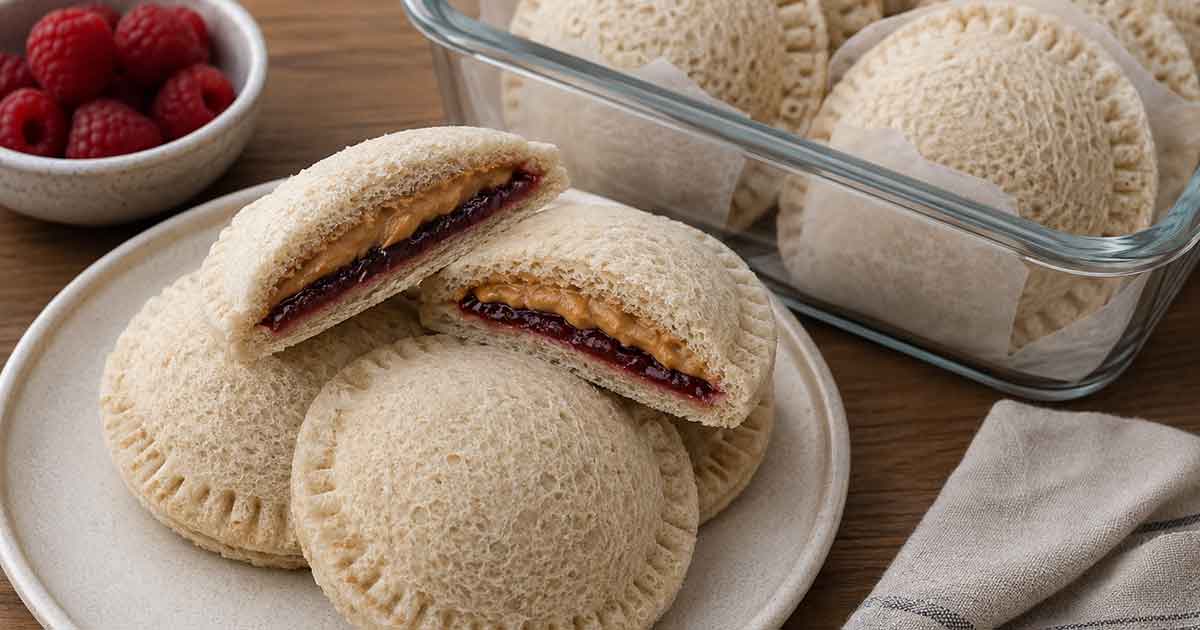
Homemade Sourdough Uncrustables: Freezer Lunch Swap
There is a reason the sealed, crustless sandwich became a lunchbox legend. It is easy, there is no crust to negotiate, and you can pull one straight from the freezer on a hectic morning. The only trouble is what is inside the store-bought version.
Flip the box over, and you will usually find refined flour, seed oils, added sugar, and a list of preservatives built to survive months in a freezer case. The good news is that the format is the genius part, not the ingredients, and the format is easy to make at home. With a loaf of real sourdough and a few pantry staples, you can turn out a big batch of these in one sitting and stock your freezer for weeks.
Quick Answer: How Do You Make Homemade Uncrustables?
To make homemade uncrustables, spread nut or seed butter and fruit-only jam between two slices of sourdough, then press and seal the edges with a sandwich sealer or the rim of a sturdy glass. Freeze them in a single layer, then transfer to a container. Pack one straight from the freezer in the morning, and it thaws to soft and fresh by lunchtime, usually in three to four hours.
Why Make Your Own Instead of Buying Them
The store-bought version is convenient, but the ingredient list is the catch. Most are made with refined white flour, sweetened with added sugar, and built on seed oils like soybean or canola oil. Then come the preservatives and dough conditioners needed to keep a frozen sandwich shelf-stable for months.
When you make them at home, you decide what goes in. Real sourdough instead of refined flour. A clean nut or seed butter with nothing but nuts and salt. A jam sweetened with fruit instead of corn syrup. Same convenience, a much shorter and simpler list.
Why Sourdough Is the Best Bread for This
Sourdough is not just a flavor upgrade here; it is the practical choice.
Its slow fermentation gives the bread a sturdier, chewier crumb that holds up to sealing, freezing, and thawing without turning to mush, which is exactly where soft sandwich bread tends to fall apart. That same fermentation process also breaks down some of the starches and gluten in the dough, which is why many people find sourdough easier on digestion than standard bread. And if you choose a traditional loaf, the ingredient list can be as simple as flour, water, and salt.
For the best results, look for a real, slow-fermented sourdough rather than a loaf that just has “sourdough” in the name and a long ingredient list. A slightly denser artisan loaf seals better than an airy one.
The Ingredients (and Why They Work)
- Sourdough bread: the sturdy, fermented base that holds a seal and freezes well. Slice it a little thinner than you think, since two slices plus filling adds up.
- Nut or seed butter: choose one with a short ingredient list, ideally just nuts or seeds and salt. Sunflower seed butter is the go-to for a nut-free, school-safe version.
- Fruit-only jam: look for a spread sweetened with fruit or fruit juice rather than added sugar or corn syrup. A thicker jam is less likely to soak into the bread.
- Optional butter barrier: a very thin layer of softened butter on the inner side of each slice keeps jam moisture from making the bread soggy in the freezer.
Homemade Sourdough Uncrustables Recipe
Prep time: 20 minutes
Freeze time: 2 hours
Total time: about 2 hours 20 minutes
Servings: 8 sandwiches
Ingredients
- 16 slices sourdough bread (about one loaf), sliced thin
- 1 cup nut or seed butter (such as almond, peanut, or sunflower seed butter)
- 2/3 cup fruit-only jam
- 2 tablespoons softened butter (optional, as a moisture barrier)
Instructions
- Lay out your bread slices in pairs. If you are using the butter barrier, spread a very thin layer of softened butter on the facing side of each slice.
- Spread about 2 tablespoons of nut or seed butter on one slice of each pair, keeping it away from the edges so it does not squeeze out when sealed.
- Spread about 1 heaping tablespoon of jam on the other slice, also staying in from the edges.
- Press the two slices together gently.
- Seal and cut using a sandwich sealer if you have one, pressing down firmly to crimp and trim in one motion. No sealer? Press a sturdy drinking glass or a wide cookie cutter down through the sandwich to cut a circle, then press the tines of a fork around the edge to seal.
- Arrange the finished sandwiches in a single layer on a baking sheet and freeze for about two hours, until solid. Freezing them flat first keeps them from sticking together.
- Transfer to an airtight container or freezer bag, with parchment between layers, and freeze for up to one month.
How to Pack and Thaw Them
This is the easy part. Pull a sandwich from the freezer in the morning and pack it straight into the lunchbox. It will thaw at room temperature in about three to four hours, so it will be soft and ready right in time for lunch. In a warm classroom, it may thaw faster, so an insulated lunch bag with a small ice pack keeps everything at a safe temperature without making the bread soggy.
Nut-Free and School-Safe Version
Many schools are nut-free, and this recipe adapts easily. Use sunflower seed butter or another seed-based spread in place of nut butter. It has the same creamy texture and pairs just as well with fruit jam, so your child gets the same lunchbox favorite without breaking the classroom rules. Always check your specific school’s policy, since some also restrict certain seed products.
Fun Filling Combinations
The classic is nut butter and jam, but the sealed-sandwich format works with plenty of fillings:
- Sunflower seed butter and banana slices
- Almond butter and honey
- Nut butter and thin apple slices
- Cream cheese and fruit-only jam
- Nut butter and a few dark chocolate chips for a treat-day version
Frequently Asked Questions
Can you freeze homemade Uncrustables?
Yes, freezing is the whole point. Assemble and seal the sandwiches, freeze them in a single layer until solid, then store them in an airtight container for up to a month. Pack them frozen, and they thaw by lunchtime.
How long do homemade Uncrustables take to thaw?
Packed straight from the freezer, they thaw at room temperature in about three to four hours, so a sandwich packed in the morning is ready by lunch. They thaw faster in a warm room and slower in an insulated bag with an ice pack.
What is the best bread for homemade Uncrustables?
A real, slow-fermented sourdough works best because its sturdier crumb holds a seal and survives freezing and thawing without falling apart. A slightly denser artisan loaf seals better than a light, airy one.
Do you need a special tool to make Uncrustables?
No. A dedicated sandwich sealer makes it fast and gives you the classic crimped edge, but a sturdy drinking glass or wide cookie cutter to cut the circle, plus a fork to press and seal the edges, works just as well.
How do you keep the sandwiches from getting soggy?
Keep the nut butter and jam away from the edges, use a thicker fruit-only jam, and spread a very thin layer of butter on the inner side of each slice as a moisture barrier. Freezing them right after assembly also helps lock everything in place.
Are homemade Uncrustables healthier than store-bought?
They can be, because you control every ingredient. Making them at home lets you use fermented sourdough, a clean nut or seed butter, and a fruit-sweetened jam, which means you can skip the refined flour, seed oils, added sugar, and preservatives found in many packaged versions.
One Afternoon, Weeks of Easy Lunches
The best lunchbox swaps are the ones that save you time and clean up the ingredient list. This is one of them. Spend twenty minutes on a weekend, stock the freezer, and you have grab-and-go lunches ready for weeks, without the seed oils and sugar in the boxed kind.
Keep updated on latest posts
-
Best Coffee Creamers at Target: Cleanest Options
If you are buying coffee creamer at Target, the ingredient list matters more than the pretty packaging on the front of the bottle. I went…
-

3 Ways I Use Thyme for Coughs and Colds Every Fall
When fall rolls around, and coughs, congestion, and sore throats start making their way through the house, I reach for an herb that has been…
-
Can Rosemary Aroma Improve Memory and Focus?
Rosemary is usually thought of as something you throw into a pan with potatoes, chicken, or vegetables. But this familiar herb may have another interesting…
-

Homemade Chicken Feet Bone Broth for Dogs
A collagen-rich, joint-supporting bone broth made with two ingredients — safe, simple, and something your dog will genuinely go crazy for Chicken feet bone broth…
One swap a week
Every week, one small change worth making, why it matters, and where to get it. Two minutes, then back to your life.