

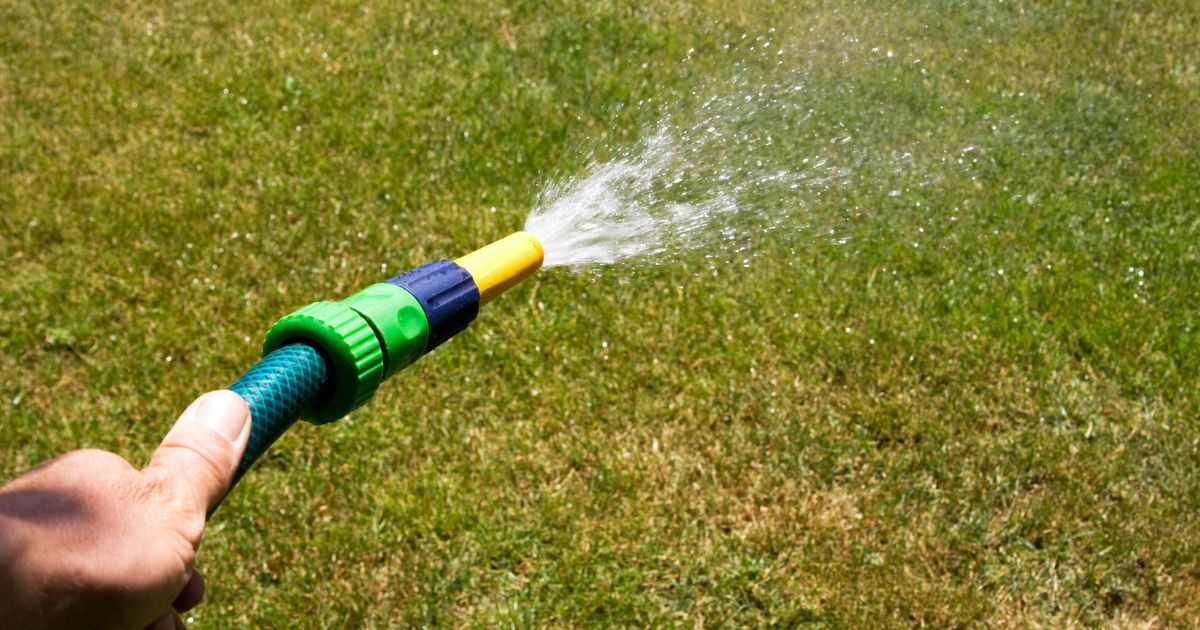
There is a quiet shift happening in how people think about their outdoor spaces. For years, the default approach to lawn care was control at all costs, using herbicides, pesticides, and synthetic fertilizers to create a uniform, weed-free look. That approach came with trade-offs that were easy to ignore when the focus stayed on appearance. Over time, more attention has moved toward what those chemicals actually do once they leave the spray bottle. They do not just disappear. They settle into the soil, linger on grass, move with water, and end up in places that were never part of the plan. A non-toxic yard is about managing it in a way that works with natural systems instead of constantly trying to override them.
Why Conventional Lawn Chemicals Raise Concerns
Herbicides like glyphosate-based products have been widely used because they are effective and easy to apply. The issue is not just whether they kill weeds, but what else they interact with along the way. These chemicals can leave residues on surfaces where people walk, sit, and spend time. Grass, soil, and dust become carriers. Contact does not require direct spraying. It can come from simply being in the environment where these substances have been applied.
Skin exposure, inhalation of fine particles, and incidental ingestion all become part of the equation. For anyone who spends time outdoors, especially close to the ground, that exposure adds up.
Ground-Level Exposure Is Easy to Overlook
Most outdoor spaces are used from the ground up. Sitting on the grass, walking barefoot, gardening, or spending time on a patio all involve close contact with surfaces that have been treated or affected by runoff. The closer someone is to the ground, the more direct that exposure becomes.
This is one of the reasons reducing chemical use in play areas matters. It is not about creating a perfectly controlled environment but removing the most direct sources of contact in the spaces where people spend the most time.
Pets Are Part of the Same Environment
Animals experience outdoor spaces differently. They move through grass, lie on treated surfaces, and then groom themselves. What ends up on their fur does not stay there. It gets ingested. This creates a different pathway of exposure that is easy to miss when focusing only on human interaction with the yard.
A toxin-free lawn reduces that risk without requiring constant monitoring. It simplifies things. Instead of wondering what might be on the ground or on your pet’s coat, the baseline becomes cleaner. That kind of simplicity is one of the real advantages of non-toxic yard care.
What Happens Beyond Your Yard Still Matters
Lawn chemicals do not stay confined to property lines. Rain and irrigation move them through the soil and into the drainage systems. From there, they can reach streams, ponds, and groundwater. This is how small, repeated applications across many properties can lead to broader environmental exposure.
Reducing chemical use at the individual level does not solve the entire problem, but it contributes to a different pattern. Less runoff means fewer contaminants entering shared water systems. It is a practical way to align personal choices with a larger impact.
Weeds Are a Symptom, Not Just a Problem
One of the biggest mindset shifts in non-toxic lawn care is seeing weeds differently. Instead of viewing them as random invaders, it helps to understand them as indicators of soil conditions. Compacted soil, low nutrient density, and poor microbial activity create an environment where certain plants thrive. Those plants are often labeled as weeds, but they are responding to the conditions already present.
Addressing the root cause changes the outcome over time. Healthier soil supports stronger grass and more balanced plant growth, which naturally reduces weed pressure. This does not happen overnight, but it creates a more stable system that requires less intervention in the long run.
Manual Weed Removal Still Works
There is no way around it, pulling weeds by hand or using simple tools is one of the most effective non-toxic methods available. It is direct, targeted, and does not introduce anything new into the environment. While it requires more effort than spraying, it also avoids the unintended consequences of chemical treatments.
Regular, small efforts keep weed growth manageable and prevent larger problems from developing. Over time, as soil conditions improve, the workload typically decreases. What starts as maintenance becomes more of a light upkeep routine.
Using Simple Solutions for Hard Surfaces
Not every area of a yard needs the same approach. Driveways, sidewalks, and cracks between pavers are places where vegetation is usually unwanted, and this is where simple household solutions can be useful. A basic vinegar-based spray can help manage weeds in these areas without introducing synthetic herbicides.
The key is to use these solutions intentionally. Vinegar sprays are non-selective, meaning they will affect any plant they touch. They work best in targeted applications where surrounding vegetation is not a concern. Used this way, they provide a practical alternative for maintaining clean edges and hard surfaces.
Soil Health Is the Long-Term Strategy
If there is one area worth focusing on, it is soil health. Compost, natural amendments, and organic matter improve soil structure, support beneficial microbes, and create conditions that allow desirable plants to thrive. This approach shifts the focus from reacting to weeds to building a system that is less prone to imbalance.
Healthy soil retains moisture more effectively, supports root development, and reduces the need for constant intervention. It becomes easier to maintain because it is working with natural processes.
Rethinking What a “Perfect” Lawn Looks Like
A completely uniform, weed-free lawn is a relatively modern expectation. In natural systems, diversity is normal. Allowing some plants, such as clover or dandelions, to grow in controlled ways can actually support soil health and benefit pollinators. These plants contribute to biodiversity and can coexist with grass without taking over when the system is balanced.
Adjusting expectations does not mean giving up on aesthetics. It means recognizing that a healthy yard may look slightly different from a chemically managed one. The trade-off is a space that supports more life, requires fewer inputs, and aligns better with long-term environmental health.
A Simple Non-Toxic Weed Spray That Gets the Job Done
For targeted weed control on hard surfaces, a straightforward mixture can be effective when used correctly. Combining one gallon of white vinegar with a tablespoon of a simple, fragrance-free liquid soap creates a solution that helps break down plant surfaces and dry them out. Spraying this directly onto weeds on a sunny, dry day improves effectiveness, as heat and sunlight enhance drying.
This approach works best for small, visible weeds rather than deep-rooted or widespread growth. It is important to apply it carefully, as it will affect any plant it comes into contact with. Used as a spot treatment, it can replace more aggressive chemical options for specific areas without introducing unnecessary exposure.
The Bigger Picture of Non-Toxic Yard Care
Creating a non-toxic yard is less about finding a single perfect solution and more about building a set of habits that work together. Reducing chemical inputs, improving soil health, using targeted weed-control methods, and adjusting expectations all play a role. None of these changes needs to happen all at once. Gradual shifts tend to be more sustainable and easier to maintain.
The result is a space that functions more like an ecosystem than a controlled surface. It supports the people and animals that use it, contributes less to environmental contamination, and requires fewer inputs over time. That is the real advantage. Not just avoiding chemicals, but creating a system that works without relying on them.
References
- Karr, C. J., Solomon, G. M., & Brock-Utne, A. C. (2007). Health effects of common home, lawn, and garden pesticides. Pediatric Clinics of North America, 54(1), 63–80, viii.https://doi.org/10.1016/j.pcl.2006.11.005
- Mohd Ghazi, R., Nik Yusoff, N. R., Abdul Halim, N. S., Wahab, I. R. A., Ab Latif, N., Hasmoni, S. H., Ahmad Zaini, M. A., & Zakaria, Z. A. (2023). Health effects of herbicides and their current removal strategies. Bioengineered, 14(1), 2259526.https://doi.org/10.1080/21655979.2023.2259526
- Pathak, V. M., Verma, V. K., Rawat, B. S., Kaur, B., Babu, N., Sharma, A., Dewali, S., Yadav, M., Kumari, R., Singh, S., Mohapatra, A., Pandey, V., Rana, N., & Cunill, J. M. (2022). Current status of pesticide effects on environment, human health and its eco-friendly management as bioremediation: A comprehensive review. Frontiers in Microbiology, 13, 962619.https://doi.org/10.3389/fmicb.2022.962619
- Sears, M., Walker, C. R., van der Jagt, R. H., & Claman, P. (2006). Pesticide assessment: Protecting public health on the home turf. Paediatrics & Child Health, 11(4), 229–234.https://www.ncbi.nlm.nih.gov/pmc/articles/PMC2528613/
- Panțiru, I., Ronaldson, A., Sima, N., Dregan, A., & Sima, R. (2024). The impact of gardening on well-being, mental health, and quality of life: An umbrella review and meta-analysis. Systematic Reviews, 13(1), 45.https://doi.org/10.1186/s13643-024-02457-9
- Kačergius, A., Gegeckas, A., & Gudiukaitė, R. (2025). Recent advances in soil health: Influences of organic carbon and microbiota. Biology, 14(5), 500.https://doi.org/10.3390/biology14050500


