
Why I Stopped Using Conventional Kitchen Sponges (And What I Use Instead)
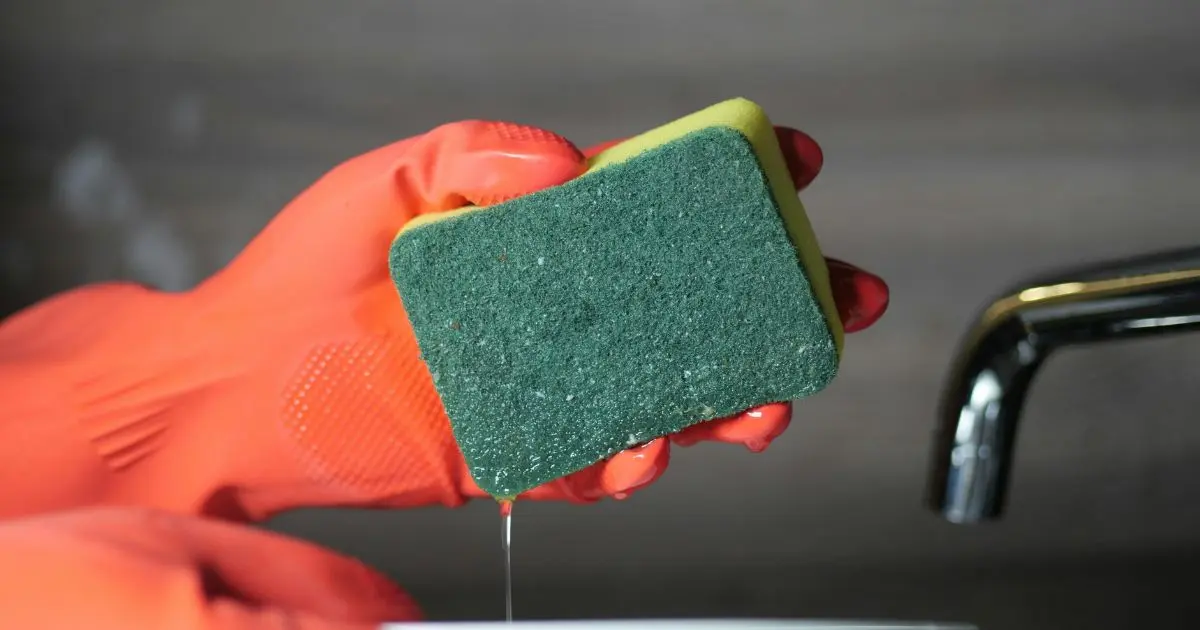
That sponge sitting next to your sink might look harmless. It scrubs dishes, wipes counters, and cleans up after cooking. But I stopped using conventional synthetic sponges for two reasons: bacteria and plastic.
Here’s why I made the switch, and how to make any kitchen scrubber last longer.
Why Kitchen Sponges Can Harbor Bacteria
Kitchen sponges are built to hold water. That’s what makes them useful for dishes, but it also means they stay damp for hours between uses.
Add food residue and grease, and you’ve created an environment where bacteria can multiply.
Research on household kitchen sponges has found that they can contain substantial microbial populations. It means a sponge is an environment where microbes accumulate if it isn’t dried and cleaned properly.
Rinsing isn’t enough. Food particles and moisture can stay trapped deep inside the material, even after you rinse it under the tap.
It’s Not Just What’s Growing in the Sponge: It’s What It’s Made Of
Most conventional sponges are made from synthetic, plastic-based foams and fibers, often with dyes, adhesives, or abrasive additives.
That doesn’t automatically make them hazardous. But every time you scrub a pan or squeeze the sponge, friction wears the material down, and some of what breaks off becomes microplastic particles.
We Already Have Enough Plastic in the Kitchen
Look around a typical kitchen: plastic containers, packaging, utensils, storage bags, bottles, and sponges.
No single item defines your home’s health. But they add up. I started asking one simple question about everything in my kitchen:
Does this product need to be made from plastic?
If the answer is no, a natural alternative is usually just as effective.
The Natural Loofah Swap
A natural loofah is one of the simplest sponge alternatives, and it’s not the same as the plastic mesh “loofahs” sold for bathing.
A real loofah comes from the dried, fibrous interior of the loofah plant (a type of gourd). Once dried, its natural texture works well for scrubbing dishes, sinks, and countertops.
The appeal is simple: you’re swapping a synthetic, plastic-based tool for a plant-derived one, without changing how you wash dishes.
Is a Natural Loofah More Hygienic?
Not automatically. A natural loofah can still harbor bacteria if it’s left wet or dirty.
It’s worth using the right care habits:
- Rinse thoroughly after every use
- Squeeze out excess water
- Dry completely somewhere with good airflow
- Replace it when it smells or looks worn
How to Make Your Sponge or Loofah Last Longer
Whether you use a loofah, sponge, or dishcloth, care matters:
- Rinse thoroughly after every use, don’t let food particles sit in the fibers
- Squeeze out excess water so it doesn’t stay saturated
- Let it dry completely: never leave it sitting in a puddle
- Use separate tools for dishes, counters, and raw meat cleanup
- Replace it regularly: odor or visible buildup means it’s time for a new one
Note: Cleaning removes dirt and many microorganisms. Sanitizing is a separate step to reduce microorganisms further when needed; a sponge alone doesn’t sanitize your kitchen.
What About Dishcloths?
A washable cotton or natural-fiber dishcloth is another solid option. Unlike a sponge, it can be fully washed and dried between uses, especially useful if you keep several in rotation for countertops.
But natural fiber alone doesn’t guarantee hygiene. A damp, dirty cloth is still a damp, dirty cloth. Cleaning and drying habits matter.
The Bottom Line
Your kitchen sponge probably isn’t the biggest source of plastic or chemical exposure in your home. But it’s an everyday product that stays wet, collects food particles, and wears down over time.
Switching to a natural loofah is:
- Inexpensive
- Simple: no change to your dish-washing routine
- One less plastic product in daily rotation
Frequently Asked Questions
Is a natural loofah more hygienic than a plastic sponge? Not automatically. A natural loofah can still harbor bacteria if left wet or dirty. The material matters less than how well you rinse, squeeze out water, and let it dry between uses.
Do kitchen sponges really contain microplastics? Conventional sponges are typically made from synthetic, plastic-based foam. As they wear down from scrubbing and squeezing, they can shed small plastic particles.
How often should I replace a kitchen sponge or loofah? Replace it as soon as it develops an odor, shows visible buildup, or starts to break apart. For most households, that’s every 1 to 4 weeks, depending on use.
What’s the difference between a natural loofah and a bath loofah? A natural loofah comes from the dried fibrous interior of the loofah plant, a type of gourd. The mesh “loofahs” sold for bathing are usually made of synthetic plastic netting, not the plant fiber.
Is cleaning the same as sanitizing? No. Cleaning removes dirt, grease, and many microorganisms. Sanitizing is a separate step that reduces microorganisms to safer levels and is typically done with a dedicated product, not a sponge alone.
References:
- Møretrø, T., Ferreira, V. B., Moen, B., Almli, V. L., Teixeira, P., Kasbo, I. M., & Langsrud, S. (2022). Bacterial levels and diversity in kitchen sponges and dishwashing brushes used by consumers. Journal of Applied Microbiology, 133(3), 1378–1391.https://doi.org/10.1111/jam.15621
- Luo, Y., Qi, F., Gibson, C. T., Lei, Y., & Fang, C. (2022). Investigating kitchen sponge-derived microplastics and nanoplastics with Raman imaging and multivariate analysis. Science of the Total Environment, 824, 153963.https://doi.org/10.1016/j.scitotenv.2022.153963
- Marotta, S. M., Giarratana, F., Calvagna, A., Ziino, G., Giuffrida, A., & Panebianco, A. (2019). Study on microbial communities in domestic kitchen sponges: Evidence of Cronobacter sakazakii and Extended Spectrum Beta Lactamase (ESBL) producing bacteria. Italian Journal of Food Safety, 7(4), 7672. https://doi.org/10.4081/ijfs.2018.7672
Keep updated on latest posts
-

Best Coffee Creamers at Target: Cleanest Options
If you are buying coffee creamer at Target, the ingredient list matters more than the pretty packaging on the front of the bottle. I went…
-

3 Ways I Use Thyme for Coughs and Colds Every Fall
When fall rolls around, and coughs, congestion, and sore throats start making their way through the house, I reach for an herb that has been…
-

Can Rosemary Aroma Improve Memory and Focus?
Rosemary is usually thought of as something you throw into a pan with potatoes, chicken, or vegetables. But this familiar herb may have another interesting…
-

Homemade Chicken Feet Bone Broth for Dogs
A collagen-rich, joint-supporting bone broth made with two ingredients — safe, simple, and something your dog will genuinely go crazy for Chicken feet bone broth…
One swap a week
Every week, one small change worth making, why it matters, and where to get it. Two minutes, then back to your life.