
The Non-Toxic Dad’s Biohacking Toolkit: Simple Habits and Tools We Actually Use
Biohacking can sound complicated. Cold plunges, wearables, supplement stacks, light panels, and endless optimization protocols make it seem like improving your health requires turning your life into a science experiment.
However, some of the most useful habits are also the simplest. Before buying another device, start with the basics: get outside, get natural light, breathe, move, sleep, and pay attention to your environment. Those fundamentals do most of the heavy lifting. From there, certain tools can be genuinely useful additions once they fit your routine and your budget. Here’s what you need to know.
Start With the Free Biohacks
The best biohacks don’t come with a price tag. Several of the habits that make the biggest difference cost nothing and are easy to build into a normal day. There’s no perfect routine required, just a few simple habits repeated consistently.
Catch the Morning Sun
Getting outside for natural light soon after waking is one of the most valuable free habits available. Light is one of the most important signals your body uses to keep its circadian rhythm aligned with the day-night cycle, which affects alertness during the day and how easily you wind down at night.
The practical version is simple. Step outside after waking and let your eyes take in natural daylight. Drink your coffee outside, walk the dog, or sit on the porch for a few minutes. It doesn’t need to be a workout or elaborate ritual, and this is about natural outdoor light.
Turn the Lights Down at Night
Morning light is only half the equation. Modern homes are filled with artificial light late into the evening, and exposure to bright light at night can affect melatonin, a hormone that helps regulate sleep timing.
A few simple adjustments help create a clearer transition into nighttime:
– Dim the lights after sunset when possible.
– Choose warmer, less intense lighting in the evening.
– Turn on night mode settings on your devices.
– Try blue-light-blocking glasses if you’re on screens late at night.
Get Outside and Get Grounded
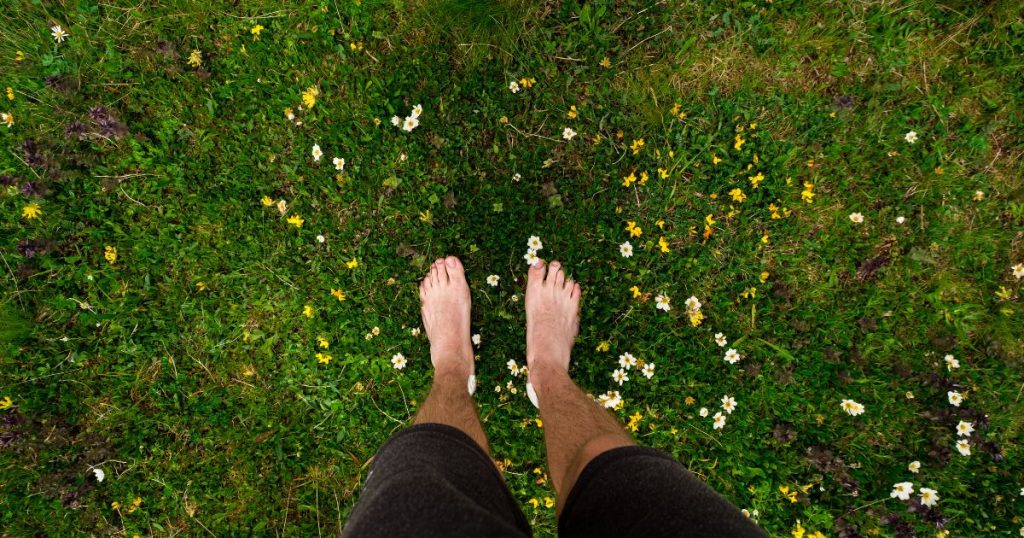
Grounding, or earthing, means making direct contact with the ground with bare skin, like walking barefoot on grass or sand. Some research has linked grounding to lower nighttime cortisol, improved sleep quality, and a shift in the autonomic nervous system away from a stressed, fight-or-flight state and toward a calmer, recovery-focused one.
There’s a practical way to put grounding to work for you. Try it during moments your body is already primed for stress, first thing in the morning before the day ramps up, or in the evening as a wind-down cue alongside dimmer lights. A few minutes barefoot on grass, sand, or soil are enough to start, and pairing them with slow breathing may reinforce the same calming shift both habits aim for. You don’t need a specialized mat, just a patch of grass or sand and a few free minutes.
Use the Stress Tool You Already Have
Your breath is the most accessible stress-management tool you own, and it requires no batteries or a subscription. Slow, controlled breathing can influence the autonomic nervous system and is commonly used to promote relaxation, especially in practices that emphasize longer exhalations. In simple terms, breathing out slower than you breathe in tells your body it’s safe to relax, switching on what’s called the parasympathetic nervous system, the body’s built-in “rest and calm down” mode.
This doesn’t need to be a long session. A few slow breaths before bed, during a stressful moment, or sitting in the car before walking into something tense is enough to create a deliberate pause.
Sweat It Out in a Sauna
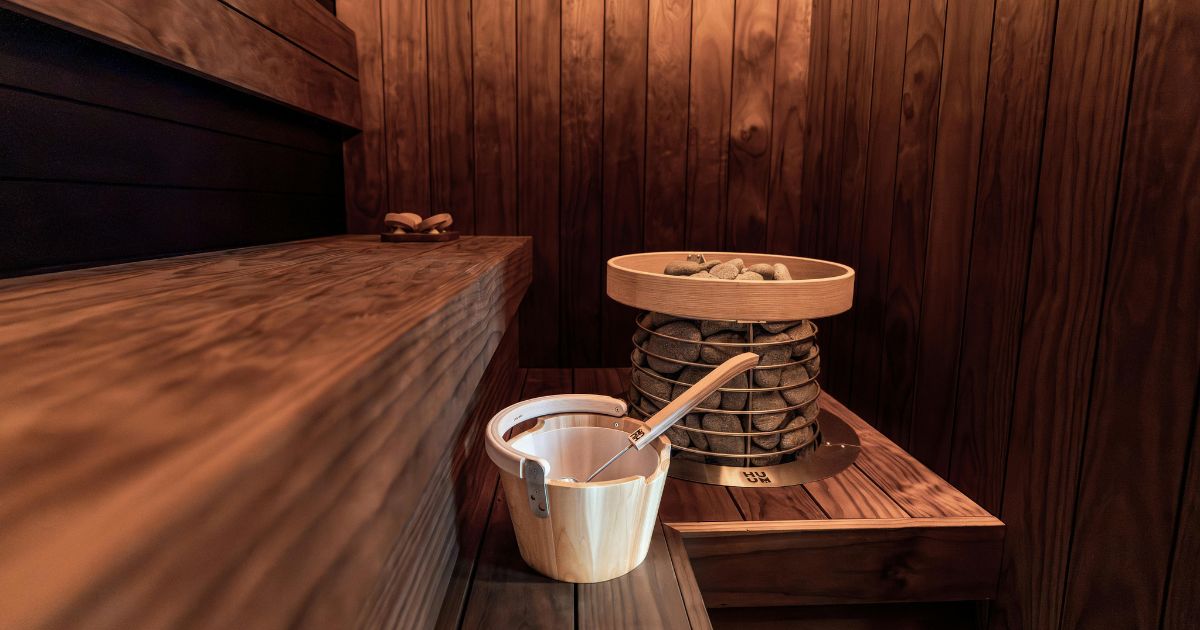
Sauna use has a long history across cultures and is commonly used for relaxation and recovery, with research also exploring links to cardiovascular and overall health. For everyday use, one of the simplest benefits is the dedicated time it gives you to slow down and disconnect from notifications and tasks.
You don’t need one at home. A gym or health club often has one available. Stay within your own tolerance, hydrate, and follow the facility’s safety guidelines.
The Tools We Actually Use
Once the fundamentals are in place, a few tools can earn a spot in the routine. The key is keeping the hierarchy straight: a device should complement healthy habits, not replace them.
LumeBox
LumeBox is a compact red and near-infrared light panel designed to make light therapy easier to incorporate into everyday life. Red and near infrared light are being studied for applications including tissue recovery and skin health, though results depend heavily on wavelength, dose, and use case.
Its biggest advantage is convenience. A device that’s too large or complicated tends to sit unused in a closet, while a compact panel can be used on sore joints and packed easily for travel.
WavWatch
WavWatch is a wearable built around preset frequency programs designed for sleep, stress, and everyday recovery. Each setting targets a specific need: a mode to help you wind down before bed, one to use during a stressful stretch of the day, and one built around general recovery after a workout or a long day.
Part of the appeal is its simplicity: choose a setting, wear it, and get on with your day. There’s no app to configure, no protocol to memorize, and no routine to build around it. If you want a low-effort way to support sleep, stress, or recovery without adding another task to your day, it’s an easy tool to fold into whatever you’re already doing.
Shielding Shop
Wireless devices and electromagnetic fields (EMFs) are worth a look, particularly in your bedroom and workspace, where you spend the most time. Shielding Shop makes shielded fabrics, canopies, and covers designed to reduce EMF exposure in those specific spaces.
A shielded canopy over your bed creates a lower-EMF zone during sleep, while shielded fabric covers can be placed over routers, laptops, or other devices in your workspace to reduce exposure at work. Combine these with simple habits like increasing distance from wireless devices and keeping them away from the bed overnight. You’ve got a more complete approach to lowering everyday EMF exposure in the rooms where you spend the most time.
You Don’t Need to Do Everything
Biohacking can quickly turn into another form of optimization anxiety, with a morning light protocol, a cold plunge, a sauna schedule, a supplement stack, and a dozen other things you’re supposedly doing wrong before breakfast. That’s not the goal here.
If you’re starting from scratch, begin with the free habits: get outside in the morning, move your body, take a few slow breaths when stress builds, dim the lights at night, and protect your sleep. These basics matter far more than any gadget.
From there, add one tool at a time and give yourself time to judge whether it’s genuinely useful before buying more.
The Non-Toxic Approach to Biohacking
Some of the most useful changes involve doing less: less artificial light at night, less time indoors, less constant stimulation, and less pressure to optimize everything at once.
Start with the free habits, build consistency before complexity, and experiment with tools that solve a real problem for you rather than ones that are simply trending. There’s no perfect biohacking routine, only the one you can realistically maintain.
Frequently Asked Questions
What is the easiest biohack to start with? Getting outside for natural light soon after waking is one of the simplest and most effective habits to start with, since it helps reinforce your circadian rhythm at no cost.
Do I need expensive gadgets to start biohacking? No. The most impactful habits, like morning sunlight, movement, slower breathing, and reducing light at night, are free. Tools like light panels or wearables can be useful additions later.
Is red light therapy effective? Red and near-infrared light are being studied for their effects on tissue recovery and skin health. Outcomes depend heavily on wavelength, dose, and the condition being addressed.
How do I avoid biohacking burnout? Start with free fundamentals, build consistency with a few simple habits, and add tools one at a time only when they solve a specific problem for you.
References:
- Siraji MA, Spitschan M, Kalavally V, Haque S. Light Exposure Behaviors Predict Mood, Memory, and Sleep Quality.Scientific Reports, 2023; 13(1):12425. doi:10.1038/s41598-023-39636-y. Available from:PubMed Central (PMCID: PMC10394000)
- Bortkiewicz, A. (2019). Health effects of Radiofrequency Electromagnetic Fields (RF EMF). Industrial Health, 57(4), 403–405. https://doi.org/10.2486/indhealth.57_400.PMID: 31378769;PMCID: PMC6685799
- Laukkanen, J. A., Laukkanen, T., & Kunutsor, S. K. (2018). Cardiovascular and other health benefits of sauna bathing: A review of the evidence. Mayo Clinic Proceedings, 93(8), 1111–1121.https://doi.org/10.1016/j.mayocp.2018.04.008
- Nash, T.R., Chow, E.S., Law, A.D., Fu, S.D., Fuszara, E., Bilska, A., Bebas, P., Kretzschmar, D., & Giebultowicz, J.M. (2019). Daily blue-light exposure shortens lifespan and causes brain neurodegeneration in Drosophila. NPJ Aging and Mechanisms of Disease, 5, Article 8. https://doi.org/10.1038/s41514-019-0038-6
PMID: 31636947; PMCID: PMC6797782 - Bedrosian, T.A., & Nelson, R.J. (2017). Timing of light exposure affects mood and brain circuits. Translational Psychiatry, 7(1), e1017. https://doi.org/10.1038/tp.2016.262
PMID: 28140399; PMCID: PMC5299389 - Bentley, T. G. K., D’Andrea-Penna, G., Rakic, M., Arce, N., LaFaille, M., Berman, R., Cooley, K., & Sprimont, P. (2023). Breathing practices for stress and anxiety reduction: Conceptual framework of implementation guidelines based on a systematic review of the published literature. Brain Sciences, 13(12), 1612.https://doi.org/10.3390/brainsci13121612
Keep updated on latest posts
-

Stuffed Delicata Squash with Sausage and Fresh Herbs
A one-pan fall dinner that uses the squash itself as the serving bowl, no peeling required, filled with savory sausage and fresh herbs for a…
-
Grounding and Earthing: Barefoot Walking and the Science
Hugging a tree barefoot might look a little out there, but there’s fascinating science behind reconnecting with the Earth. Grounding, also called earthing, is the…
-

Cleaning Out the Bathroom Cabinet: What to Look for in Everyday Personal Care Products
Personal care products are easy to overlook when you’re thinking about everyday chemical exposure. Soap, deodorant, lotion, toothpaste, and sunscreen are products we use regularly,…
-
What’s Really in Your Tea Bag? What to Know Before Your Next Cup
A cup of tea seems pretty simple: hot water, tea leaves, and a few minutes to let everything steep. But have you ever stopped to…
One swap a week
Every week, one small change worth making, why it matters, and where to get it. Two minutes, then back to your life.