

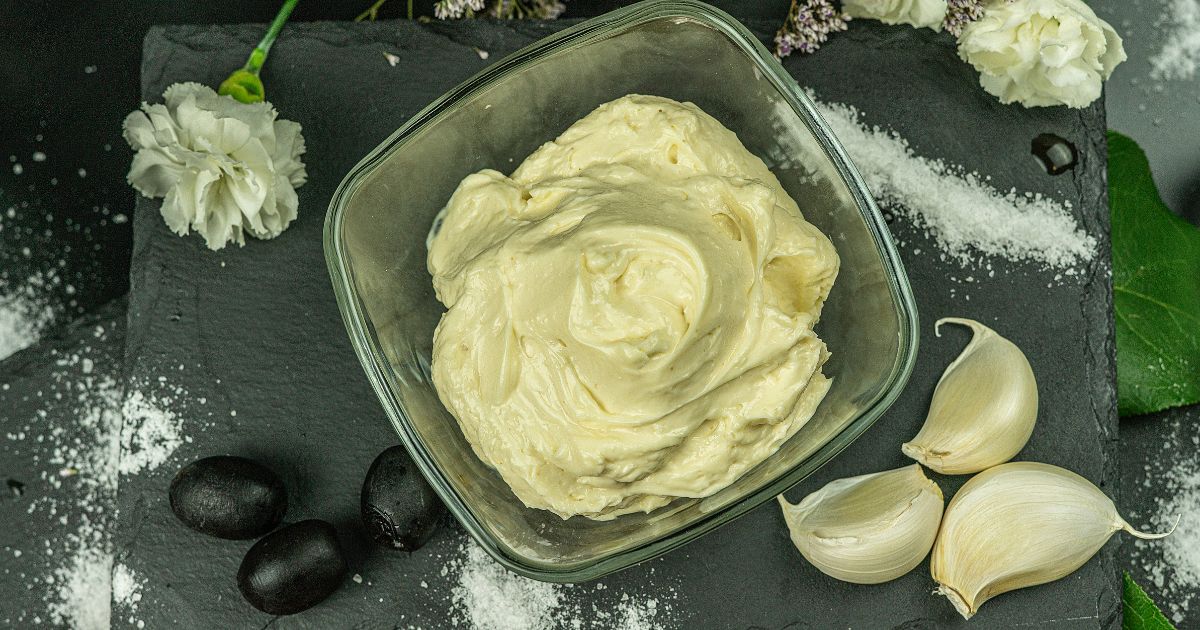
Mayonnaise is one of those condiments most people never think twice about. It’s in the fridge door next to the ketchup, it ends up on half of everything, and most people have never once looked at the ingredient label.
I used to be the same way. Then I did.
Most conventional mayo isn’t really made from food anymore; it’s industrial seed oils mixed with preservatives, stabilizers, gums, and artificial flavors, all of which have become normalized simply because they’re everywhere. Once you see that, it’s hard to unsee.
The good news: homemade mayonnaise takes under two minutes, uses five real ingredients, tastes dramatically better than anything from the store, and cuts out a significant amount of processed-food junk that most people eat daily without realizing it.
What’s Actually in Most Store-Bought Mayo
The primary issue is the oil.
Most major mayo brands use soybean oil, canola oil, sunflower oil, or safflower oil, not because they taste good, but because they’re cheap, shelf-stable, and profitable.
The problem isn’t just that these are processed oils. It’s how they’re processed. Industrial seed oils go through high-heat extraction, chemical solvent treatment, bleaching, and deodorizing before they end up in a jar. By the time they reach a grocery shelf, they’re far removed from anything natural, and they often sit in plastic containers under fluorescent lighting for months before anyone buys them.
These oils are also extremely high in omega-6 fatty acids. Omega-6 isn’t inherently bad in small amounts, but the modern diet is already overloaded with it from salad dressings, chips, crackers, fast food, sauces, frozen meals, bread, and protein bars. That imbalance, too much omega-6 relative to omega-3, is something many researchers link to chronic inflammation, oxidative stress, and metabolic dysfunction.
Mayonnaise is one of the most concentrated sources of seed oils in the average diet. Most people aren’t eating a tablespoon of straight soybean oil, but they’re eating mayo made primarily from it several times a week. That adds up.
On top of the oil, most conventional mayos also contain:
- Preservatives and stabilizers
- Modified food starch or gums
- “Natural flavors” (a catch-all term that doesn’t require ingredient disclosure)
- Artificial flavors in some formulas
None of those are necessary. Real mayo has five ingredients.
Why Homemade Mayo Is Different
When you make mayo at home, the ingredient list becomes completely recognizable:
- Egg
- Avocado oil
- Dijon mustard
- Sea salt
- Lemon juice or apple cider vinegar
That’s food. No gums, no mystery stabilizers, no oxidized seed oils aging in plastic, no “natural flavors.”
The taste difference is also immediate and unmistakable. Real mayonnaise tastes fresh, rich, and clean; it complements food rather than adding a processed aftertaste. Most people who make it once don’t go back.
Many people also notice less heaviness and better digestion after switching away from heavily processed oils. This isn’t surprising, given what those oils are; it’s worth paying attention to how your body responds.
Why Avocado Oil Specifically
Avocado oil is the right fat for homemade mayo for a few reasons.
It’s rich in monounsaturated fats, the same fat profile as olive oil, and significantly more stable than the highly processed polyunsaturated seed oils used in conventional mayo. Stability matters because oxidized fats generate compounds that increase oxidative stress and inflammation in the body. A fat that degrades easily under heat, light, and prolonged storage is a problem in a condiment that sits in your fridge for weeks.
Avocado oil also has a neutral, creamy flavor that doesn’t compete with or overpower whatever you’re eating it with.
One caveat on sourcing: cheap avocado oils are frequently diluted or poorly processed. Look for organic, purity-tested options. If you’re going to make a cleaner version, use ingredients that are actually worth using.
The 2-Minute Homemade Mayo Recipe
This is the method I use every time. It’s fast, reliable, and almost impossible to mess up once you get the technique down.
What you need:
- 1 medium egg (room temperature works best)
- 1 tsp Dijon mustard (preferably organic)
- ½ tsp sea salt
- ½ tsp apple cider vinegar or fresh lemon juice (lemon = brighter; ACV = more tang)
- 1 cup organic avocado oil
- Wide-mouth mason jar
- Immersion blender
How to make it:
- Crack the egg directly into the mason jar
- Add the mustard, salt, and vinegar or lemon juice
- Pour in the full cup of avocado oil
- Place the immersion blender all the way at the bottom of the jar before turning it on
- Blend without moving the blender until the bottom emulsifies. You’ll see it turn white and creamy within a few seconds
- Slowly pull the blender upward as the emulsion forms and thickens
- Once fully emulsified, store in an airtight glass container in the refrigerator
The most common mistake: moving the blender too quickly before the bottom has emulsified. Let it work from the bottom first, then slowly bring it up. That patience is what creates the right texture.
Use within 1–2 weeks and keep refrigerated.
Why Small Kitchen Swaps Matter More Than People Think
Modern food is already loaded with enough problems before you even start thinking about it: artificial dyes, pesticides, preservatives, plastic packaging, excess sugar, industrial oils, emulsifiers, and ultra-processed ingredients in products that look completely ordinary on the shelf.
When you make simple staples at home, you automatically reduce that exposure significantly. Homemade mayo is one of the easiest entry points because the improvement is immediate, the effort is minimal, and it tastes better than what it replaces.
Most people spend more time picking a restaurant on a delivery app than it takes to make an entire jar of this.
Frequently Asked Questions
Why is store-bought mayonnaise bad for you? Most conventional mayonnaise is made primarily from industrial seed oils such as soybean or canola oil, which undergo heavy processing, including high heat, chemical solvents, bleaching, and deodorizing. These oils are extremely high in omega-6 fatty acids, which, in excess relative to omega-3s, are associated with chronic inflammation and oxidative stress. Most store-bought mayo also contains preservatives, stabilizers, gums, and “natural flavors” that aren’t necessary in a real mayonnaise formulation.
What oil is best for homemade mayonnaise? Avocado oil is widely considered the best choice for homemade mayo. It’s rich in monounsaturated fats, which are more stable and less prone to oxidation than the polyunsaturated fats in the seed oils used in conventional mayo. It also has a neutral flavor that doesn’t compete with the other ingredients. Look for organic, purity-tested avocado oil, since cheap versions are often diluted or poorly processed.
How do you make mayonnaise with an immersion blender? Crack one egg into a wide-mouth mason jar, then add Dijon mustard, sea salt, and lemon juice or apple cider vinegar. Pour in one cup of avocado oil. Place the immersion blender at the bottom of the jar before turning it on. Let the bottom emulsify first, then slowly pull the blender upward until the entire mixture thickens into creamy mayo. The key is to keep the blender at the bottom initially and move it up slowly; this creates a stable emulsion.
How long does homemade mayonnaise last in the fridge? Homemade mayo made with a raw egg typically lasts 1–2 weeks when stored in an airtight glass container in the refrigerator. Because it contains no commercial preservatives, it doesn’t last as long as store-bought versions. Make smaller batches if you don’t use it frequently, and always use clean utensils when scooping to avoid introducing bacteria.
What are industrial seed oils, and why are they concerning? Industrial seed oils, such as soybean oil, canola oil, sunflower oil, safflower oil, and corn oil, are extracted from seeds using high-heat processing and chemical solvents, then bleached and deodorized before use. They’re extremely high in omega-6 polyunsaturated fats and prone to oxidation when exposed to heat, light, and prolonged storage. Many researchers associate the heavy presence of these oils in the modern diet, consumed far in excess of omega-3 fats, with elevated chronic inflammation and metabolic dysfunction.
Is homemade mayo healthier than store-bought? For most people following a low-tox, whole-food approach, yes. Homemade mayo made with avocado oil, egg, Dijon mustard, and sea salt contains no industrial seed oils, preservatives, stabilizers, or undisclosed flavor compounds. The fat profile is significantly better, the ingredient list is fully transparent, and the taste is noticeably fresher. It’s one of the highest-reward, lowest-effort kitchen swaps available.
References:
- Fornari Laurindo L, Dogani Rodrigues V, da Silva Camarinha Oliveira J, Leme Boaro B, Cressoni Araújo A, Landgraf Guiguer E, et al. Evaluating the effects of seed oils on lipid profile, inflammatory and oxidative markers, and glycemic control of diabetic and dyslipidemic patients: a systematic review of clinical studies. Frontiers in Nutrition. 2025;12:1502815. doi:10.3389/fnut.2025.1502815. PMID: 39996006; PMCID: PMC11849496.


