
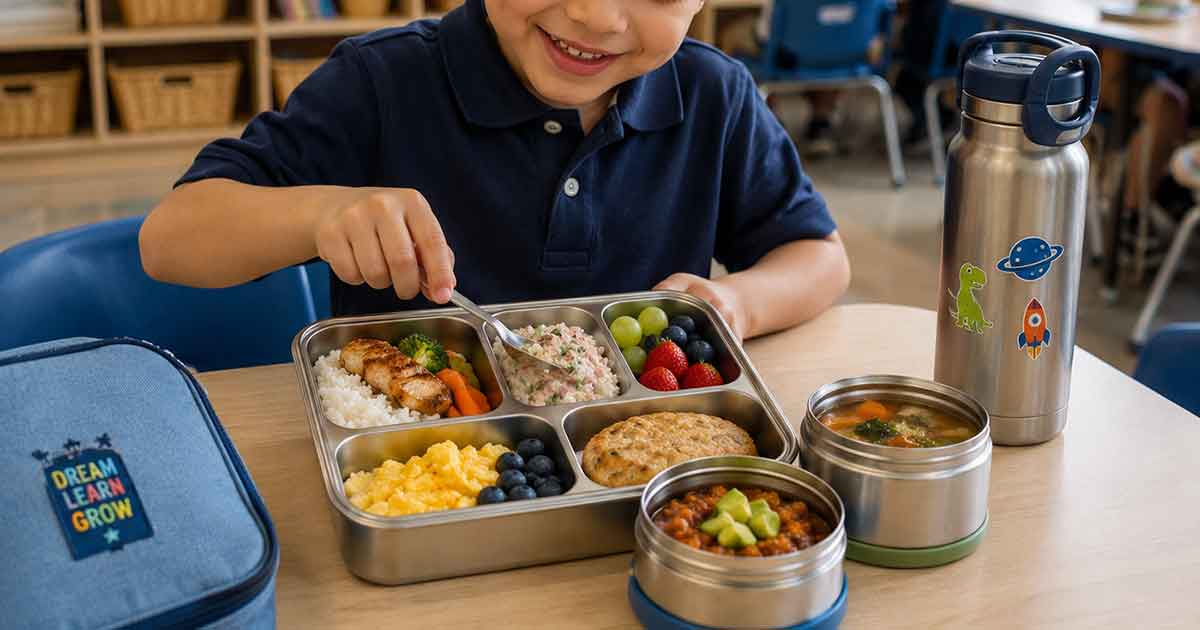
How to Pack a Cleaner School Lunch: Non-Toxic Swaps That Actually Make a Difference
Packing a school lunch seems simple: food in a container, drink, snack, done. But when you start looking at what that food actually touches for several hours a day, five days a week, the lunchbox becomes one of the easiest places to make meaningful, non-toxic swaps.
A few durable, reusable changes can replace the plastic-heavy products that show up in lunchboxes year after year. And because these items get used nearly every school day, better material choices pay off thousands of times over.
Here’s the setup we use, what we look for, and why these swaps are worth making.
Start With the Lunchbox: Stainless Steel Over Plastic
The lunchbox is the foundation, so it’s where to start.
Most traditional lunch containers and bento boxes are made primarily from plastic. Plastic is lightweight and inexpensive, but it also means food sits directly against a synthetic material for hours at a time. Heat, oil, and acidic foods can all increase the likelihood that chemicals will migrate from plastic into food, which matters more when the same container is used every single school day.
Stainless steel solves most of these concerns. A quality stainless steel lunchbox or bento:
- Doesn’t absorb food odors the way plastic does
- Doesn’t stain from tomato sauce or other colorful foods
- Doesn’t scratch, warp, or become permanently discolored
- Lasts years instead of needing seasonal replacement
Look for food-grade stainless steel and a design that fits how you actually pack food. A divided bento works well for keeping foods separated; a simple, deeper container handles leftovers and larger portions better.
One note: stainless steel isn’t microwave-safe. If your child needs to reheat lunch at school, you’ll need a strategy for that, but for most families, a thermos handles hot food better anyway (more on that below).
Water Bottles: Insulated Stainless Steel Over Plastic
The water bottle is a high-use item most people overlook when thinking about plastic exposure.
Consider how a school water bottle actually gets used: filled and emptied repeatedly, tossed into a backpack, dropped, exposed to heat, washed constantly, sometimes left sitting in a hot locker for hours. Over time, plastic scratches and degrades, and those worn surfaces are also harder to clean thoroughly.
An insulated stainless steel bottle eliminates these concerns. It keeps water cold for hours (a real advantage when a backpack spends the morning in a warm classroom), is far more durable than plastic, and doesn’t require drinking water to come into contact with synthetic material all day.
When shopping, pay attention to the lid. Even when the main bottle body is stainless steel, the cap, straw, or other components may still include plastic or silicone. The goal isn’t to eliminate every polymer but to minimize unnecessary plastic contact with food and water while choosing something durable enough to stay in rotation for years.
The Most Important Swap: A Stainless Steel Thermos for Hot Food
Heat and plastic are the combination I most want to avoid, and a stainless-steel insulated food thermos solves it completely for hot lunches.
A quality thermos lets you pack soups, chili, pasta, rice, oatmeal, curry, or dinner leftovers and keep them warm until lunchtime without putting hot food directly into plastic. It also expands what’s possible for school lunches: instead of defaulting to sandwiches and cold snacks daily, you can send leftovers from dinner or batch-cook soup on the weekend and portion it throughout the week.
For best results, preheat the thermos before adding food. Fill it with hot water, let it sit for a few minutes, empty it, then add the hot food. This single step makes a significant difference in how long food stays warm.
As with the lunchbox, check that the interior surface where food contacts the container is stainless steel and look for a lid and seals that can be fully disassembled and cleaned properly.
Replace Disposable Plastic Bags With Reusables
The sandwich bag seems small until you add it up: one for a snack, one for a sandwich, one for fruit, one for crackers, multiplied by five days a week, multiplied by an entire school year.
Better alternatives:
- Beeswax wraps: great for sandwiches, fruit, baked goods, and dry foods
- Small stainless steel containers: ideal for snacks, cut fruit, and vegetables
- Glass containers: good option for older kids and adults
Start with the bag type you use most often. The financial case is also real: reusable products have an upfront cost, but they pay for themselves quickly when they replace something purchased repeatedly throughout the year.
Don’t Forget What Goes Inside the Lunchbox
The container is only half of it.
A stainless steel lunchbox doesn’t make a highly processed lunch automatically healthy. The food itself still matters: protein, produce, healthy fat, and a carbohydrate that provides sustained energy rather than a spike-and-crash.
A practical approach:
- Chicken or beef with vegetables and rice
- Tuna salad with fruit
- Chili with avocado in the thermos
- Eggs with berries and a whole-food carbohydrate
- Leftovers from dinner in the thermos
You don’t need elaborate bento-box presentations every morning. The best lunch system is one you can actually maintain five days a week.
Choose Tuna Carefully: Mercury Matters for Kids
Tuna is a convenient, affordable, high-protein lunch staple, but not all tuna is equal when it comes to mercury.
Certain fish accumulate more mercury than others. The type of tuna and serving frequency both matter here.
Safe Catch tests every individual fish for mercury and applies a stricter limit than the FDA action level. That additional testing makes it a more cautious choice for families who include tuna regularly in kids’ lunches. It works for tuna salad, mixed with avocado, added to a wrap, or paired with vegetables and fruit.
When buying any seafood, look at the specific species rather than treating all fish as equivalent. Mercury levels vary considerably, making informed species choices lets you get the nutritional benefits of seafood while limiting unnecessary exposure.
Why Organic Food Matters
Children aren’t small adults when it comes to pesticide exposure; they’re genuinely more vulnerable.
Pound for pound, kids eat more food relative to their body weight than adults do. Their organs and nervous systems are still developing, and their detoxification pathways aren’t fully mature. That means the same pesticide exposure that represents a minor burden for an adult can have a disproportionate impact on a child’s developing biology.
The lunch box is where this becomes practically relevant. The foods most commonly packed in school lunches, fruit, vegetables, and grain-based snacks, are also some of the most heavily sprayed crops in conventional farming.
Where to prioritize organic in a school lunch:
- Strawberries, grapes, and apples: consistently among the highest-residue fruits; easy to swap organic at most grocery stores
- Bell peppers, cucumbers, and cherry tomatoes: common lunchbox vegetables that tend to carry significant pesticide loads
- Raisins and dried fruit: often overlooked, but concentrated fruit means concentrated residues
- Grain-based snacks: look for organic options that also avoid the refined oils and artificial additives common in conventional versions
If buying everything organic isn’t realistic, the Environmental Working Group’s annual Dirty Dozen list is a practical shortcut; it identifies the produce with the highest conventional pesticide loads and is updated each year. Prioritizing those specific items organically while accepting conventional produce as a lower-residue option is a sensible, budget-conscious approach.
Rethink the Snack: What Most Packaged Snacks Are Actually Made Of
The snack slot in the lunchbox is where ultra-processed food most reliably sneaks in.
Individually packaged crackers, fruit pouches, flavored rice cakes, granola bars, and cheese-flavored snacks are convenient. Still, most are built around refined flour, industrial seed oils, added sugar, artificial flavors, and long ingredient lists that have little to do with the food they’re imitating. A snack that looks like it contains fruit often contains more corn syrup than fruit. A “protein” snack bar often gets its protein from isolated powders rather than whole-food sources.
Children who consistently snack on ultra-processed foods are getting a significant portion of their daily calories from products engineered to be hard to stop eating, which is a different nutritional reality than snacking on actual food.
Simple whole-food alternatives that pack just as easily:
- A small container of nuts or seeds (age-appropriate)
- Hard-boiled eggs
- Cut fruit or vegetables with a dip like hummus or nut butter
- Full-fat cheese cubes or slices, ideally organic
- Olives in a small stainless steel container
- Homemade energy balls made with oats, nut butter, and honey
None of these requires special preparation beyond basic planning. They also tend to keep kids more satisfied between meals than snacks engineered for palatability rather than nutrition, which means fewer complaints about being hungry before lunch is even over.
The Cleaner School Lunch Checklist
- Stainless steel lunchbox or bento: food-grade, divided or single compartment
- Stainless steel insulated water bottle: check lid materials too
- Stainless steel insulated food thermos: for hot food without plastic contact
- Low-mercury tuna: Safe Catch or another brand with transparent testing
- Beeswax wraps: for sandwiches, fruit, and dry foods
- Small stainless steel or glass containers: for snacks and cut produce
- Organic fruit and vegetables: prioritize highest-residue items (EWG Dirty Dozen)
- Whole-food snacks: that don’t require individual plastic packaging
Frequently Asked Questions
What is the safest material for a school lunchbox? Stainless steel is the most commonly recommended material for school lunchboxes because it doesn’t absorb odors, doesn’t stain, doesn’t scratch or degrade the way plastic does, and doesn’t require the same considerations about heat and chemical migration. Food-grade stainless steel bento boxes and containers are durable enough to last years under daily school use. Glass is another safe option, but it is heavier and less practical for younger children.
Is it bad to put hot food in plastic containers for school lunch? Heat increases the likelihood that chemicals will migrate from plastic into food, which is why avoiding hot food in plastic containers is a common recommendation in health-conscious households. A stainless-steel insulated food thermos is the straightforward alternative; it keeps food warm until lunchtime without any hot food coming into contact with plastic at all. Preheating the thermos with hot water for a few minutes before filling it significantly improves temperature retention.
What tuna brand is lowest in mercury for kids? Safe Catch is a commonly recommended brand because it tests every individual fish for mercury and maintains a stricter limit than the FDA action level. For children, who are more vulnerable to mercury’s effects than adults, both the type of tuna and the frequency of servings matter. Light tuna generally contains less mercury than albacore, and choosing a brand with transparent, rigorous testing adds an extra layer of confidence for frequent servings.
Are beeswax wraps a good replacement for plastic bags? Yes, for most sandwich and snack applications. Beeswax wraps work well for sandwiches, fruit, baked goods, and dry foods. They’re reusable and compostable, eliminating the daily accumulation of single-use plastic bags. They’re not ideal for wet or heavily liquid foods, where a small stainless steel or glass container works better. Replacing the one or two bag types you use most often is the easiest way to start.
Does a stainless steel water bottle keep water cold long enough for school? An insulated stainless steel bottle keeps water cold for 12–24 hours, depending on the model and conditions, more than enough for a school day, even when a backpack spends time in a warm locker or classroom. The double-wall vacuum insulation that keeps drinks cold also means the outside of the bottle stays dry, which prevents condensation in the backpack.
How do I get kids actually to use and enjoy a non-toxic lunch setup? The most effective approach is involving them in choosing the lunchbox and water bottle. Kids are far more likely to use gear they picked themselves. Stainless steel options now come in a wide range of colors, designs, and formats that appeal to kids. Keeping the contents of the lunch familiar and enjoyable matters more than the container for day-to-day buy-in. A thermos full of a favorite soup or pasta from the night before is often more exciting for kids than a sandwich anyway.
Should I buy organic food for my child’s school lunch? Children are more vulnerable to pesticide exposure than adults because they eat more food relative to their body weight, and their developing organs and nervous systems are less equipped to process chemical exposures efficiently. Prioritizing organic for the highest-residue produce, strawberries, grapes, apples, bell peppers, cucumbers, cherry tomatoes, and dried fruit, makes the most meaningful difference without requiring an all-organic approach. The Environmental Working Group’s annual Dirty Dozen list is an updated, practical guide for identifying which conventionally grown produce carries the highest pesticide loads and is therefore most worth replacing with organic produce.
What are the healthiest snacks to pack in a school lunch? The best lunchbox snacks are whole foods that provide real nutrition rather than packaged products engineered for palatability. Good options include a small container of nuts or seeds, hard-boiled eggs, cut fruit or vegetables with hummus or nut butter, full-fat cheese cubes (ideally organic), olives, or homemade energy balls made from oats, nut butter, and honey. Most packaged snacks, even those marketed as healthy, are built around refined flour, seed oils, added sugar, and artificial flavors. Replacing even one packaged snack per day with a whole-food alternative adds up meaningfully over a school year.
References:
- Zhang X, Yu C, Wang P, Yang C. Microplastics and human health: Unraveling the toxicological pathways and implications for public health. Frontiers in Public Health. 2025;13:1567200. doi: 10.3389/fpubh.2025.1567200
- Snekkevik VK, Cole M, Gomiero A, Haave M, Khan FR, Lusher AL. Beyond the food on your plate: Investigating sources of microplastic contamination in home kitchens. Heliyon. 2024;10(15):e35022. doi: 10.1016/j.heliyon.2024.e35022
- Yee, M. S., Hii, L. W., Looi, C. K., Lim, W. M., Wong, S. F., Kok, Y. Y., Tan, B. K., Wong, C. Y., & Leong, C. O. (2021). Impact of microplastics and nanoplastics on human health. Nanomaterials, 11(2), 496.https://doi.org/10.3390/nano11020496
- Tsochatzis, E. D., Gika, H., Theodoridis, G., Maragou, N., Thomaidis, N., & Corredig, M. (2024). Microplastics and nanoplastics: Exposure and toxicological effects require important analysis considerations. Heliyon, 10(11), e32261.https://doi.org/10.1016/j.heliyon.2024.e32261
- Bae SJ, Shin KS, Park C, Baek K, Son SY, Sakong J. Risk assessment of heavy metals in tuna from Japanese restaurants in the Republic of Korea. Annals of Occupational and Environmental Medicine. 2023;35:e3. doi:10.35371/aoem.2023.35.e3. PMID: 36925630; PMCID: PMC10011450.
- Vitale M, Costabile G, Testa R, D’Abbronzo G, Nettore IC, Macchia PE, Giacco R. Ultra-processed foods and human health: A systematic review and meta-analysis of prospective cohort studies. Adv Nutr. 2024 Jan;15(1):100121. doi: 10.1016/j.advnut.2023.09.009. Epub 2023 Dec 18. PMID: 38245358; PMCID: PMC10831891.1
- PAN UK. (n.d.). PFAS – the ‘Forever Chemicals’. Pesticide Action Network UK. Retrieved fromhttps://www.pan-uk.org/pfas-forever-chemicals/
Keep updated on latest posts
-

3 Kids’ Clothing Types I’d Think Twice About at Target
Kids’ clothing seems simple until you start looking at what actually goes into making a garment perform a certain way. A T-shirt can be designed…
-
The Cream Cheese Ingredient You May Want to Rethink
Cream cheese seems like one of those foods that should be simple. Milk, cream, salt, maybe a culture, and that’s about it. But flip over…
-
Could Choosing Different Fruits and Vegetables Support Fertility?
When you’re trying to improve fertility, the conversation usually turns to hormones, supplements, sleep, stress, exercise, alcohol, and overall diet. There’s another piece worth considering,…
-
Ricotta Raspberry Toast: An Easy 5-Minute Breakfast
Some mornings you want something that feels a little special without any actual effort. This is that breakfast. Creamy ricotta, sweet-tart raspberries, and a scatter…
One swap a week
Every week, one small change worth making, why it matters, and where to get it. Two minutes, then back to your life.