
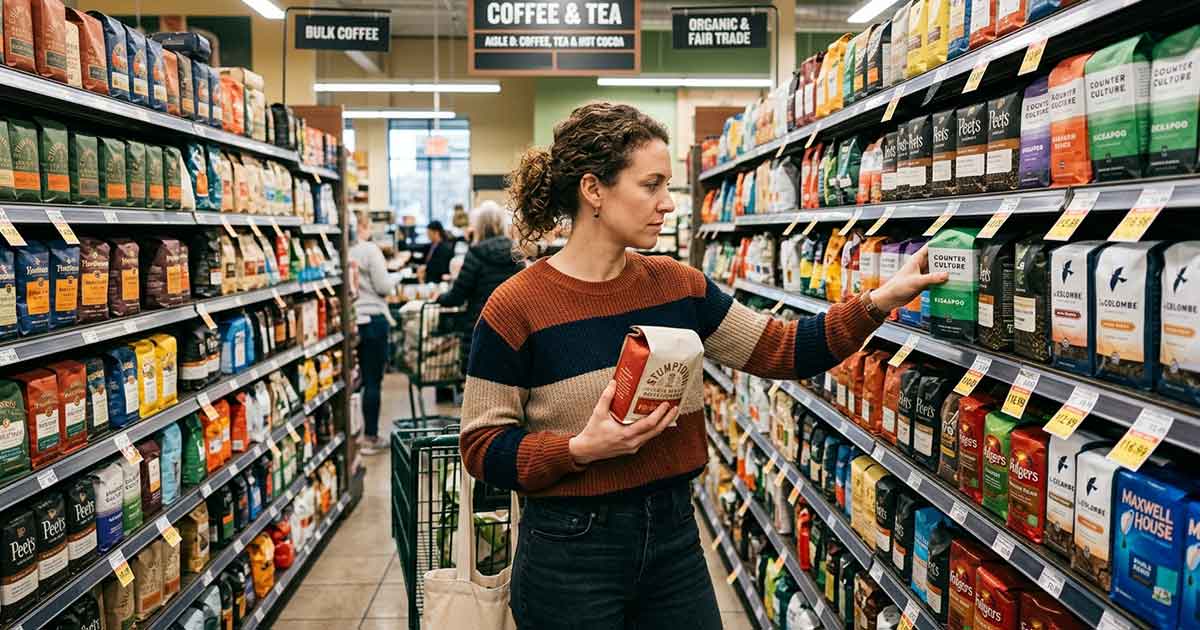
Before You Buy Coffee, Check These 4 Things
Coffee is one of those everyday products most people buy without giving much thought to where it comes from or how it is produced. You pick up a bag at the grocery store, check the roast, maybe look at the price, and put it in the cart. If coffee is something you drink every day, though, there are a few other details worth paying attention to.
From how the beans were grown to how their origin is documented and whether the finished product has been tested for contaminants, the label can tell you more than you’d expect. You don’t need to become a coffee expert or spend an hour reading every bag in the store. A few specific things can help narrow down your choices. Here are four factors worth looking for when choosing coffee, especially if you drink several cups a day.
-
Look for Certified Organic Coffee
Coffee is an agricultural product, which means the beans are grown using farming practices that can involve pesticides and other agricultural chemicals. Conventional coffee production can involve synthetic pesticides, herbicides, and fertilizers, whereas certified organic production follows specific standards governing which substances and farming practices are allowed.
For shoppers trying to reduce unnecessary exposure to agricultural chemicals, an organic certification is one straightforward detail to look for on the package. In the United States, the USDA Organic seal indicates that the product has been produced and handled in accordance with USDA organic standards and has undergone the required certification process. That distinction matters, since words like natural, clean, or chemical-free on a package don’t provide the same standardized assurance.
It’s also worth noting that organic certification does not mean what it claims to mean. Organic doesn’t mean a crop is grown without any pesticides whatsoever, since organic agriculture permits certain naturally derived and synthetic substances under specific conditions. The practical takeaway is simpler: if reducing exposure to conventional agricultural chemicals is a priority, a legitimate organic certification gives you a clearer standard than marketing language alone.
Coffee is also a product in which the agricultural stage matters, as the beans are ultimately roasted, ground, and brewed into something consumed regularly. While roasting can alter or reduce some compounds present in green coffee, it shouldn’t be assumed that it automatically eliminates all residues or contaminants. Choosing coffee from producers who follow clearly defined agricultural standards gives you more information about what actually went into producing the beans.
-
Consider the Coffee’s Acidity
Coffee naturally contains a variety of acids, and those compounds contribute to its flavor, aroma, and overall character. For some people, drinking coffee can be associated with digestive discomfort, particularly when consumed in large amounts or on an empty stomach.
If regular coffee leaves you with stomach discomfort, heartburn, or indigestion, the coffee’s acidity may be one factor to consider, though it’s not necessarily the only one. When shopping, you may come across products marketed as low-acid. These coffees are generally processed or selected in ways intended to produce a less acidic cup. Some companies also provide measured pH information, though pH alone doesn’t tell the entire story about how a particular coffee will affect an individual’s digestive system.
Coffee can also contribute to tooth staining. If you’re drinking several cups throughout the day, pay attention to how your coffee affects your body, and discuss any persistent digestive or dental concerns with a qualified professional.
-
Choose Single-Origin Coffee
Single origin is another term worth understanding when you’re standing in front of a wall of coffee bags. In general, single-origin coffee comes from a specific geographic origin rather than a blend of beans from multiple countries or regions. Depending on the producer, that origin might refer to a country, region, estate, farm, or cooperative.
Why does that matter? Traceability. The more specific the origin information is, the easier it becomes to understand where the coffee came from and learn more about the people and agricultural practices involved in producing it.
That doesn’t automatically make every single-origin coffee superior to every blend. Blends can be intentionally created for flavor, consistency, and other reasons, and coming from multiple origins doesn’t mean a coffee was poorly produced. The useful distinction here is transparency. A bag that provides information about its origin gives consumers more context than a product with only a generic roast description. Single-origin labeling can also make it easier to explore how growing conditions, altitude, soil, processing methods, and roasting influence the flavor of the finished coffee.
-
Look for Testing for Mold and Mycotoxins
Mold and mycotoxins are other concerns that frequently come up when discussing coffee quality. Coffee is an agricultural commodity, and like many plant-based foods, it can be susceptible to fungal growth under certain conditions. Mycotoxins are substances produced by certain fungi, and their presence in food is a legitimate food safety concern.
The actual risk depends on factors including growing conditions, harvesting, processing, storage, transportation, and quality-control practices. This is where testing becomes useful. Rather than relying on vague claims such as mold-free or clean coffee, look for companies that explain what they test for, how they test, and whether those standards apply to their finished products or ingredients. A company that publishes information about its quality-control process gives consumers something concrete to evaluate.
It’s also worth remembering that a testing claim isn’t automatically proof that a product is completely free of every possible contaminant, since testing methods have detection limits and different labs and standards can vary. Still, documented testing provides more useful information than marketing language alone.
Why These Four Things Matter If You Drink Coffee Every Day
Coffee can be a perfectly ordinary part of a diet, and research has associated moderate coffee consumption with a variety of health outcomes. The point is that when something becomes part of your daily routine, the product’s quality and sourcing are worth considering.
Think about how often you drink coffee in a month. For someone having one cup a few times a week, the purchasing decision may not feel particularly important. For someone who drinks coffee every morning or several cups throughout the day, the choice becomes a repeated exposure and a regular part of their diet. That makes transparency more useful.
Instead of looking only at roast level, flavor notes, or price, you can ask a few basic questions:
How was the coffee grown?
Where did it come from?
What does the company actually test for?
Does the product provide enough information for me to make an informed decision?
What About the Health Claims Around Coffee
Coffee is chemically complex, and its effects depend on the individual, the amount consumed, the preparation method, and the overall diet and lifestyle.
Caffeine can improve alertness and reduce fatigue, but excessive amounts can contribute to jitteriness, anxiety, digestive symptoms, or disrupted sleep in some people. If you’re drinking several cups a day, your total caffeine intake is worth considering alongside the beans’ quality and sourcing. People particularly sensitive to caffeine may also want to consider decaffeinated options.
One Coffee That Checks These Boxes
One coffee brand that meets the four criteria discussed here is Lifeboost Coffee. The company markets its coffee as organic and single-origin and provides information about its approach to acidity and testing. For readers who want to explore the brand, its sourcing, and quality claims, we’ve put together a Non-Toxic Dad offer via the link below.
Shop Lifeboost Coffee:http://lifeboostcoffee.com/nontoxicdad
The Bottom Line
Organic certification provides information about agricultural practices, single-origin labeling improves traceability, lower-acid options may be useful for people who experience digestive discomfort, and transparent testing provides additional information about quality control.
None of these factors makes one coffee universally right for everyone, but together they give you a practical framework for evaluating what you’re putting in your cup. The next time you reach for a bag of coffee, take an extra minute to look past the front label. Knowing where the beans came from, how they were grown, and what the company does to verify their quality can make your everyday coffee choice a little more informed.
Frequently Asked Questions
Does organic coffee really matter if you drink it every day? For daily drinkers, organic certification offers a standardized way to reduce exposure to conventional agricultural pesticides and herbicides, since repeated daily consumption makes sourcing more relevant.
What does single-origin coffee actually mean? Single-origin coffee comes from a single defined geographic source, such as a country, region, estate, farm, or cooperative, rather than being blended from beans grown in multiple locations, which gives shoppers greater traceability into how and where the coffee was produced.
Is low-acid coffee actually better for digestion? Low-acid coffee may be more comfortable for people who experience heartburn or indigestion from regular coffee. Acidity is just one of several factors, including serving size and whether it’s consumed on an empty stomach, so persistent symptoms are worth discussing with a professional.
Does coffee contain mold or mycotoxins? Coffee is an agricultural product that can be susceptible to fungal growth under certain conditions, but the actual risk depends on growing, harvesting, processing, and storage practices. Companies that publish specific testing information provide more useful assurance than vague, clean-coffee marketing claims.
Is coffee actually healthy to drink every day? Research has associated moderate coffee consumption with a variety of health outcomes. Still, individual response depends on total caffeine intake, sensitivity, preparation method, and overall diet.
References:
- Casas-Junco, P. P., Ragazzo-Sánchez, J. A., Ascencio-Valle, F. J., & Calderón-Santoyo, M. (2017). Determination of potentially mycotoxigenic fungi in coffee (Coffea arabica L.) from Nayarit. Food Science and Biotechnology, 27(3), 891–898.https://doi.org/10.1007/s10068-017-0288-7
- Ponder, A., Krakówko, K., Kruk, M., Kuliński, S., Magoń, R., Ziółkowski, D., Jariene, E., & Hallmann, E. (2025). Organic and conventional coffee beans, infusions, and grounds as rich sources of phenolic compounds in coffees from different origins. Molecules, 30(6), 1290.https://doi.org/10.3390/molecules30061290
Keep updated on latest posts
-
Before You Buy Coffee, Check These 4 Things
Coffee is one of those everyday products most people buy without giving much thought to where it comes from or how it is produced. You…
-

How to Lower Cortisol Naturally: 7 Simple Ways to Manage Stress
Cortisol is often talked about as if it were something we need to get rid of, but it’s actually an essential hormone. It helps regulate…
-

Fall Butternut Squash Bisque with Toasted Pumpkin Seeds
Butternut squash bisque is a creamy fall soup made by roasting butternut squash, then blending it with broth, warm spices, and a splash of coconut…
-
3 Nutrient-Dense Foods Worth Adding to Your Cart
A trip to Target can mean many things, depending on what you’re shopping for. Maybe you’re grabbing household essentials, picking up a few things for…
One swap a week
Every week, one small change worth making, why it matters, and where to get it. Two minutes, then back to your life.