
Safer Food Storage: What to Use Instead of Plastic
For most people, food storage is automatic. Cover the leftovers with plastic wrap. Transfer lunch into a plastic container. Grab a bag from the drawer. It’s fast, familiar, and rarely questioned.
But storage materials aren’t simply passive barriers between your food and the refrigerator. Depending on the material, the food type, the temperature, and how long they’re in contact, substances from food-contact materials can migrate into what you eat.
Why “BPA-Free” Isn’t the End of the Conversation
The most common assumption in food storage is that BPA-free plastic is safe plastic. That’s an oversimplification worth addressing directly.
BPA became widely known because of concerns about its hormone-like activity in the body. Manufacturers responded by replacing it, but replacing one chemical doesn’t automatically eliminate the concern. A 2014 study published in Environmental Health Perspectives found that many products marketed as BPA-free still showed estrogenic activity under testing conditions.
The more useful question isn’t “does this say BPA-free?” It’s “what’s actually touching my food, under what conditions, and for how long?”
Three factors increase migration from food-contact materials:
- Heat: the most significant variable
- Acidity: tomato, citrus, and vinegar-based foods are more reactive
- Duration: days of contact versus hours
That’s why the same plastic container you’d use for a dry snack shouldn’t automatically be the one you reheat soup in. Those are two different jobs that may call for different materials.
The Microwave Is Where It Matters Most
If there’s one place food storage deserves the most attention, it’s the microwave.
Heat increases the migration of substances from food-contact materials. A container that’s adequate for cold storage isn’t necessarily appropriate for reheating. The simple rule: transfer food to a glass or ceramic before heating, even if the original container is marked “microwave-safe.”
“Microwave-safe” means the container won’t warp or melt, not that it won’t release anything into your food under heat. It’s a stability rating, not a safety guarantee.
What to Use Instead: The New Storage System
You can replace products as they wear out, and make better choices for the jobs that matter most.
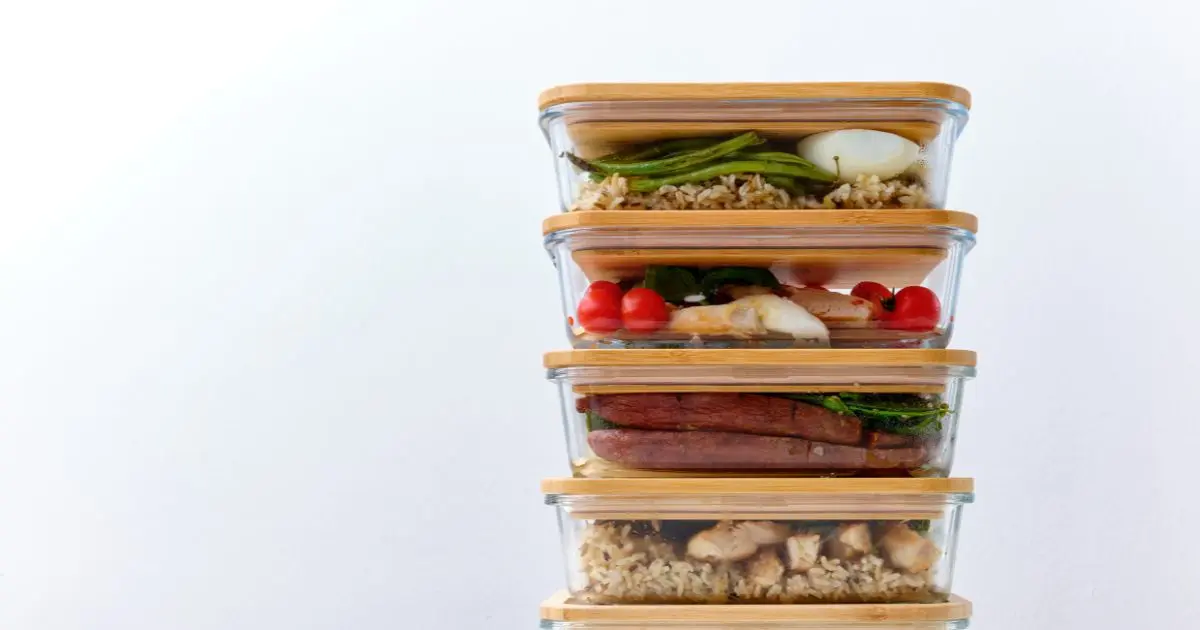
Glass Containers with Glass Lids
Glass is the most versatile upgrade in the kitchen. It’s nonporous, doesn’t absorb odors, doesn’t react with acidic or fatty foods, and moves from refrigerator to microwave to table without changing what it is.
The lid matters too. Standard glass containers with plastic lids still have plastic touching the food’s surface. Glass-lidded containers eliminate that contact. If you’re not ready to replace lids, a sheet of unbleached parchment paper between the food and a plastic lid works as a simple interim solution.
Stainless Steel Containers
Stainless steel is durable, doesn’t leach chemicals, and handles years of daily use without degrading. It’s particularly useful for:
- Packed lunches
- Snacks and dry foods
- Food that travels
One practical note: stainless steel doesn’t go in the microwave. That’s not a drawback; it just means separating storage from reheating, which is good practice anyway.
Food-Grade Silicone Bags
Reusable silicone bags are a practical replacement for single-use plastic storage bags. They work well for:
- Cut fruit and vegetables
- Sandwiches and snacks
- Freezer storage
The keyword is food-grade: not all silicone products are manufactured for food contact. Check that what you’re buying is explicitly labeled for food use, and follow the manufacturer’s temperature limits.
Beeswax Wraps
For covering bowls, wrapping produce, or keeping half an avocado fresh, beeswax wraps eliminate the need for plastic wrap. They’re reusable and compostable. They’re not appropriate for raw meat, hot foods, or the dishwasher, but for everyday produce and pantry items, they’re one of the simplest swaps available.
Plain Paper for Dry Goods
Not everything needs an airtight container. Bread, baked goods, and similar dry items can often be stored in a simple paper bag without any plastic involved. Check that packaging labeled “compostable” doesn’t include coatings or additives that make it less suitable for food contact than it appears to be.
Rethink Aluminum Foil Too
Aluminum foil tends to get overlooked in the food storage conversation, but it deserves a mention.
Research has shown that aluminum migration into food increases with acidity, salt content, and temperature. Acidic foods such as tomato sauce, citrus, and marinated dishes are the worst match for direct, prolonged contact with aluminum foil.
For those applications, a glass container is the better choice. Foil still has a place in the kitchen for lower-risk uses, but using it automatically for everything is a habit worth breaking.
The Priority Table: Where to Start
| Situation | Old Default | Better Option |
| Reheating leftovers | Plastic container in the microwave | Glass or ceramic dish |
| Packing lunch | Disposable plastic bag | Stainless steel or silicone bag |
| Covering bowls in the fridge | Plastic wrap | Beeswax wrap or glass lid |
| Storing hot leftovers | Plastic container immediately | Cool first, then glass |
| Acidic foods (tomato, citrus) | Aluminum foil or plastic | Glass container |
| Freezer storage | Disposable plastic bag | Freezer-safe glass or silicone |
You Don’t Need to Throw Out What You Have
The most practical advice on food storage is also the most overlooked: don’t empty the cabinet and start over.
Discarding functional plastic containers immediately creates unnecessary waste and expense. Use what you have until it reaches the end of its life. A container that’s cracked, heavily scratched, persistently smells, or has been microwaved hundreds of times is a reasonable candidate for replacement.
As items need replacing, redirect toward glass, stainless steel, or food-grade silicone. The transition happens naturally without requiring a single dramatic overhaul.
Frequently Asked Questions
Is it safe to store food in plastic containers? Plastic is not the safest choice for storing food, especially when the food is hot, fatty, or acidic. Chemicals from some plastics can migrate into food, and heat can increase that migration. For everyday food storage, glass is a better option because it is more stable and does not raise the same concerns as plastic. When possible, store food in glass containers and avoid heating food in plastic altogether.
What does BPA-free actually mean? BPA-free means the product was manufactured without bisphenol A, a chemical associated with hormone-disrupting effects. However, it doesn’t mean the product contains no biologically active compounds; research has found that some BPA-free plastics still show estrogenic activity under test conditions. BPA-free is a useful label but not a guarantee of chemical inertness, which is why reducing overall plastic contact with food, especially under heat, remains a reasonable goal.
What are the safest food storage containers? Glass and stainless steel are consistently regarded as the safest food storage materials because they’re chemically stable, don’t react with acidic or fatty foods, and don’t degrade in ways that increase chemical release over time. Food-grade silicone is considered safe for most storage applications when used within the manufacturer’s temperature guidelines. For heating, glass and ceramic are the preferred options.
Why shouldn’t you microwave food in plastic containers? Heat increases the migration of substances from food-contact materials into food. Even containers labeled “microwave-safe” are rated for stability, meaning they won’t melt or warp, rather than a guarantee that nothing transfers into food. Glass and ceramic don’t have the same heat-related migration concerns, making them better choices for reheated food.
Is aluminum foil safe to use for food storage? Research has shown that aluminum migration into food increases with acidity, salt, and temperature. Acidic foods like tomato sauce, citrus-based dishes, and marinades are poor matches for prolonged direct contact with foil. For those applications, a glass container is a better choice.
Are beeswax wraps actually a good replacement for plastic wrap? For covering bowls, wrapping whole produce, and similar everyday applications, yes. Beeswax wraps are reusable, compostable, and eliminate single-use plastic for a range of common kitchen tasks. They’re not appropriate for raw meat, hot foods, or the dishwasher. For those situations, a glass container with a lid or a food-grade silicone bag is more suitable.
References:
- Zhang X, Yu C, Wang P, Yang C. Microplastics and human health: Unraveling the toxicological pathways and implications for public health. Frontiers in Public Health. 2025;13:1567200. doi: 10.3389/fpubh.2025.1567200
- Snekkevik VK, Cole M, Gomiero A, Haave M, Khan FR, Lusher AL. Beyond the food on your plate: Investigating sources of microplastic contamination in home kitchens. Heliyon. 2024;10(15):e35022. doi: 10.1016/j.heliyon.2024.e35022
- Yee, M. S., Hii, L. W., Looi, C. K., Lim, W. M., Wong, S. F., Kok, Y. Y., Tan, B. K., Wong, C. Y., & Leong, C. O. (2021). Impact of microplastics and nanoplastics on human health. Nanomaterials, 11(2), 496.https://doi.org/10.3390/nano11020496
- Tsochatzis, E. D., Gika, H., Theodoridis, G., Maragou, N., Thomaidis, N., & Corredig, M. (2024). Microplastics and nanoplastics: Exposure and toxicological effects require important analysis considerations. Heliyon, 10(11), e32261.https://doi.org/10.1016/j.heliyon.2024.e32261
- Jackson JS, Rout P. Aluminum Toxicity. StatPearls [Internet]. Treasure Island (FL): StatPearls Publishing; 2025 Jan–. Updated 2024 Oct 26. PMID: 39536138.
- Ali Sultan SA, Ahmed Khan F, Wahab A, Fatima B, Khalid H, Bahader A, Safi SZ, Selvaraj C, Ali A, Alomar SY, Imran M. Assessing Leaching of Potentially Hazardous Elements from Cookware during Cooking: A Serious Public Health Concern. Toxics. 2023;11(7):640. Published 2023 Jul 24. doi:10.3390/toxics11070640. PMID: 37505605; PMCID: PMC10386729.
- Bryliński Ł, Kostelecka K, Woliński F, Duda P, Góra J, Granat M, Flieger J, Teresiński G, Buszewicz G, Sitarz R, Baj J. Aluminium in the Human Brain: Routes of Penetration, Toxicity, and Resulting Complications. Int J Mol Sci. 2023;24(8):7228. Published 2023 Apr 13. doi:10.3390/ijms24087228. PMID: 37108392; PMCID: PMC10139039.
Keep updated on latest posts
-
Non-Toxic Cleaning: The Old Way vs the New Way to Clean Your Home
For decades, we have been taught that a clean home should smell like chemicals. Spray the counters, disinfect the bathroom, wipe everything down, and finish…
-
Safer Food Storage: What to Use Instead of Plastic
For most people, food storage is automatic. Cover the leftovers with plastic wrap. Transfer lunch into a plastic container. Grab a bag from the drawer….
-
Before You Buy Coffee, Check These 4 Things
Coffee is one of those everyday products most people buy without giving much thought to where it comes from or how it is produced. You…
-

How to Lower Cortisol Naturally: 7 Simple Ways to Manage Stress
Cortisol is often talked about as if it were something we need to get rid of, but it’s actually an essential hormone. It helps regulate…
One swap a week
Every week, one small change worth making, why it matters, and where to get it. Two minutes, then back to your life.