
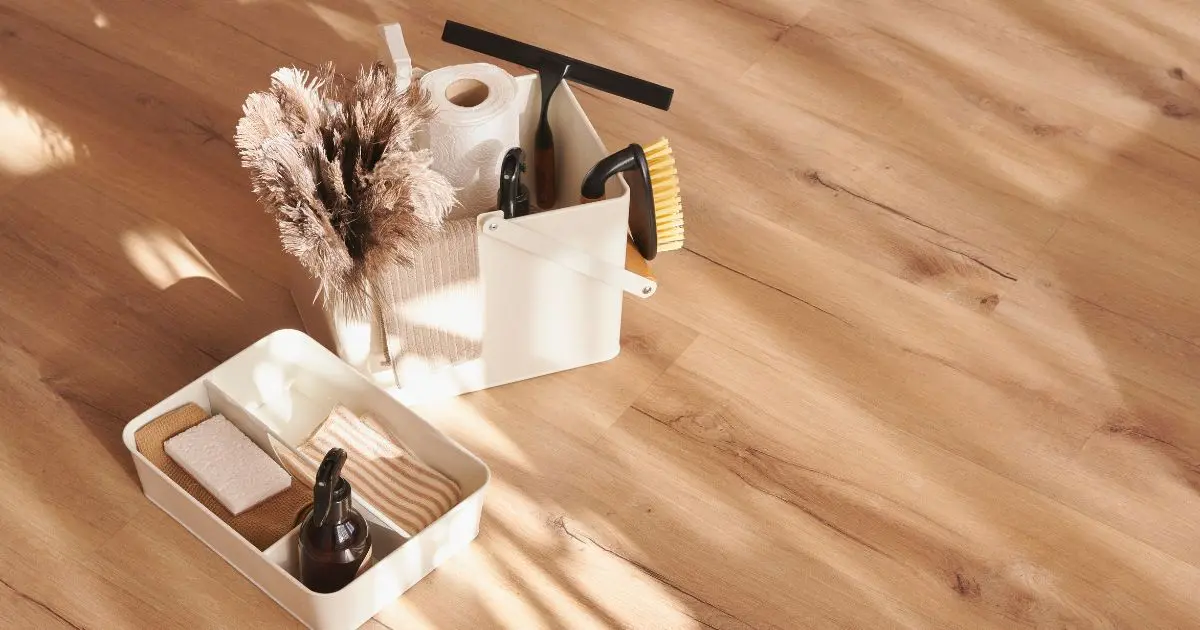
Non-Toxic Cleaning: The Old Way vs the New Way to Clean Your Home
For decades, we have been taught that a clean home should smell like chemicals. Spray the counters, disinfect the bathroom, wipe everything down, and finish with an air freshener so the whole house smells “fresh.” But clean does not actually have a smell.
The old way of cleaning often means using a different product for each surface, then adding fragrance to mask any lingering odors. The newer approach is much simpler: use the right cleaner for the job, avoid unnecessary ingredients when possible, and remove odors instead of masking them.
That is the basic idea behind non-toxic cleaning: creating a clean home while reducing unnecessary exposure to harsh chemicals, strong fragrances, and excessive cleaning products.
What Is Non-Toxic Cleaning?
Non-toxic cleaning means choosing cleaning products and methods that minimize unnecessary exposure to potentially irritating or concerning ingredients while still effectively cleaning your home.
The better approach is to look at what you are cleaning, what the product contains, and whether you actually need it.
The Old Way: More Cleaning Products, More “Clean”
Walk through a typical cleaning aisle, and you will find a product for almost everything.
One spray for the kitchen. Another for the bathroom. A glass cleaner, a disinfectant, a toilet cleaner, a floor cleaner, disinfecting wipes, fabric sprays, air fresheners, plug-ins, and scented products designed to make your home smell freshly cleaned.
It is easy to assume that more products mean a cleaner home.
But many everyday cleaning tasks do not require the strongest product available. And when you use multiple fragranced products throughout the house, you are also adding more chemicals to your indoor environment without necessarily improving how clean the surface actually is.
The new way starts by asking a simpler question: What am I actually trying to remove?
The New Way: Use the Simplest Effective Cleaner
Start with the problem:
- Dust and loose dirt: A microfiber cloth or vacuum may be enough.
- Grease: Use a cleaner designed to break down grease.
- Mineral buildup: An appropriate acidic cleaner can help dissolve deposits.
- Soap residue: Use a suitable bathroom cleaner or acidic solution when appropriate.
- Odors: Find and remove the source instead of simply covering it.
- Potentially harmful microorganisms: Use an appropriate disinfectant when disinfection is actually needed.
This approach reduces the number of products you need and makes your cleaning routine more intentional.
Can You Clean Your Home With Vinegar and Baking Soda?
Vinegar and baking soda can both be useful household cleaning ingredients, but they do different things and are not universal cleaners.
White vinegar is acidic, which makes it useful for certain mineral deposits and soap residue. However, it should not be used on every surface. Its acidity can damage materials such as some natural stone surfaces, and vinegar should never be mixed with bleach or other incompatible cleaning products.
Baking soda provides mild abrasive action and can be useful for scrubbing certain surfaces and addressing some odors.
Stop Using Fragrance to Define “Clean”
This may be one of the biggest differences between the old and new approaches.
After cleaning, many people reach for an air freshener, plug-in fragrance, room spray, scented candle, or fabric refresher. The result is a room that smells strongly of “clean.” But fragrance does not remove the source of an odor.
If the kitchen smells bad, check the garbage, refrigerator, sink, dishwasher, and food residue. If the bathroom smells musty, look for moisture and ventilation problems. If a towel smells stale, wash and dry it properly.
Remove the source instead of automatically covering it.
Fragrance is not inherently harmful to everyone, and people can respond to fragrances differently. But if your goal is to reduce unnecessary chemical exposure at home, choosing fragrance-free or lower-fragrance products is a straightforward place to start.
Cleaning and Disinfecting Are Not the Same Thing
This distinction is easy to miss.
Cleaning removes dirt, debris, grease, and many microorganisms from surfaces. Disinfecting is a separate process intended to kill certain microorganisms.
That means you do not necessarily need to disinfect every surface every time you clean it.
For everyday dust, fingerprints, food crumbs, and ordinary grime, cleaning may be sufficient. When disinfection is appropriate, use a product specifically intended for that purpose and follow its instructions, including the required contact time and ventilation recommendations.
The new way is not about never using disinfectants, but using them when there is a reason to disinfect,rather than automatically reaching for them every time.
Build a Smaller, Simpler Non-Toxic Cleaning Kit
You do not need an entire cabinet of specialty sprays to keep your home clean.
A practical non-toxic cleaning kit can include:
- Reusable microfiber cloths
- A non-toxic, gentle all-purpose cleaner
- White vinegar for appropriate surfaces
- Baking soda for gentle scrubbing
- A suitable bathroom cleaner
- An appropriate disinfectant for situations that require disinfection
- Fragrance-free or low-fragrance products when preferred
Your exact lineup will depend on the surfaces in your home and the type of cleaning you regularly do.
You Don’t Have to Throw Away Your Cleaning Products
Use what you already have according to the manufacturer’s instructions. Never mix cleaning products unless the label specifically says they can be combined, and be particularly careful with bleach and acidic products such as vinegar.
Then, as products run out, reconsider whether you actually need to replace them.
Ask:
- Do I use this product regularly?
- Does it perform a job that another cleaner cannot?
- Could I choose a fragrance-free alternative?
- Could a simpler cleaning method accomplish the same thing?
- Am I buying this because I need it or because cleaning-product marketing told me I do?
That gradual approach is more practical, less wasteful, and easier to maintain.
What Should You Look for in Non-Toxic Cleaning Products?
When choosing a cleaning product, do not rely on words like “natural,” “green,” or “clean” alone.
Look at the ingredient list and consider whether the product contains unnecessary fragrance, whether it is designed for the surface you are cleaning, and whether you actually need the formula’s strength.
The best cleaning product is the one that does the job effectively with the least unnecessary exposure.
The New Definition of a Clean Home
The old approach to cleaning taught us to associate cleanliness with intensity. More foam. Stronger smell. More disinfectant. More products. The new approach asks us to separate the idea of clean from the idea of chemically scented.
A clean home does not need to smell like bleach, lemon, fresh linen, or anything else. It needs to be free of the dirt, residue, dust, and odors that actually need to be removed. That can mean fewer products, simpler ingredients, better ventilation, less unnecessary fragrance, and a little more thought about what you are spraying around your home.
The Old Way vs. the New Way
Old way: Buy a different product for every cleaning problem.
New way: Use fewer effective products for specific needs.
Old way: Strong chemical smell means clean.
New way: Clean means the source of dirt and odor has actually been removed.
Old way: Disinfect everything.
New way: Clean routinely and disinfect only when necessary.
Old way: Reach for the strongest product first.
New way: Start with the simplest, most effective option.
Sometimes the biggest change is simply looking at the bottles under your sink and asking a question we probably should have been asking all along: Do I actually need all of this to make my home clean?
Frequently Asked Questions
What is the best way to start a non-toxic cleaning routine? Start by replacing products as they run out rather than throwing everything away. Choose simpler, fragrance-free, or lower-fragrance options where appropriate, and use each product only for the job it is designed to do.
Is vinegar a non-toxic household cleaner? White vinegar can be a useful household cleaner for certain tasks because its acidity helps with mineral deposits and soap residue. However, it is not appropriate for every surface and should never be mixed with bleach or other incompatible cleaning products.
Do I need to disinfect my home every day? Not necessarily. Routine cleaning is different from disinfection, and everyday surfaces do not automatically require disinfecting after every use. Disinfection can be appropriate in specific situations where reducing certain microorganisms is important.
Are natural cleaning products always safer? No. “Natural” describes the source of an ingredient, not its safety under every circumstance. Some naturally derived substances can irritate the skin or lungs, damage surfaces, or become hazardous when improperly combined.
How can I reduce fragrance in my home? Start by removing unnecessary air fresheners, plug-ins, scented sprays, and heavily fragranced cleaning products. When possible, choose fragrance-free alternatives and address the source of unpleasant odors instead of masking them.
References:
- Rádis-Baptista, G. (2023). Do synthetic fragrances in personal care and household products impact indoor air quality and pose health risks? Journal of Xenobiotics, 13(1), 121–131.https://doi.org/10.3390/jox13010010
- van Amerongen, C. C. A., Ofenloch, R. F., Cazzaniga, S., Elsner, P., Gonçalo, M., Naldi, L., Svensson, Å., Bruze, M., & Schuttelaar, M. L. A. (2021). Skin exposure to scented products used in daily life and fragrance contact allergy in the European general population – The EDEN Fragrance Study. Contact Dermatitis, 84(6), 385–394.https://doi.org/10.1111/cod.13807
- Jin, S., Zhong, L., Zhang, X., Li, X., Li, B., & Fang, X. (2023). Indoor volatile organic compounds: Concentration characteristics and health risk analysis on a university campus. International Journal of Environmental Research and Public Health, 20(10), 5829.https://doi.org/10.3390/ijerph20105829
- Jung, Y. S., Chiang, S., Athni, T. S., Shah, J., McCurdy, K., Yu, S. E., Kariveda, R., Mitchell, M., Ruan, M., Zou, J., Banerjee, M., Awan, Z., Dey, T., Nordgaard, C. L., Allen, J. G., Maxfield, A., Roditi, R., Bergmark, R., Nadeau, K., & Lee, S. E. (2025). Characterizing everyday exposure to volatile organic compounds and upper respiratory health effects. Scientific Reports, 15(1), 23555.https://doi.org/10.1038/s41598-024-81873-2
Keep updated on latest posts
-
Non-Toxic Cleaning: The Old Way vs the New Way to Clean Your Home
For decades, we have been taught that a clean home should smell like chemicals. Spray the counters, disinfect the bathroom, wipe everything down, and finish…
-

Safer Food Storage: What to Use Instead of Plastic
For most people, food storage is automatic. Cover the leftovers with plastic wrap. Transfer lunch into a plastic container. Grab a bag from the drawer….
-

Before You Buy Coffee, Check These 4 Things
Coffee is one of those everyday products most people buy without giving much thought to where it comes from or how it is produced. You…
-

How to Lower Cortisol Naturally: 7 Simple Ways to Manage Stress
Cortisol is often talked about as if it were something we need to get rid of, but it’s actually an essential hormone. It helps regulate…
One swap a week
Every week, one small change worth making, why it matters, and where to get it. Two minutes, then back to your life.