
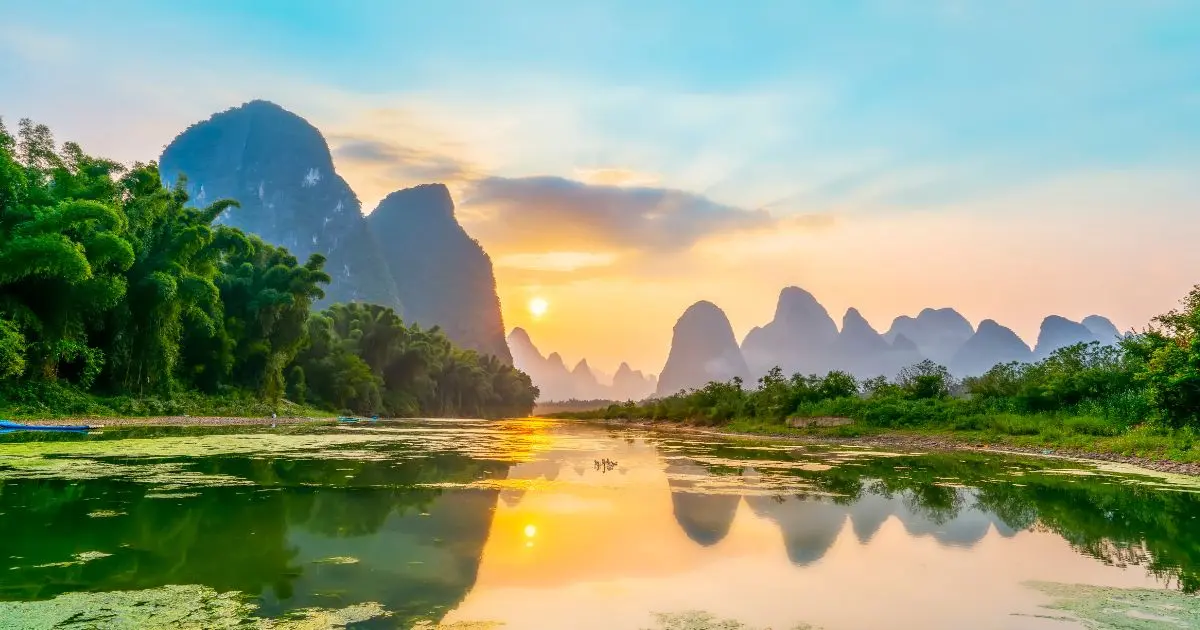
Co-Creating With Nature: Our Role in Creating a Healthier Planet
Nature already has more of the answers than we think. One of the biggest shifts we can make in how we think about the environment is recognizing that nature is not waiting for us to rescue it.
Nature has been solving problems, adapting, regenerating, and creating balance for billions of years. The better question is not “How do we save the planet?” It is “How do we learn to live as part of the planet again?” That is what co-creating with nature means, and it is the idea behind this post.
What Does Co-Creating With Nature Mean?
- Nature already regenerates. Forests, soil, wetlands, and plants have been restoring balance for billions of years.
- We are part of the planet. What is really at stake is the health of the ecosystems that support human life and millions of other species.
- Restoration often starts by removing what blocks nature. Sometimes it begins not with doing more, but with stepping back.
- Our choices matter. Humans can be destructive or regenerative, and the goal is to use that influence differently.
Nature Already Has More of the Answers Than We Think
Nature does not need humans to invent the concept of regeneration. It has been doing it all along. Every ecosystem operates through relationships:
- Forests communicate through complex networks.
- Soil regenerates through microorganisms.
- Wetlands filter water.
- Plants capture carbon.
- Predators maintain balance within ecosystems.
When you look at the natural world this way, it stops looking like something fragile that needs constant rescue. It looks like a system that has been working, adapting, and regenerating the entire time.
The Solution Is Often Already There
Nature has never allowed an injury to occur on this planet without already placing the solution inside of it. Look at almost any natural system, and you can find examples of resilience:
- A forest can regenerate after a fire.
- Plants can grow through cracks in concrete.
- Wetlands can absorb and filter enormous amounts of water.
- Soil can rebuild itself when given the right conditions.
The natural world is constantly adapting to disruption and finding ways to restore balance.
What This Does Not Mean
That does not mean every environmental problem has a simple natural solution, or that ecosystems will automatically recover from everything humans do to them. Damage can be severe and permanent, taking generations to reverse.
But nature gives us something incredibly valuable: a blueprint. Instead of always asking how we can control nature, extract more from it, or engineer our way around its limits, perhaps we should also be asking what nature is already teaching us.
We Do Not Need to Save the Planet
The idea that humans need to “save the planet” can sound noble, but it also puts us in the wrong position. The planet existed long before us and, in one form or another, will continue to exist long after us.
What Is Actually at Stake
What is actually at stake is the health of the ecosystems that support human life and the millions of other species we share this planet with. We depend on:
- Functioning soil
- Clean water
- Healthy oceans
- Biodiversity
- Forests
- Pollinators
- Stable climate systems
When those systems are damaged, we are not standing outside of the problem trying to save something separate from ourselves. We are living inside of it.
That is why I think the better question is not, “How do we save the planet?” It is, “How do we learn to live as part of the planet again?”
Coming Back Into Alignment With Nature
Nature is not waiting for us to solve every problem before it can begin healing. In many cases, what ecosystems need most is for us to stop interfering with the processes that already know how to work.
What Restoration Can Look Like
Here are a few examples of what natural systems may need:
- Degraded land: fewer chemicals, healthier soil, native plants, water, and time
- A river: pollution removed and its natural flow restored
- A forest: protection from unnecessary clearing
- An agricultural system: practices that work with soil biology rather than treating soil as an inert substance
The principle is simple: sometimes restoration begins not by doing more, but by removing what prevents natural systems from functioning.
This is what alignment looks like. It means paying attention to how nature actually works and making our decisions accordingly.
The Role of Humans as a Keystone Species
Humans have an enormous ability to influence ecosystems. That influence can be destructive, but it can also be regenerative.
A keystone species is one whose presence has a disproportionately large effect on its ecosystem. Whether we use that term precisely in an ecological sense or more broadly as a metaphor for our role on the planet, there is an important idea here: our choices matter.
Two Directions We Can Choose
Every day, we choose between two directions:
- We can clear forests or protect them.
- We can contaminate waterways or restore them.
- We can deplete soil or rebuild it.
- We can create waste that persists for generations or design systems that reuse materials.
- We can treat the natural world as a warehouse of resources or recognize that we are participants in a living system.
The goal is not to pretend humans have no impact. We clearly do. The goal is to use that influence differently.
From Extraction to Cooperation
For a long time, our relationship with nature has largely been based on extraction. We take timber from forests, minerals from the ground, fish from oceans, water from rivers, and energy from the Earth. We turn those resources into products, consume them, and often discard them when we are finished.
There is nothing inherently wrong with using natural resources. Human civilization has always depended on them.
Where the Problem Begins
The problem begins when extraction becomes disconnected from regeneration. If we take faster than a system can replenish itself, eventually there is a cost.
Co-creating with nature means changing that equation:
- Designing agriculture around soil health
- Designing cities around natural systems
- Designing buildings around energy efficiency
- Designing products around durability and reuse
It also means asking not only, “What can we get from this?” but also, “What does this system need to continue?”
Nature as a Teacher: Biomimicry and Natural Principles
This perspective changes the way we approach environmental problems. Instead of assuming that every solution must be invented from scratch, we can study systems that have already survived enormous changes.
What Is Biomimicry?
Biomimicry is one example of this thinking: humans study structures and processes found in nature and use those principles to solve problems. There are countless examples of natural systems inspiring everything from materials and architecture to water management and energy efficiency.
Principles Nature Can Teach Us
Nature does not necessarily give us a direct answer, but it can give us principles:
- Efficiency
- Diversity
- Adaptation
- Cycles
- Interdependence
- Regeneration
These principles are useful far beyond environmentalism. They can change the way we think about consumption, agriculture, business, technology, and even our own homes.
We Are Part of the Solution
I believe the biggest shift is recognizing that we are not separate from nature. We are nature. The food we eat comes from it. The air we breathe comes from it. The water in our bodies comes from it. The materials in our homes come from it.
When ecosystems are healthy, we benefit. When they are degraded, we eventually feel the consequences.
Environmental Responsibility
That means environmental responsibility does not have to be about guilt or fear. It can be about participation. Every decision is an opportunity to move in one direction or another.
Simple Ways to Participate
- Choose products that last longer.
- Reduce unnecessary waste.
- Support regenerative practices.
- Plant native species.
- Protect pollinators.
- Consume more consciously.
- Spend time outside and actually pay attention to the systems around you.
None of these actions individually solves the world’s environmental problems. But they reinforce a different relationship with the natural world.
Co-Creating With the Planet
We are not here to save the planet. We are here to co-create with it. That distinction matters.
Saving something implies that it belongs to someone else and that we stand outside of it. Co-creating means recognizing that we are participants. It means working with natural systems instead of constantly trying to overcome them.
Nature has already given us the tools, the patterns, and the examples. Our job is not to become masters of the natural world. Our job is to become better participants in it.
Maybe the future of environmentalism is not about doing more and more to nature. Maybe it is about learning when to step back, when to restore, when to protect, and when to let natural systems do what they have been doing for billions of years.
The planet does not need us to be its saviors. It needs us to remember that we belong here, too.
Frequently Asked Questions
What does it mean to co-create with nature?
Co-creating with nature means recognizing that we are participants in natural systems rather than outsiders trying to control them. It means working with natural systems instead of constantly trying to overcome them.
Can nature heal itself?
Nature shows many examples of resilience. A forest can regenerate after a fire, and soil can rebuild itself when given the right conditions. That does not mean ecosystems will automatically recover from everything, since some damage can be severe, permanent, or take generations to reverse.
What is biomimicry?
Biomimicry is the practice of studying structures and processes found in nature and using those principles to solve problems. Natural systems have inspired materials, architecture, water management, and energy efficiency.
What does it mean to be a keystone species?
A keystone species is one whose presence has a disproportionately large effect on its ecosystem. I use the term to describe our role on the planet: our choices matter, and our influence can be destructive or regenerative.
What can I do to live more in harmony with nature?
Choose products that last longer, reduce unnecessary waste, support regenerative practices, plant native species, and protect pollinators. Consume more consciously and spend time outside, paying attention to the systems around you.
References:
- Delgado-Baquerizo M, et al. Soil biodiversity and function under global change. Science. 2025. PMID: 40146744.
https://pubmed.ncbi.nlm.nih.gov/40146744/ - Rey Benayas JM, Newton AC, Diaz A, Bullock JM. Enhancement of biodiversity and ecosystem services by ecological restoration: a meta-analysis. Science. 2009;325(5944):1121-1124. PMID: 19644076.
- Robinson JM, Breed AC, Camargo A, Redvers N, Breed MF. Biodiversity and human health: A scoping review and examples of underrepresented linkages. Environ Res. 2024;246:118115. PMID: 38199470.
- Marques de Sá AA, Viana DM. Design and Biomimicry: A Review of Interconnections and Creative Potentials. Biomimetics (Basel). 2023;8(1):61. PMID: 36810392. PMCID: PMC9944943.
Keep updated on latest posts
-
Co-Creating With Nature: Our Role in Creating a Healthier Planet
Nature already has more of the answers than we think. One of the biggest shifts we can make in how we think about the environment…
-

Toxic Electronics: Headphones, Apple Watch & TV Tips
When we think about non-toxic living, we think about food, cleaning products, cookware, and personal care, but the same logic applies to the technology we…
-

Rosemary & Thyme Immune-Boosting Infusion
A warming daily infusion made with two of the most research-backed immune-supporting herbs — ready in 10 minutes, no special equipment required Rosemary and thyme…
-

How to Use Rosemary and Thyme Beyond Cooking
Rosemary and thyme are easy to overlook precisely because they’re so familiar. Most people think of them as something you throw into a roast, soup,…
One swap a week
Every week, one small change worth making, why it matters, and where to get it. Two minutes, then back to your life.