
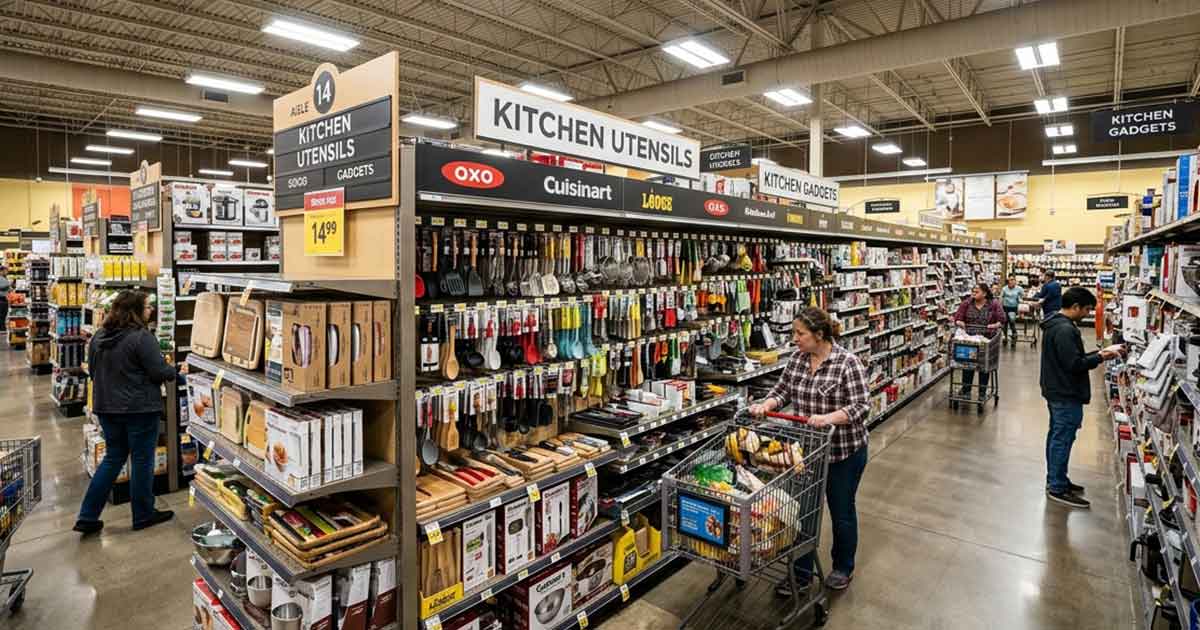
The Kitchen Aisle Toxins Nobody Warns You About
Walk down the kitchen aisle of any big-box store, and you’ll see the same products that every household has stocked for decades. Sandwich bags. Dish soap. Dishwasher tablets. Sponges. Storage containers. Nothing about that aisle looks dangerous. That’s exactly the problem.
I didn’t set out to overhaul my kitchen. I started paying attention to one thing, then another, and eventually I couldn’t unsee it. Many of the products sitting in that aisle shed microplastics and endocrine-disrupting compounds straight into the food and drinks we consume every day. Others leave residues on the dishes we eat off, residues that can affect gut health over time.
Here’s what I found, aisle by aisle, and what I use instead.
The “BPA Free” Label Doesn’t Mean What You Think It Means
Before getting into specific products, it’s worth clearing up one thing. BPA-free has become a marketing shortcut that makes people feel like they’ve solved the problem. In most cases, it hasn’t solved anything.
When manufacturers remove BPA, a well-known hormone-disrupting compound, they often replace it with closely related chemicals such as BPS or BPF. These substitutes belong to the same chemical family, and research increasingly shows they can behave similarly in the body. A product can be labeled BPA-free and still be loaded with hormone-disrupting bisphenol compounds and phthalates.
So when you see BPA-free on packaging, treat it as a starting point for questions, not a finish line. The material still matters more than the label.
Ziploc Bags and Other Plastic Storage Bags
Sandwich bags and freezer bags are among the most common items in this aisle and among the easiest to overlook. Most conventional storage bags are made of polypropylene, and that plastic doesn’t remain perfectly inert once it comes into contact with your food.
These bags can shed microplastics and endocrine-disrupting chemicals directly into whatever they’re storing, especially when exposed to heat, acidity, or freezing. None of those conditions is unusual. They’re just Tuesday in most kitchens.
The swap I made was straightforward: silicone storage bags instead of plastic ones. They’re reusable, which means you’re not restocking a box every few weeks, and they withstand freezing, reheating, and regular washing far better than a disposable plastic bag ever could. Over a year, that adds up to real savings, not just fewer toxins going into your food but fewer dollars going into the trash.
Dawn Dish Soap and the Soaps That Sound Safer Than They Are
Dish soap seems like the last place you’d expect a problem. It touches every dish, cup, and utensil in your kitchen, then gets rinsed away, so most people assume whatever’s left behind is negligible.
Conventional dish soaps, including Dawn, can leave behind residues that may affect gut health when they’re not fully rinsed off dishes and cookware. That residue builds a little more each time you wash, especially on porous surfaces like wood or unglazed ceramic.
Seventh Generation is a much safer option here, and it cleans just as effectively without requiring you to change how you wash dishes.
Dishwasher Tablets
If you run a dishwasher instead of washing by hand, the tablets you use matter just as much as the soap in your sink. Conventional dishwasher tablets can leave residue on dishes that goes largely unnoticed because it’s invisible and odorless.
That residue sits on the same plates, bowls, and glasses you eat and drink from at every meal. Over months and years of daily use, that’s not a small detail.
Seventh Generation dishwasher tablets are a better option here as well. They genuinely clean dishes without leaving behind the same buildup, and they don’t require a different washing routine or a new dishwasher setting to work properly.
Yellow Kitchen Sponges
If you’ve read our recent post on kitchen sponges, you already know where this is going. Those yellow and green sponges sitting by nearly every sink are essentially 100 percent plastic, built to hold water, trap bacteria, and slowly break down into smaller and smaller plastic particles every time you use them.
We’ve already covered the full breakdown of why that matters and the natural loofah swap that replaces it without changing how you wash a single dish. If you haven’t read that one yet, it’s worth a few minutes of your time.
Plastic Storage Containers
Plastic storage containers round out the list, and they might be the easiest swap of all. Glass storage containers do the same job, stack the same way, and go in the dishwasher without warping, staining, or absorbing smells the way plastic does over time.
Glass also sidesteps the leaching concerns that come with heating food in plastic, whether that’s a microwave reheat or just storing something acidic like tomato sauce for a few days. If you know someone who’s always making a Target run for more plastic containers because the lids never seem to match anymore, this is the swap to send them. A one-time switch to glass ends that cycle for good.
How I Actually Approached This
None of these swaps happened in a single weekend, and none of them required throwing away a fully stocked kitchen to start over. I replaced things as they wore out or ran low, starting with the products I used most often and the ones with the clearest, most well-documented concerns.
That’s really the approach I’d recommend to anyone reading this. You need a short list of products worth paying attention to, and a plan to swap them out the next time you’re restocking anyway. Sandwich bags run out. Dish soap runs out. Sponges wear down. Those replacement moments are natural opportunities to choose something better without adding extra effort to your week.
The bigger picture here isn’t that any single product in your kitchen is secretly dangerous on its own. It’s that these products add up, day after day, meal after meal, for years. Small, consistent swaps in the products you already use every day make a bigger difference over time.
Frequently Asked Questions
Does BPA-free actually mean a product is safe? Not necessarily. Manufacturers often replace BPA with closely related compounds like BPS or BPF, which belong to the same chemical family and can behave similarly in the body as hormone disruptors. A BPA-free label is a starting point, not a guarantee of safety.
Are silicone storage bags actually better than plastic ones? Yes, for both health and cost reasons. Silicone bags are reusable, withstand freezing and reheating, and don’t shed the same microplastics and endocrine-disrupting chemicals that conventional polypropylene bags can release into food over time.
Is Dawn dish soap toxic? Dawn and similar conventional dish soaps can leave residues on dishes and cookware that may affect gut health if not thoroughly rinsed off. Seventh Generation is a widely available alternative that cleans effectively without the same residue concerns.
Are Mrs. Meyer’s products actually non-toxic? Not necessarily. While the brand markets itself around natural ingredients, many of its formulas rely on synthetic fragrance blends that aren’t fully disclosed on the label.
Why are yellow kitchen sponges considered a toxic swap? Standard yellow and green kitchen sponges are made almost entirely from synthetic plastic foam. They trap bacteria while wet and shed microplastic particles as they wear down through regular scrubbing and squeezing, which is why a natural loofah is a common replacement.
Is switching from plastic to glass storage containers worth it? Yes. Glass containers avoid the leaching concerns associated with heating or storing acidic foods in plastic, last significantly longer without warping or staining, and eliminate the common problem of mismatched lids that leads to repeatedly buying more plastic containers.
References:
- Yee, M. S., Hii, L. W., Looi, C. K., Lim, W. M., Wong, S. F., Kok, Y. Y., Tan, B. K., Wong, C. Y., & Leong, C. O. (2021). Impact of microplastics and nanoplastics on human
- health. Nanomaterials, 11(2), 496.https://doi.org/10.3390/nano11020496
- Tsochatzis, E. D., Gika, H., Theodoridis, G., Maragou, N., Thomaidis, N., & Corredig, M. (2024). Microplastics and nanoplastics: Exposure and toxicological effects require important analysis considerations. Heliyon, 10(11), e32261.https://doi.org/10.1016/j.heliyon.2024.e32261
- Rádis-Baptista G. Do Synthetic Fragrances in Personal Care and Household Products Impact Indoor Air Quality and Pose Health Risks? Journal of Xenobiotics. 2023;13(1):121–131. doi: 10.3390/jox13010010. PMID: 36976159; PMCID: PMC10051690.
- Ogulur I, Pat Y, Aydin T, Yazici D, Rückert B, Peng Y, Kim J, Radzikowska U, Westermann P, Sokolowska M, Dhir R, Akdis M, Nadeau K, Akdis CA. Gut epithelial barrier damage caused by dishwasher detergents and rinse aids. Journal of Allergy and Clinical Immunology. 2023;151(2):469–484. doi: 10.1016/j.jaci.2022.10.020. PMID: 36464527.
Keep updated on latest posts
-
Are Food Expiration Dates a Lie? What Those Dates Really Mean
That date printed on your food package might not mean what you think it means. In the United States, most food products are not federally…
-
The Kitchen Aisle Toxins Nobody Warns You About
Walk down the kitchen aisle of any big-box store, and you’ll see the same products that every household has stocked for decades. Sandwich bags. Dish…
-

Your Wardrobe Is Poisoning You (Here’s the Proof) – NTL Episode #1
Have you ever wondered what’s really in the clothes you wear or the sheets you sleep on? In this episode of Non-Toxic Living, I’m exposing…
-
Homemade Elderberry Syrup: An Easy Immune Recipe
Every fall, right about the time the kids head back to school, we make a batch of elderberry syrup and keep it in the fridge….
One swap a week
Every week, one small change worth making, why it matters, and where to get it. Two minutes, then back to your life.