
The Toxic Truth About Fireworks: What’s Actually in the Smoke
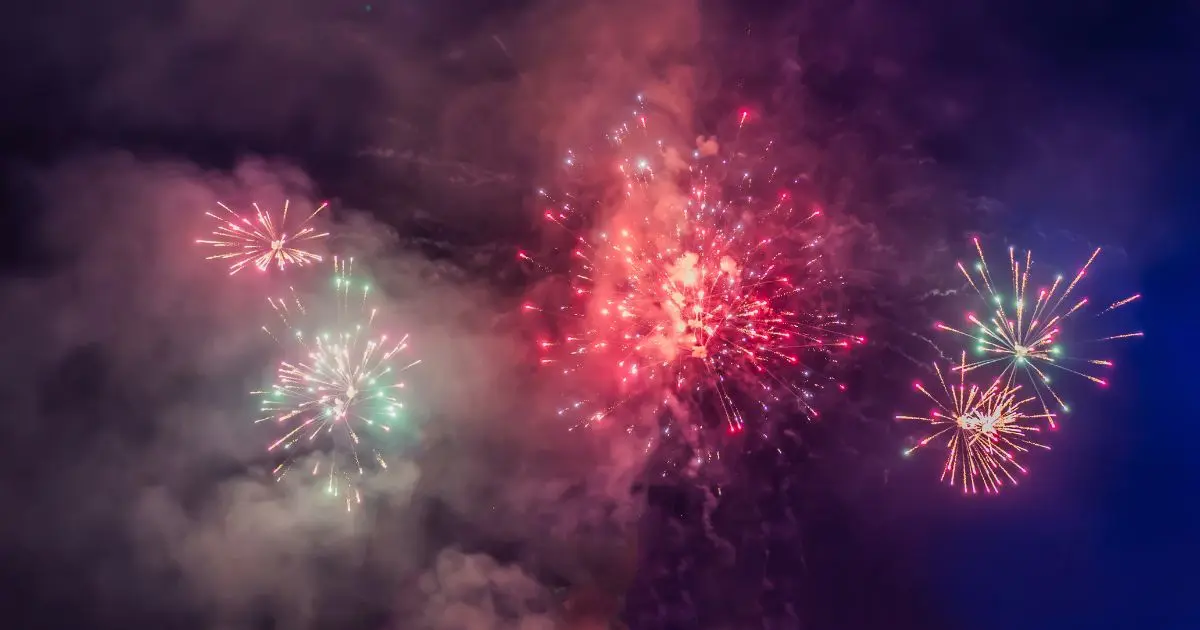
Lawn chairs come out. Kids run around with glow sticks and sticky popsicles. Everyone waits for the sky to light up. Fireworks are woven into so many summer celebrations that most of us never stop to think about what happens after the explosion fades and the smoke drifts over the crowd.
I never questioned it either, until I started paying attention to what’s actually in the things we consider normal. Fireworks turned out to be one of those things.
Here’s what’s actually in that smoke, who it affects most, and the small adjustments that make a real difference without taking away the experience.
What’s Actually in Fireworks Smoke
Fireworks create more than bright colors and loud sounds. They release heavy metals, fine particulate pollution, and chemical compounds directly into the air that people are standing in.
The colors come from metal salts, each one a different compound burned at high temperature:
- Red: strontium compounds
- Green: barium
- Blue: copper compounds
- White flashes: aluminum or magnesium
It’s genuinely impressive chemistry. It’s also material that doesn’t simply disappear after ignition. Once fireworks explode, much of it becomes airborne; some particles settle into soil and water, and others drift through neighborhoods for hours after the show ends.
PM2.5: The Pollution Spike Most People Never Hear About
One of the biggest concerns with fireworks is PM2.5: fine particulate matter measuring 2.5 micrometers or smaller. These particles are small enough to bypass the body’s natural respiratory defenses and travel deep into the lungs.
Air quality monitoring stations routinely detect major spikes in PM2.5 during large fireworks displays, sometimes reaching levels comparable to heavy urban pollution or wildfire smoke. And the effects don’t end when the finale does. Depending on wind, humidity, and weather conditions, that smoke can linger for hours, with haze hanging in some neighborhoods well into the next morning.
Who’s most affected:
- People with asthma, COPD, or other respiratory conditions
- Anyone with cardiovascular conditions
- Kids: their lungs are still developing, and they breathe more rapidly than adults
- Older adults
- Pets who experience both respiratory stress and noise-related anxiety simultaneously
For healthy adults, exposure typically means mild, temporary irritation. For these groups, the effects tend to be more noticeable.
Perchlorates: The Other Chemical Worth Knowing About
A less commonly discussed compound tied to fireworks is perchlorate: used in rocket fuel, explosives, and pyrotechnics because it accelerates the rate at which a reaction burns.
Studies have found elevated perchlorate levels in soil and water near areas with repeated fireworks displays. This matters because perchlorates can interfere with iodine uptake in the thyroid, which plays a key role in hormone regulation and metabolism.
A single fireworks show isn’t going to create a health crisis. Context, dose, and frequency all matter. But understanding cumulative exposure helps explain why some communities are reconsidering large-scale pyrotechnic events, particularly in densely populated areas.
This fits into the same broader picture as indoor air pollution, synthetic fragrances, vehicle exhaust, cleaning chemicals, and pesticides. Fireworks are just one more piece of an already crowded exposure puzzle.
How to Reduce Fireworks Smoke Exposure
What surprised me most about researching this topic was how preventable a lot of the exposure actually is. None of these adjustments requires skipping the show.
Watch from upwind, not downwind. Smoke follows wind patterns, and most people never check wind direction before setting up chairs and blankets. Positioning yourself upwind of the launch site can dramatically cut how much smoke you actually inhale.
Add distance. Sitting slightly farther back from the launch area reduces both particle exposure and noise intensity. The best view isn’t always the healthiest spot.
Watch from indoors if anyone has respiratory sensitivities. Closed windows and a good HVAC filter significantly reduce indoor particle infiltration during peak smoke periods.
Run an air purifier overnight after a major display. This helps clear residual particulate matter from indoor air by morning.
Air out the house the next day. Once outdoor air quality has cleared, opening windows helps flush out anything that settled indoors overnight.
Lower-Smoke Alternatives Worth Considering
For younger kids, especially, smaller traditions often end up being more memorable than the giant public display anyway.
- Glow sticks
- Backyard projector lights
- Lanterns
- Nighttime scavenger hunts
Some communities have started replacing traditional fireworks entirely with drone light shows or laser displays. These eliminate most of the air pollution and fire risk while still delivering a visually striking, shared experience. A few years ago, this felt futuristic; now it’s becoming increasingly common at major public events.
The Noise Factor Deserves Attention Too
Fireworks aren’t just a smoke issue. The noise itself can be genuinely distressing for pets, veterans, trauma survivors, neurodivergent individuals, and young children sensitive to loud sensory input.
Lower-noise celebrations, or simply being thoughtful about timing and proximity, can make community events more accessible without sacrificing the celebratory feeling.
A Reasonable Approach
You don’t need to feel guilty for enjoying fireworks, and one night of exposure isn’t a crisis. But “traditional” doesn’t automatically mean harmless, and once you know what’s actually in the smoke, it’s easier to make thoughtful decisions about how close you want to be to it, and how often.
At our house, we still celebrate. We just do it a little differently: paying attention to wind direction, avoiding the smoke cloud directly, keeping windows closed during the display, airing the house out the next morning, and leaning toward quieter alternatives. None of these changes is complicated, expensive, or extreme.
That’s really the core of low-tox living, just paying closer attention to the things we’ve always assumed were harmless simply because they’re traditional.
Frequently Asked Questions
Are fireworks bad for air quality? Yes. Fireworks release significant amounts of PM2.5, fine particulate matter small enough to penetrate deep into the lungs, along with heavy metals from the colorant compounds used to create different colors. Air quality monitors routinely record major PM2.5 spikes during large fireworks displays, sometimes reaching levels comparable to wildfire smoke or heavy urban pollution. That pollution can linger in the air for hours afterward.
What chemicals are in fireworks that create different colors? Each color in fireworks comes from a specific metal salt that burns at high temperatures. Red typically comes from strontium compounds, green from barium, blue from copper compounds, and bright white flashes from aluminum or magnesium. These materials become airborne particulate matter once the firework explodes, and some settle into nearby soil and water.
Who is most at risk from fireworks smoke exposure? People with asthma, COPD, cardiovascular conditions, or general respiratory sensitivities tend to experience more noticeable symptoms from fireworks smoke. Children are particularly vulnerable because their lungs are still developing and they breathe more rapidly than adults. Older adults and pets are also more affected; pets experience both respiratory stress and noise-related anxiety during fireworks displays.
What is perchlorate, and why is it a concern with fireworks? Perchlorate is a chemical compound used in fireworks, rocket fuel, and explosives because it helps reactions burn rapidly. Studies have detected elevated perchlorate levels in soil and water near sites with frequent fireworks displays. This matters because perchlorate can interfere with iodine uptake in the thyroid, which plays an important role in hormone regulation and metabolism. However, a single fireworks show is unlikely to pose a significant individual risk.
How can I reduce my exposure to fireworks smoke? The most effective steps are positioning yourself upwind of the launch site rather than downwind, increasing the distance between yourself and the display, and watching from indoors with the windows closed if anyone in your household has respiratory sensitivities. Running an air purifier overnight after a major display, then airing out the house the next day, can also help clear residual particulate matter from the indoor air.
Are drone shows a safer alternative to fireworks? Yes, drone light shows and laser displays produce far less air and noise pollution than traditional fireworks while still delivering a visually impressive shared experience. They also eliminate most fire risk associated with pyrotechnics. A growing number of communities and major events have adopted drone shows as an alternative, particularly in densely populated or fire-prone areas.
References:
- Gouder, C.
- , & Montefort, S. (2014). Potential impact of fireworks on respiratory health. Lung India, 31(4), 375–379.https://doi.org/10.4103/0970-2113.142124
Hickey, C. Gordon, C., Galdanes, K., Blaustein, M., Horton, L., Chillrud, S., Ross, J., Yinon, L., Chen, L. C., & Gordon, T. (2020). Toxicity of particles emitted by fireworks. Particle and Fibre Toxicology, 17(1), 28.https://doi.org/10.1186/s12989-020-00360-4
Keep updated on latest posts
-
3 Kids’ Clothing Types I’d Think Twice About at Target
Kids’ clothing seems simple until you start looking at what actually goes into making a garment perform a certain way. A T-shirt can be designed…
-

The Cream Cheese Ingredient You May Want to Rethink
Cream cheese seems like one of those foods that should be simple. Milk, cream, salt, maybe a culture, and that’s about it. But flip over…
-

Could Choosing Different Fruits and Vegetables Support Fertility?
When you’re trying to improve fertility, the conversation usually turns to hormones, supplements, sleep, stress, exercise, alcohol, and overall diet. There’s another piece worth considering,…
-
Ricotta Raspberry Toast: An Easy 5-Minute Breakfast
Some mornings you want something that feels a little special without any actual effort. This is that breakfast. Creamy ricotta, sweet-tart raspberries, and a scatter…
One swap a week
Every week, one small change worth making, why it matters, and where to get it. Two minutes, then back to your life.