
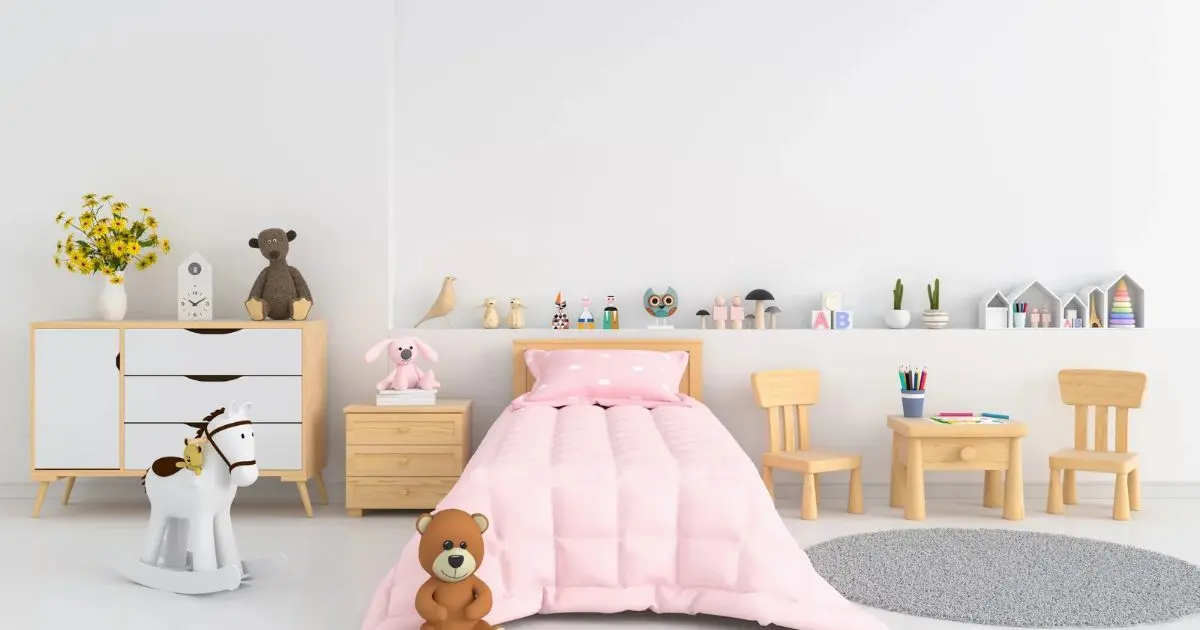
Non-Toxic Kids’ Bedroom: 7 Swaps for Healthier Sleep
A kid’s bedroom is where sleep, play, and screen time all come together. But between furniture, bedding, electronics, toys, and cleaning products, there are plenty of everyday items that deserve a closer look. Some can introduce unnecessary chemical exposures, while others can interfere with a healthy sleep environment.
When I’m building a non-toxic kids’ bedroom, I pay attention to what’s in the furniture, what touches their skin, what they breathe, and what surrounds them while they sleep. Making a few thoughtful swaps can gradually create a cleaner, healthier bedroom.
Quick Overview: 7 Non-Toxic Bedroom Swaps
- Reduce unnecessary EMF exposure by keeping wireless devices away from the bed overnight.
- Choose solid wood furniture instead of particleboard and MDF.
- Switch to organic cotton bedding and sleepwear.
- Use warm or red-spectrum lighting in the evening.
- Reduce backlit screen exposure before bedtime.
- Choose natural wooden toys over plastic alternatives.
- Clean with simple ingredients instead of heavily fragranced products.
-
Reduce EMF Exposure in the Bedroom
Wi-Fi routers, smart devices, chargers, and other electronics produce electromagnetic fields (EMFs). Research continues to explore potential health effects, including questions about sleep and fatigue.
I recommend keeping Wi-Fi routers outside bedrooms, turning off unnecessary devices overnight, and avoiding charging stations next to the bed. Unplug electronics that aren’t being used and keep beds away from crowded outlets whenever possible.
For bedrooms or dorm-style setups with multiple devices, SafeCharger™ from The Shielding Shop is a great product worth exploring.
-
Skip Particleboard and MDF Furniture
Many inexpensive beds, dressers, and bookshelves are made from particleboard or medium-density fiberboard (MDF). These materials are manufactured using wood particles or fibers bonded with adhesives, some of which contain formaldehyde-based resins. Formaldehyde can be released into indoor air over time, contributing to indoor air pollution.
Formaldehyde is a known human carcinogen and can irritate the eyes, nose, and throat. That’s why I prefer solid wood furniture with simple, low-emission finishes.
Solid wood is also durable and can last for years. If replacing every piece isn’t realistic, start with the bed and furniture closest to where your child sleeps. For composite wood products, look for recognized low-formaldehyde emission certifications.
-
Upgrade to Organic Bedding and Sleepwear
Kids spend hours every night in direct contact with their sheets, blankets, and pajamas. Conventional textiles may contain synthetic dyes, finishing agents, or treatments designed to resist stains and wrinkles. Choosing simpler materials can help reduce exposure to unnecessary textile chemicals.
I prefer organic cotton bedding because it’s breathable, comfortable, and easy to maintain. Look for brands that disclose their materials, dyes, and chemical treatments, as well as certifications such as OEKO-TEX STANDARD 100.
For bedding, I use Aizome, which focuses on naturally dyed textiles. PureEarth Collection is another option I like for sleepwear and sleeping bags. Both are worth exploring when upgrading bedroom essentials.
-
Replace Harsh Lighting With Warm or Red Light
Bright overhead lights and screens can interfere with the body’s natural preparation for sleep. Blue-enriched light in the evening can suppress melatonin, a hormone that helps regulate the sleep-wake cycle. This makes lighting an important part of creating a healthier bedroom.
I recommend switching bright white bulbs to warm, dimmable lighting during the evening. Red-spectrum lighting is another option because longer-wavelength light generally has less effect on melatonin suppression than comparable blue-enriched light.
We use red-spectrum lighting from Stainless Lighting in the evening. It’s a simple swap that helps create a calmer atmosphere as bedtime approaches.
-
Rethink Screen Time and Tablet Displays
Screen time isn’t only about what kids watch. Conventional tablets use backlit displays that emit visible light, including blue wavelengths, which can interfere with sleep timing when used late in the evening.
The Daylight Kids Tablet offers a different approach with a paper-like display designed to reduce reliance on conventional backlighting. It’s worth considering for families seeking alternatives to standard tablets, though display settings and overall screen habits still matter.
I also recommend creating a screen-free wind-down period before bedtime. Reading, drawing, or quiet play can help establish a more consistent nighttime routine.
-
Choose Wooden Toys Over Plastic
Plastic toys are everywhere, but some may contain additives such as phthalates, while certain electronic or foam-containing products can include flame retardants. The specific chemicals depend on the materials and manufacturing process.
I prefer wooden toys made from solid wood with simple, transparent finishes. They’re often durable, last longer, and reduce reliance on certain plastic materials.
Look for age-appropriate toys with smooth surfaces and coatings that meet applicable safety standards. Wooden toys aren’t automatically chemical-free, so paints and finishes still matter.
-
Clean With Simple, Non-Toxic Ingredients
A bedroom can have organic bedding and solid wood furniture, but still contain unnecessary fragrance chemicals from cleaning products. Scented sprays, air fresheners, and heavily fragranced cleaners can introduce additional substances into indoor air.
I prefer keeping cleaning simple with vinegar, baking soda, and castile soap. These ingredients can handle many routine cleaning tasks without relying on synthetic fragrances.
Castile soap works well for many washable surfaces, while baking soda can help with odors. Diluted vinegar is useful on certain hard surfaces, but avoid using it on natural stone or mixing it with bleach.
Regular vacuuming and dusting also help reduce household dust, which can collect chemicals from furniture and other indoor materials.
Where Should You Start With a Non-Toxic Bedroom?
I recommend starting with the products that have the most direct contact with the body and those that contribute to indoor air quality.
Organic bedding, solid wood furniture, fragrance-free cleaning products, and better evening lighting are all worthwhile priorities. Smaller changes, like removing unnecessary electronics and reducing plastic toys, can happen immediately.
Frequently Asked Questions
What makes a kids’ bedroom non-toxic?
A non-toxic kids’ bedroom focuses on reducing unnecessary chemical exposures through better furniture, bedding, toys, and cleaning products. Solid wood furniture, organic textiles, and fragrance-free cleaners are practical choices. Good ventilation and regular dust removal also support healthier indoor air.
Is MDF furniture safe for bedrooms?
MDF furniture can release formaldehyde depending on the adhesives and manufacturing methods used. Products that meet established emission standards generally emit less formaldehyde than noncompliant materials. Solid wood with low-emission finishes is an alternative to composite wood adhesives.
What bedding is best for a non-toxic bedroom?
Organic cotton bedding with minimal chemical treatments is a practical option. Look for manufacturers that disclose their dyes, finishes, and textile certifications. Breathable fabrics and regular washing also contribute to a comfortable sleeping environment.
Does blue light affect children’s sleep?
Blue-enriched light in the evening can interfere with melatonin regulation and sleep timing. Bright tablets, phones, and overhead lighting may contribute to this exposure. Dimming lights and limiting screens before bedtime can support healthier sleep routines.
Are wooden toys better than plastic toys?
Wooden toys can reduce reliance on certain plastics and their additives. However, safety also depends on the paints, finishes, and construction. Choose age-appropriate toys that meet relevant safety standards.
References:
- Salthammer T, Mentese S, Marutzky R. Formaldehyde in the Indoor Environment. Chemical Reviews. 2010;110(4):2536–2572.https://doi.org/10.1021/cr800399g
- Chang AM, et al. Evening Use of Light-Emitting eReaders Negatively Affects Sleep, Circadian Timing, and Next-Morning Alertness. PNAS. 2015;112(4):1232–1237.https://doi.org/10.1073/pnas.1418490112
- Hale L, Guan S. Screen Time and Sleep Among School-Aged Children and Adolescents: A Systematic Literature Review. Sleep Medicine Reviews. 2015;21:50–58.https://doi.org/10.1016/j.smrv.2014.07.007
- Rudel RA, Perovich LJ. Endocrine Disrupting Chemicals in Indoor and Outdoor Air. Atmospheric Environment. 2009;43(1):170–181.https://doi.org/10.1016/j.atmosenv.2008.09.025
- Dodson RE, et al. Endocrine Disruptors and Asthma-Associated Chemicals in Consumer Products. Environmental Health Perspectives. 2012;120(7):935–943.https://doi.org/10.1289/ehp.1104052
- Wood AW. How Dangerous Are Mobile Phones, Transmission Masts, and Electricity Pylons? Archives of Disease in Childhood. 2006;91(4):361–366.https://doi.org/10.1136/adc.2005.075176
Keep updated on latest posts
-

Homemade Heirloom “Goldfish” Crackers
A cleaner take on the lunchbox classic, made with stone-ground heirloom flour and real cheese instead of bleached flour and cheese powder, with a cracker…
-
Non-Toxic Kids’ Bedroom: 7 Swaps for Healthier Sleep
A kid’s bedroom is where sleep, play, and screen time all come together. But between furniture, bedding, electronics, toys, and cleaning products, there are plenty…
-

Baking Soda Beyond Baking: 4 Everyday Uses You Might Not Know About
Grab an extra box of baking soda next time you’re at the store, because baking is honestly one of the least interesting things it can…
-

3 Target Grocery Items I’d Skip (and the Swaps I’d Grab Instead)
A quick grocery run can turn into a lot of label reading when you’re trying to make more thoughtful choices about what comes home with…
One swap a week
Every week, one small change worth making, why it matters, and where to get it. Two minutes, then back to your life.